
Antigua Guatemala Festivals and Cultural Calendar for Expats
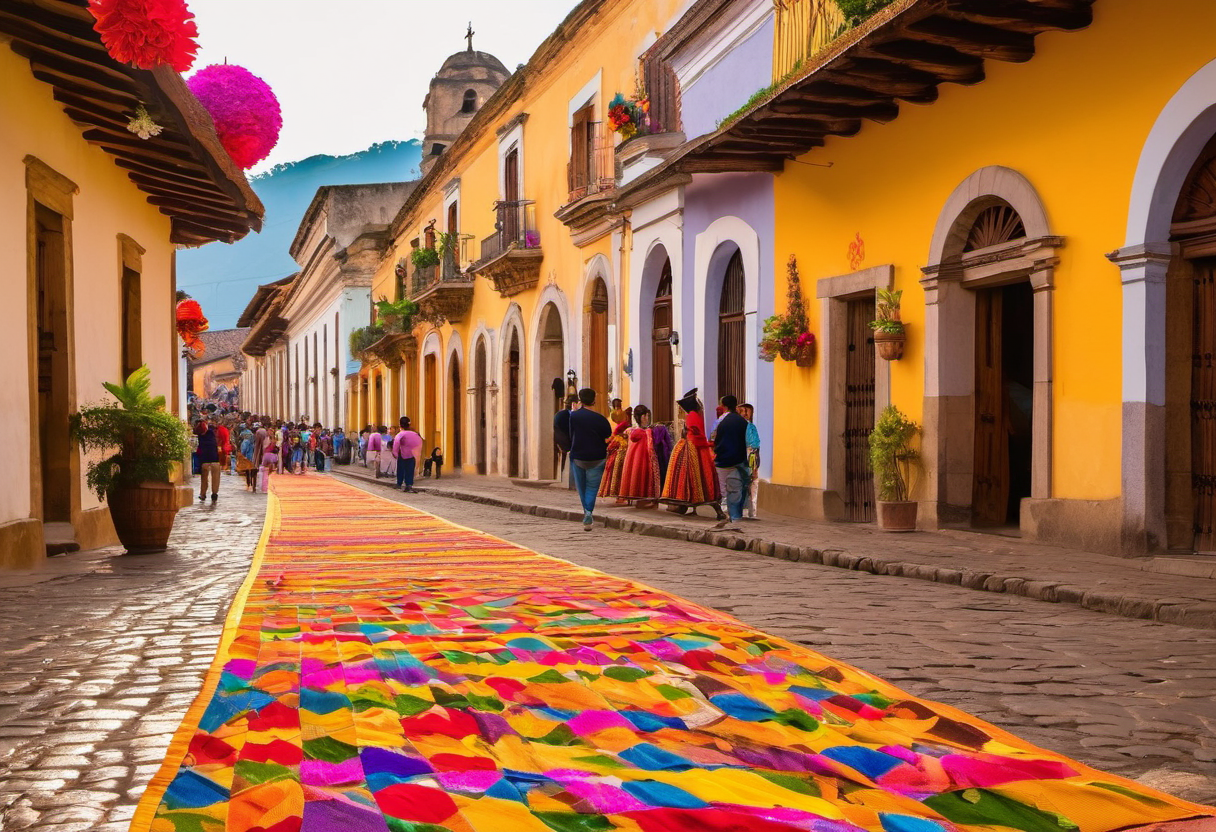
Living in Antigua Guatemala means living inside a year-round celebration. This city does not have one or two big events and then go quiet. It has a rolling calendar of religious processions, cultural festivals, community fairs, and neighborhood patron saint days that fill the streets with color, music, and food almost every month.
For expats considering relocation, understanding this festival rhythm is not just a nice-to-know. It directly affects your daily life: traffic patterns, noise levels, rental availability, and even grocery store hours. More importantly, it is one of the richest parts of living here.
Semana Santa: The Big One
Holy Week, or Semana Santa, is Antigua’s most famous event and one of the largest religious celebrations in the Americas. It takes over the entire city for roughly ten days, with the most intense activity during the final week before Easter.
What makes it extraordinary are the alfombras, elaborate carpets made from colored sawdust, flowers, pine needles, and fruit that families create in the streets right before processions pass through. The processions themselves feature massive floats (called andas) carried by hundreds of people in purple robes.
What expats should know:
- Streets close for hours at a time. If you live on a procession route, you may not be able to drive in or out for most of the day.
- Rental prices spike. Short-term rental demand skyrockets, and some landlords temporarily raise prices. If you own property, this is the peak rental season.
- Grocery stores run low on supplies. Stock up on essentials the week before.
- It is genuinely beautiful. Many expats say Semana Santa is the single most impressive cultural event they have ever experienced. Watching families spend hours creating alfombras that will be destroyed minutes later by the procession is a powerful lesson in impermanence and community.
Patron Saint Festivals (Fiestas Patronales)
Every town and neighborhood around Antigua has its own patron saint festival, typically lasting three to seven days. These are smaller than Semana Santa but more frequent, and they are where expats can really connect with local life.
Key fiestas patronales near Antigua:
- Jocotenango (June) celebrates its patron saint with processions, live music, food stalls, and a small carnival. Jocotenango is just ten minutes from central Antigua, and many expats live there for the lower prices and quieter streets.
- San Pedro Las Huertas (June) hosts a colorful festival with traditional food and marimba music.
- Ciudad Vieja (December) celebrates with processions and community events in what was once the original capital of Guatemala.
- San Juan del Obispo (June) has a charming festival centered around the colonial church.
The pattern is similar across all of them: morning processions, afternoon food vendors, evening fireworks (yes, literal fireworks, often at 4 AM), marimba bands, and community dancing in the streets.
Independence Day: September 15
Guatemala celebrates independence from Spain on September 15, and Antigua goes all out. The night of September 14 is the main event: the Central American independence torch passes through the city, carried by runners. Streets fill with people, and there are parades, traditional dances, and the famous “antorcha” torch relay.
Schools participate with marching bands and student groups, and many neighborhoods organize their own celebrations. The atmosphere is genuinely joyful and patriotic without being heavy-handed.
All Saints Day: November 1
Día de Todos los Santos on November 1 is when Guatemalan families visit cemeteries to honor their ancestors. In the villages around Antigua, families clean and decorate graves with flowers and candles. It is a quiet, reflective day, very different from the noisy fiestas.
The traditional food is fiambre, a massive cold salad made from dozens of ingredients including cold cuts, cheeses, pickled vegetables, and beets. Every family has their own recipe, and it is only made once a year. If your neighbors invite you to share their fiambre, accept. It is a genuine gesture of inclusion.
Christmas and New Year
The holiday season in Antigua starts in early December with posadas, nightly processions reenacting Mary and Joseph’s search for shelter. Neighborhoods take turns hosting, and the host house provides food, drinks, and fireworks.
Christmas Eve is the main celebration, with family dinners, fireworks at midnight, and church services. New Year’s Eve features more fireworks (Antigua really loves fireworks) and celebrations in Central Park.
One tradition that surprises many expats: at midnight on New Year’s Eve, people eat twelve grapes, one for each stroke of midnight, making a wish with each one. Many also wear yellow underwear for good luck in the new year.
How Festivals Affect Daily Life
Understanding the festival calendar helps you plan around the practical realities:
- Traffic and street closures are frequent during major festivals. If you commute or need to drive regularly, learn which streets are on procession routes.
- Noise levels increase significantly. Fireworks at 4 AM are normal during patron saint festivals. If you are a light sleeper, invest in good earplugs or choose a home away from the central churches.
- Rental availability shifts with the seasons. Semana Santa and Christmas are peak demand periods.
- Business hours change during festivals. Many shops close early or do not open at all on major procession days.
- Community connections deepen through participation. Even just watching from your doorway and offering water to procession carriers is appreciated.
Embracing the Rhythm
The biggest adjustment for expats is learning to plan around the celebrations rather than being frustrated by them. A street closure that blocks your commute is also the reason your neighborhood smells like pine needles and flowers and your neighbors are outside together creating something beautiful.
Many long-term expats say the festival culture is one of the main reasons they stay. It creates a sense of community that is hard to find in more anonymous modern cities. When your neighbor invites you to help make an alfombra, you are being invited into something that matters deeply to the community.
Ready to experience Antigua Guatemala’s festival culture firsthand? Contact Luna Jerney to explore homes in neighborhoods where you can be part of these celebrations year-round.