
Building Permits in Antigua Guatemala
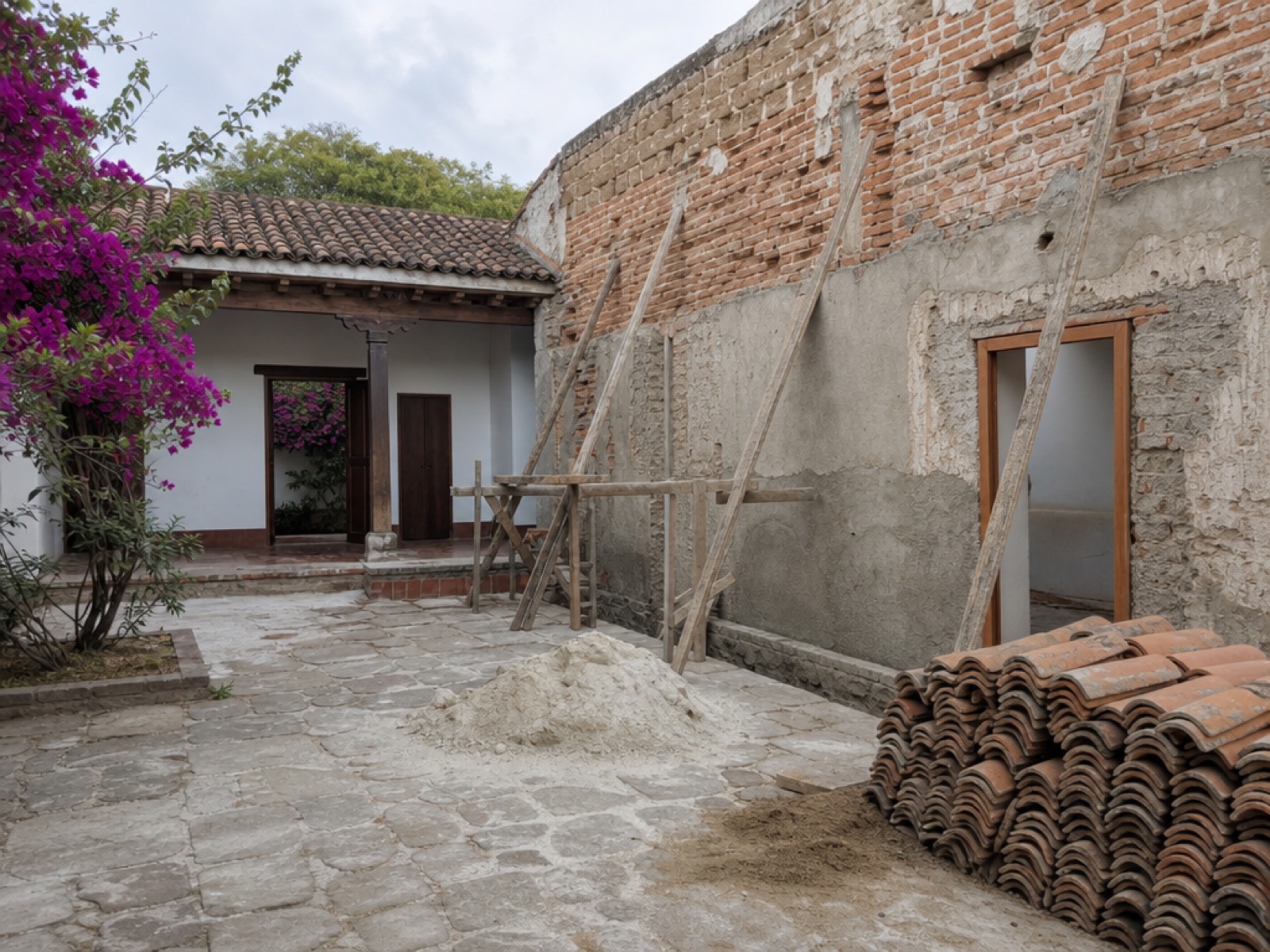
In Antigua Guatemala, most work inside your own walls needs no permit. Anything that changes what the street sees does. A municipal construction licence (licencia de construcción) comes from the Municipality of Antigua. Inside the protected historic centre, a project that alters a street facade, a roofline, a height or a colour also needs a favourable opinion from the Consejo Nacional para la Protección de la Antigua Guatemala, known as CNPAG. For a straightforward facade project, budget Q5,000 to Q20,000 and four to ten weeks.
This guide explains which projects need approval, what the paperwork costs, how long it takes, and what building without a permit really risks.
Do you need a permit to renovate in Antigua Guatemala?
The test is what a passer-by can see from the street, not how much you spend. New wiring, new plumbing, a refitted bathroom, floor tile, a repainted interior and a new kitchen all sit behind the front door and, in practice, need no municipal licence. Move a window, widen a door, change a roofline, raise the wall on the street line, or add a second floor, and you are in permit territory.
Structural work inside also counts. Taking out a load-bearing wall, adding a room or rebuilding a floor can need a licence even when nothing is visible from outside, because the municipality tracks the safety of the building, not only its appearance.
What is CNPAG and why does it matter?
CNPAG is the state body that protects Antigua’s heritage, created in the 1940s and reinforced by decree in 1969, then backed by the 1979 UNESCO World Heritage listing. It is not the same office as the municipality. The municipality issues the construction licence; CNPAG gives the heritage opinion the licence depends on for anything street-visible in the protected zone.
That zone covers the historic centre and spills into parts of the surrounding barrios, so check your exact address rather than assuming a house “outside the centre” is automatically outside the rules. If you are buying, this is one of the questions worth settling before you commit, alongside the title checks in our UNESCO heritage property guide.
Which projects need a permit and which do not?
| Project | Historic centre | Outside the protected zone |
|---|---|---|
| Repaint an interior wall | No permit | No permit |
| New kitchen or bathroom fittings | No permit | No permit |
| Full rewire or repipe behind the front door | No permit | No permit |
| Repaint a street facade in a new colour | Municipal licence plus CNPAG opinion | Municipal licence in some zones, often none |
| New or moved window or door on the street facade | Municipal licence plus CNPAG opinion | Municipal licence |
| Raise or stone-face the perimeter wall on the street | Municipal licence plus CNPAG opinion | Municipal licence |
| Add a room at the rear or off the courtyard | Usually no permit if not street-visible | Municipal licence if it is structural |
| Second floor over a colonial facade | Municipal licence plus CNPAG opinion, most often refused | Municipal licence |
The heritage principle is blunt: the street facade belongs to the town, the inside belongs to you.
What does a permit cost and how long does it take?
The municipal fee is the small part. The drawings, the filed plans and the person who walks the paperwork through are the real cost.
| Item | Typical 2026 range |
|---|---|
| Municipal licence fee, residential project | Q1,500 to Q8,000, set from declared project value |
| Architect or engineer drawings and technical file | Q3,000 to Q12,000 |
| Gestor or lawyer to file and follow the trámite | Q2,000 to Q10,000 |
| Total for a straightforward street-facade project | Q5,000 to Q20,000 |
| Typical timeline | 4 to 10 weeks, and 3 to 6 months for a second floor or a large facade |
A local architect who files Antigua permits every month is worth the fee, because the same drawings can be rejected for a formality when filed by someone who does not know the office. Ask your builder whether the quote includes the trámite.
What happens if you build without a permit?
You risk a stop-work order, a fine, and a much harder job afterwards. The municipality can halt a site it finds working without a licence, and getting one after the fact is slower and more expensive than getting it first, because an inspector is now judging finished work that may have to be undone.
The bigger danger is at resale. A buyer’s due diligence will ask whether recent roof, facade or extension work was approved. Unpermitted improvements do not appear in the escritura, and a missing permit can hold up a closing or force a price cut to cover the buyer’s risk.
How does the approval process actually work?
- Check your zone. Confirm at the municipality whether your address sits inside the protected centre.
- Hire a registered architect or engineer (colegiado) to prepare drawings and the technical file.
- File the licence application at the Municipality of Antigua with the drawings, the fee and proof of ownership.
- CNPAG opinion, if the work touches anything street-visible inside the zone.
- Receive the municipal resolution and pay the licence fee.
- Post the permit on site and expect an inspector to visit during the work.
- Keep the licence, the drawings and the CNPAG opinion. You will need them when you sell.
If the project is a restoration of an old house rather than a new addition, the sequence is similar but the drawings lean harder on traditional methods. Our colonial homes restoration guide covers what that work involves.
What should a buyer check about permits?
- Ask to see the licence and the CNPAG opinion for any recent roof, facade, extension or second-floor work.
- Check at the municipality whether those improvements were registered, rather than trusting the seller’s word.
- Do not rely on the escritura alone. It records the sale, not the building file.
- If you plan your own work, price the permit before you fall in love with a design.
Antigua Real Estate Development works with buyers on properties where approvals matter, and can point you to architects and gestores who file clean permits. Browse current listings at our properties page, review our services, or send your questions through the contact page and we will tell you what a given house will need.
The bottom line
Interior work in Antigua Guatemala usually needs no permit. Street-visible changes need a municipal licence and, in the protected zone, a CNPAG opinion. Budget Q5,000 to Q20,000 and four to ten weeks for a typical facade project, more for structural or second-floor work, and never skip the paperwork on a house you may sell. Getting the permit first is almost always cheaper than fixing its absence later.
Interested in Antigua Real Estate?
Whether you're looking to buy, rent, or invest. I can help. Free consultation, no pressure.