Buying Commercial Property in Antigua Guatemala
Buying Commercial Property in Antigua Guatemala
Commercial property in Antigua Guatemala is a small, protected market: the historic center is a UNESCO World Heritage site, so no one can demolish a colonial building and build larger. That fixed supply is why a well-placed storefront, café or office rents for 6 to 9 percent gross and holds value through downturns.
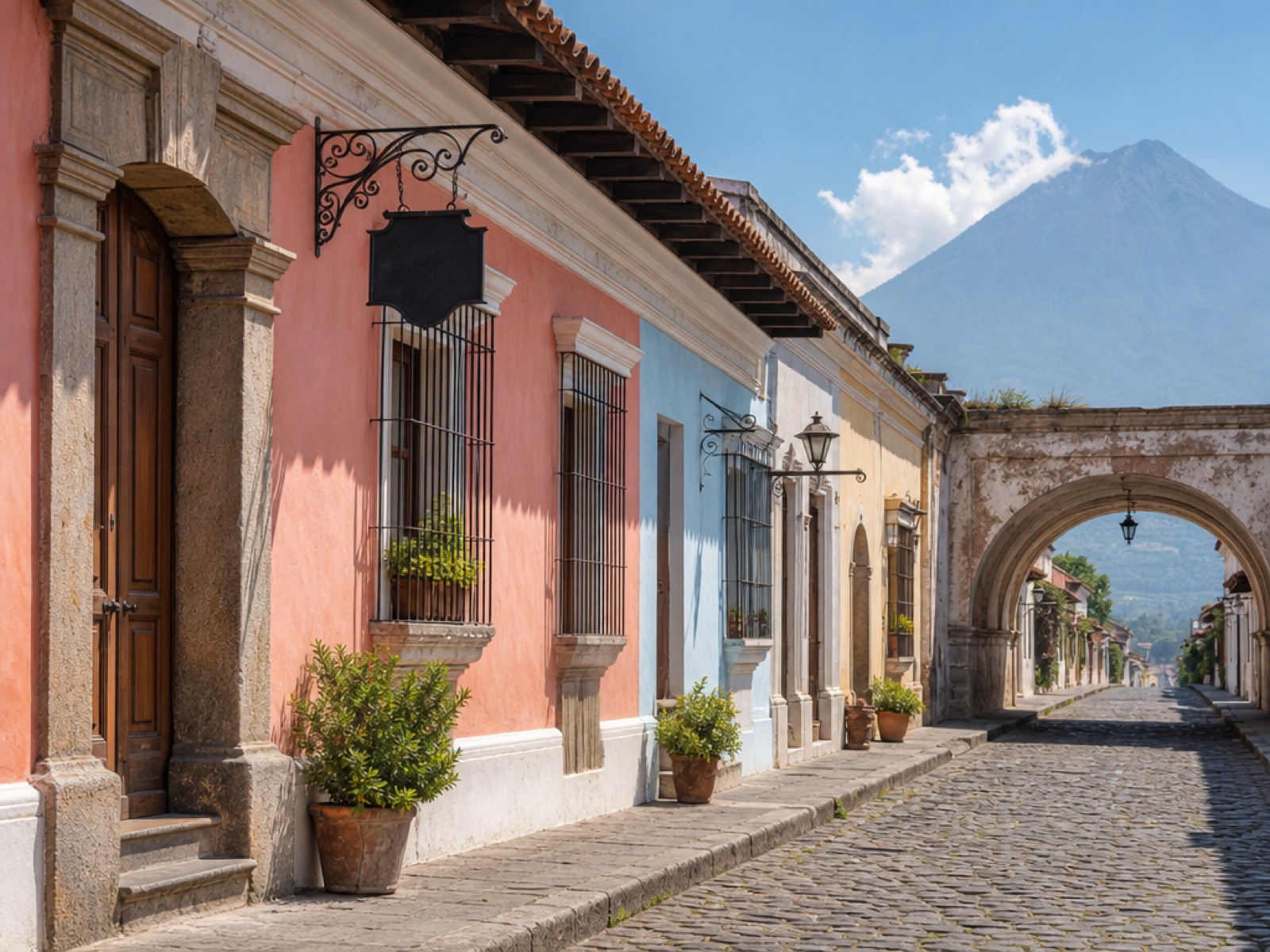
Antigua draws a steady flow of tourists, expats and Guatemalan weekend visitors into a grid you can walk end to end in twenty minutes. Every business that wants to serve them needs a door on one of those streets, and there are only so many doors.
What counts as commercial property in Antigua Guatemala
Commercial covers more than retail. In Antigua it usually means:
- A street-level storefront or gallery in the historic center
- A café, bakery or restaurant, often with a courtyard or rooftop
- A boutique hotel or guesthouse of six to twenty rooms
- Office space, from a single suite to a converted colonial building
- A mixed-use building with shops below and apartments above
- Commercial land on the perimeter roads and the highway toward Ciudad Vieja
Each behaves differently. A café lives or dies on foot traffic and a patio, an office depends on internet and parking, and commercial land is a development play, not a rental one.
Why supply cannot expand
Antigua’s heritage status protects the architecture and caps the inventory. You cannot raise a second floor over a colonial facade, widen a doorway onto the plaza, or replace a tile roof with a concrete one without approval from the Consejo Nacional para la Protección de La Antigua Guatemala.
Inside the protected zone, every new business competes for the same limited stock of approved space, so tenants rarely leave and empty units re-let quickly. Outside the zone you can build freely, but you lose the foot traffic that makes the center valuable.
What does commercial property cost in Antigua Guatemala?
Prices below are for the 2026 market and vary by street, condition and whether a tenant is in place. Frontage on a pedestrian street can double the price of the same building two blocks away.
| Property type | Typical price range | Typical monthly rent | Gross yield |
|---|---|---|---|
| Small storefront, historic center | $180,000 to $450,000 | $900 to $2,500 | 5 to 7 percent |
| Café or restaurant with patio | $300,000 to $700,000 | $1,800 to $4,500 | 7 to 9 percent |
| Office suite or small office building | $120,000 to $400,000 | $700 to $2,200 | 6 to 8 percent |
| Mixed-use building, shops plus apartments | $500,000 to $1,500,000 | $3,000 to $8,000 | 6 to 8 percent |
| Commercial land, perimeter roads | $50 to $150 per square meter | Not applicable | Development play |
A restaurant with a working kitchen, a liquor licence and an established clientele sells at a premium over an empty shell, because the buyer inherits the operation.
Can foreigners own commercial property in Guatemala?
Yes, on the same terms as a home: a foreigner can hold commercial property in Antigua in their own name, with no fideicomiso and no restricted zone. You need a valid passport, a NIT tax number, and a deed registered at the Registro de la Propiedad.
Many investors buy through a Guatemalan sociedad anónima instead, especially when several partners are involved or when the property will be leased to a business they also own. Holding through a company keeps the asset separate from your personal estate and makes it easier to sell shares rather than real estate. The trade is annual accounting and tax filings, so it only pays above a certain ticket size.
The permits that decide what you can actually do
A commercial building’s value depends on what the municipality will let you operate inside it. This is where buyers get caught.
- Uso de suelo. Confirm the zoning certificate allows your intended use. A space approved for retail may not be approved for a restaurant with a kitchen and late hours.
- Heritage approval. Any change to a facade, roof, window or sign inside the protected zone needs approval. Budget weeks, not days.
- Liquor licence. Restaurants and bars need a licence tied to the address, and it does not always transfer with the sale.
- Parking and access. Some uses are approved only with off-street parking, which is scarce and expensive in the narrow center.
- Municipal debts. Unpaid IUSI and municipal fees follow the property, not the seller, unless the closing settles them.
What do commercial leases look like?
Leases in Antigua normally run three to five years, with rent quoted in US dollars or quetzales. Expect a one to three month deposit, annual increases of 3 to 5 percent, and a clause making the tenant responsible for interior repairs while the landlord keeps the structure.
Commercial rent carries IVA at 12 percent, and the landlord pays IUSI at 0.75 percent of the registered fiscal value each year. Registered values sit well below market prices, so the tax bill is usually modest.
What returns should you expect?
Gross yields in the center run 5 to 9 percent, with cafés and restaurants at the top of the range and plain office space at the bottom. Net returns are lower once you subtract IUSI, management fees of 8 to 12 percent, repairs, and a vacancy allowance.
The bigger return usually comes from the building itself. Colonial commercial property in Antigua has appreciated steadily, and a restored facade on a good street is both an income asset and a store of value. That is why buyers here hold for a decade rather than flip.
How do you finance a commercial purchase?
Local banks lend to foreigners reluctantly, and almost never on commercial property without residency and local income. Most purchases are cash. Some sellers offer direct financing for higher-value buildings, typically a three to five year note at a rate between what a bank charges and what the seller earns on a deposit.
Closing costs run 5 to 7 percent of the price, covering notary fees, the 3 percent transfer tax and registry fees. If a tenant is in place, ask for the lease and proof that rent is current.
Common mistakes investors make
- Buying on a beautiful street with no foot traffic, because tourists walk one route and ignore the rest.
- Assuming a licence, a tenant or a kitchen transfers automatically.
- Skipping the uso de suelo check, then discovering the business you planned is not permitted.
- Underestimating restoration costs on a colonial building with a tired roof and old wiring.
- Buying commercial land without confirming road access, water and power to the lot.
- Pricing rent in dollars without checking what comparable space actually leases for today.
Commercial property in Antigua Guatemala rewards patience and local knowledge more than capital alone. The market is small and the good addresses are closely held.
Ready to look? Browse our available properties, see how we work with foreign buyers, or contact Luna for an honest read on which commercial space in Antigua fits your budget and your plans.
Interested in Antigua Real Estate?
Whether you're looking to buy, rent, or invest. I can help. Free consultation, no pressure.