
Earthquake Safety in Antigua Guatemala: What Property Buyers Need to Know
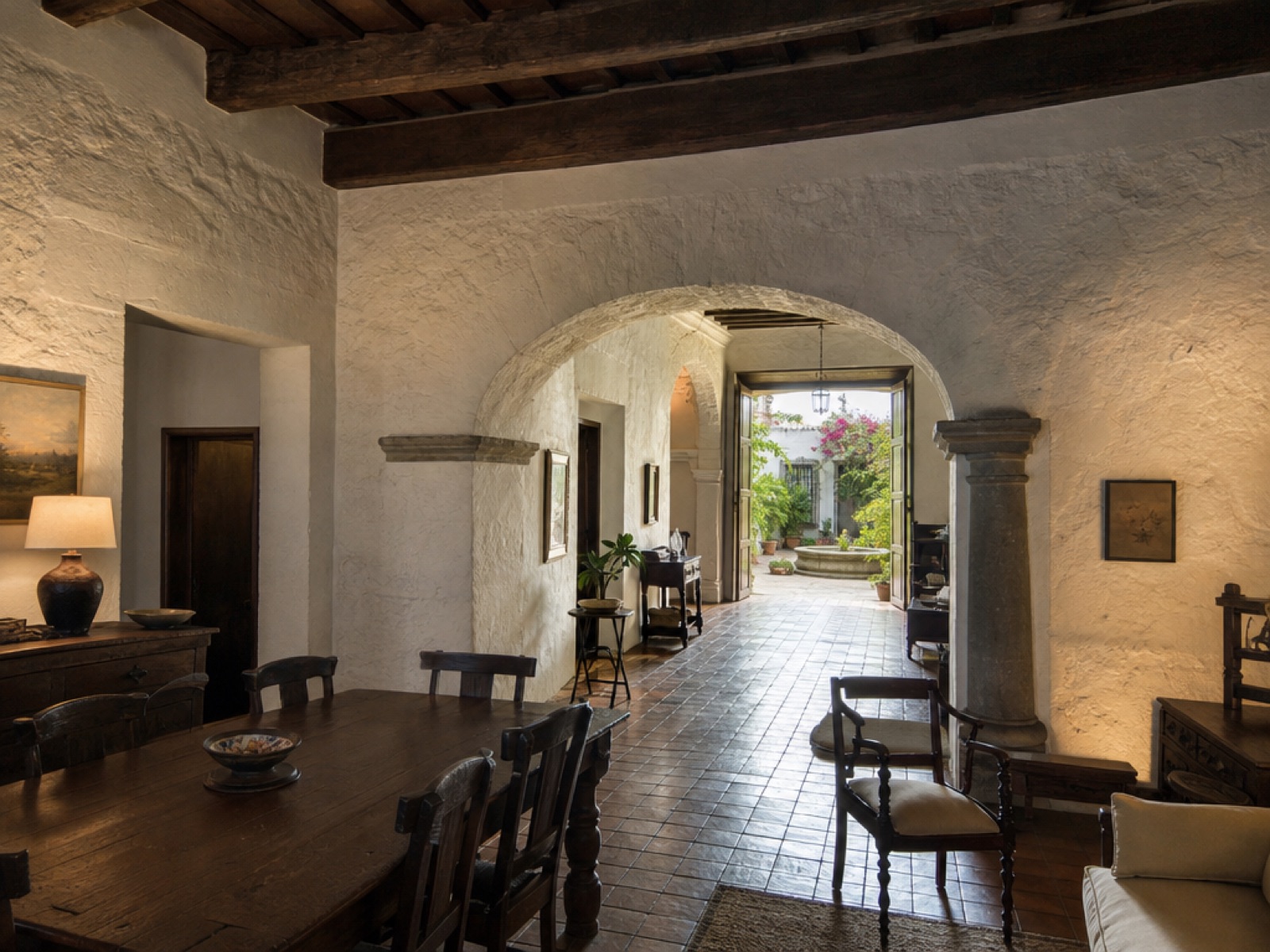
Antigua Guatemala sits on one of the most seismically active stretches of the planet, and that fact shapes every property decision here — from how a colonial house was built 300 years ago to what a structural engineer should check before you sign anything. The good news: Antigua’s architecture evolved specifically to survive earthquakes, and with the right inspection and retrofitting, both historic and modern homes can be safe places to live and invest.
Here is what foreign buyers need to understand about earthquake risk in Antigua Guatemala.
Why Is Antigua Guatemala Prone to Earthquakes?
Antigua lies in the Central American volcanic arc, wedged between the Motagua and Polochic fault systems — two major transform faults where the Caribbean and North American plates grind past each other. That is the same tectonic boundary responsible for the 1976 Guatemala earthquake (magnitude 7.5), which killed more than 23,000 people nationwide, and for the 1773 Santa Marta earthquakes that destroyed the colonial capital and forced the Spanish crown to move the seat of government to present-day Guatemala City.
On top of the fault lines, Volcán de Fuego — one of the most consistently active volcanoes in the Americas — erupts regularly just 16 km from Antigua, blanketing the town in ash and occasionally triggering local tremors. In short, seismic activity is not a rare event here. It is a permanent feature of the landscape.
That sounds alarming until you understand the second half of the story: Antigua has been building to resist earthquakes for centuries.
How Are Colonial Homes Built to Handle Earthquakes?
Most people assume a 250-year-old house is a liability in a seismic zone. In Antigua, the opposite is often true. Colonial builders learned hard lessons from repeated earthquakes and developed techniques that engineers still respect today:
- Massive wall thickness. Colonial walls are typically 60–90 cm of adobe, brick, or volcanic stone. That dead weight resists lateral shaking far better than a thin modern wall.
- Low building heights. Most historic homes in the center are one or two stories. Less height means less leverage for an earthquake to work against.
- Flexible wooden vigas. The hand-hewn ceiling beams and wooden lintels act as a semi-rigid frame, absorbing movement rather than cracking.
- Buttresses and thick corner returns. Many facades are reinforced with stone buttresses and rounded corners specifically to stiffen the structure against lateral forces.
- Light clay tile roofs. Traditional barrel-tile roofs are far lighter than a concrete slab, which reduces the mass that has to be supported during shaking.
The result is that hundreds of colonial structures in Antigua have survived multiple major earthquakes, including the devastation of 1773. A well-maintained colonial home is often structurally tougher than people expect.
That said, “survived” is not the same as “safe today.” Centuries of moisture, improvised repairs, and previous damage can leave weaknesses that only an inspection will reveal.
What Should Buyers Check Before Purchasing?
Whether you are considering a restored colonial property in the historic center or a new build in a gated community, the inspection process is similar. Here is what to look at:
1. Commission a Structural Inspection
Never rely on a visual walkthrough. Hire a Guatemalan structural engineer with experience in Antigua’s historic construction. A professional assessment costs roughly Q5,000–Q15,000 (US$650–US$2,000) and is the single best investment you can make before purchase. Ask specifically about:
- Diagonal cracking on walls, especially cracks that step through mortar joints — a classic sign of seismic shear stress.
- Out-of-plane walls. If a wall bows outward or leans away from the structure, it can collapse in a strong quake.
- Roof-to-wall connections. In colonial homes, the roof often simply rests on the walls. In modern homes, check for proper anchoring.
- Foundation condition. Volcanic stone or rubble foundations vary enormously in quality.
2. Understand Retrofitting
If the inspection finds weaknesses, retrofitting is usually feasible. Common interventions include confining rings (cast-in-place concrete bands), steel reinforcement, tie-rods connecting opposing walls, and repointing mortar with lime-based mixes that flex rather than crack. Retrofit costs for a typical colonial home commonly run US$10,000–US$40,000 depending on scope — often worth negotiating into the purchase price.
Note that any structural work on a property in Antigua’s protected historic center must be approved by CONCULTURA, the authority that guards the UNESCO-listed architecture. Your architect manages that process.
3. Look at the Surroundings
A structurally sound house can still be damaged by a neighbor. Check whether adjacent buildings are well maintained, and avoid buying directly downhill from a large, unreinforced structure or a steep hillside that could fail in heavy rain combined with seismic activity.
4. Insure the Property
Standard homeowner policies in Guatemala can exclude or limit earthquake coverage. Ask your broker specifically about cobertura de terremoto and confirm the deductible — a policy that technically includes earthquakes but has a 10% deductible on the full insured value may not protect you the way you expect. Read our guide to property insurance for foreigners before you close.
Is a New Build Automatically Safer?
Not necessarily. Guatemala’s structural code (administered under CONRED, the national disaster agency) sets minimum seismic requirements for reinforced concrete and steel construction, and reputable developers in Antigua build well above the minimum. But code compliance depends entirely on the builder and the supervision on site. For any new or pre-construction home:
- Ask for the structural drawings and the engineer’s stamp.
- Confirm the foundation design matches soil conditions on that specific lot.
- Walk the site during construction if you can — proper rebar spacing and concrete quality are invisible once finished.
Antigua has a deep bench of experienced builders, but shortcuts happen. Having your own engineer review the plans is cheap insurance on a US$150,000+ purchase. Browse our current listings for examples of well-built modern homes.
Living With Earthquakes in Antigua
Most residents simply learn to live with occasional tremors. Fuego’s activity is monitored closely by INSIVUMEH, and Antigua’s historic center has not experienced catastrophic shaking since 1976. Simple precautions make a real difference:
- Bolt heavy furniture, water heaters, and bookshelves to walls.
- Keep a go-bag with water, documents, and a flashlight.
- Know that colonial courtyards double as safe open assembly areas — another reason the patio layout endures.
The Bottom Line
Antigua Guatemala’s earthquake risk is real, but it is manageable — and it is priced in. A thorough structural inspection, realistic retrofitting budget, and proper insurance turn a seismic-zone purchase into a sound investment. The buyers who lose money here are the ones who skip the inspection, not the ones who do their homework.
Planning to buy in Antigua Guatemala? Contact Luna Jerney at Antigua Real Estate Development. We connect buyers with trusted structural engineers, architects, and legal advisors, and we can walk you through the colonial restoration process if you are considering a historic property. Explore our available properties to get started.
Interested in Antigua Real Estate?
Whether you're looking to buy, rent, or invest — I can help. Free consultation, no pressure.