
Fire Safety in Antigua Guatemala Homes
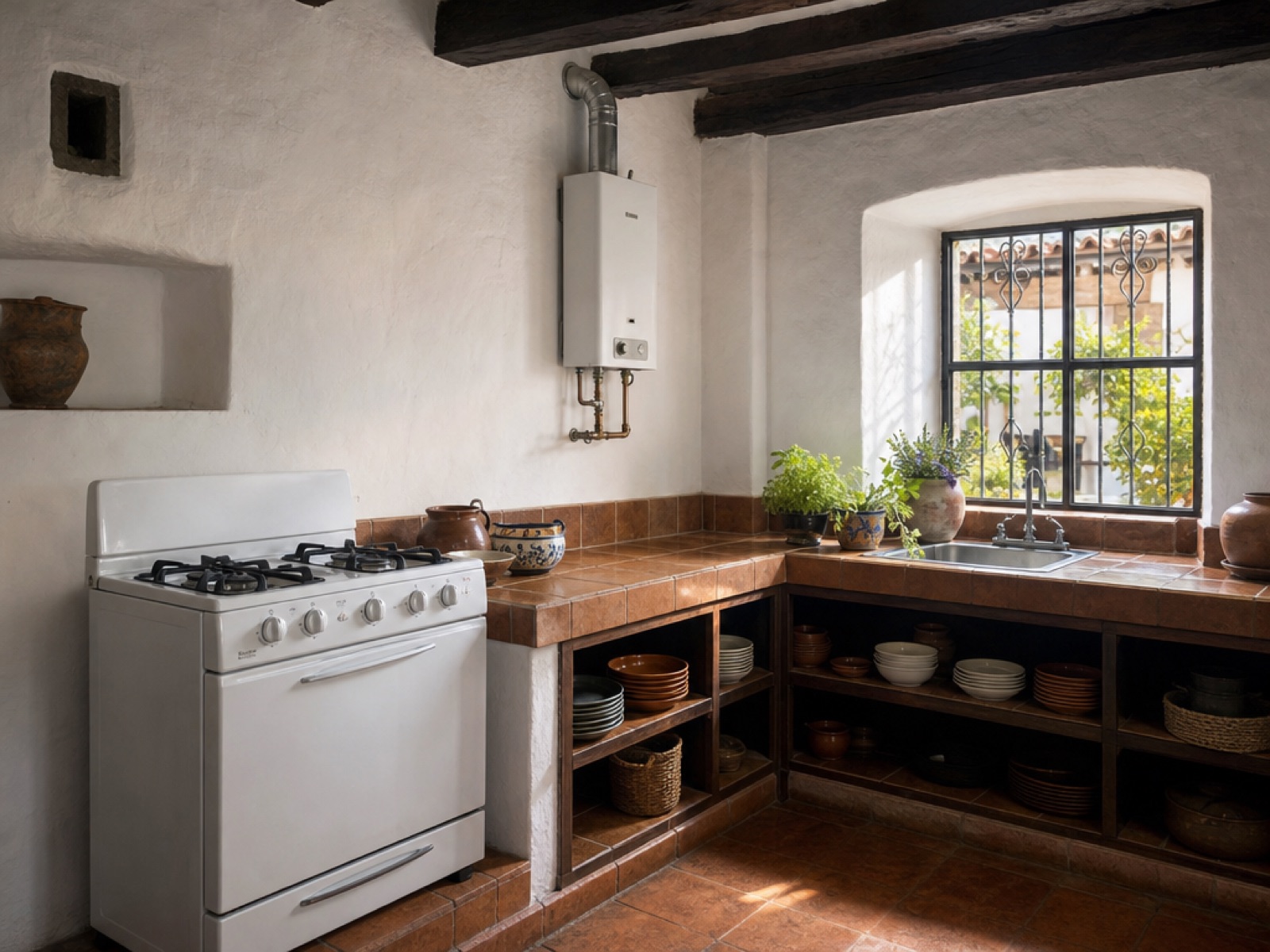
A house fire is not the everyday risk in Antigua Guatemala that it is in North American or European cities, but fires start differently here, and a colonial house changes how you get out. Most homes have no smoke detector, many have a gas water heater on an interior wall, and a 1970s house was never wired for the appliances now plugged into it. Ten minutes of checking during a viewing usually shows where the risk sits.
Is fire a real risk in Antigua Guatemala?
Yes, and it is more about how fires start than how often they happen. No hydrant network covers every street in the heritage centre, the colonial grid is narrow and often one-way, and outside the city the volunteer companies drive further, so a response on a finca road at the end of the dry season is slower. Prevention and early detection matter more here than counting on a fast arrival.
Why colonial homes carry a different fire risk
- Timber roof structure. Roofs sit on wooden beams, called vigas, with cane and mortar between them. The walls may be adobe or stone, but the roof frame is wood.
- Thick adobe, bahareque or stone walls. Forty to eighty centimetres of wall does not burn, but it holds heat and slows access.
- One door to the street. Many courtyard houses have a single street entrance, with every room opening onto the courtyard and no second exit.
- Barred windows. Security grilles on every window are normal here, and they are also what someone needs to open in a hurry.
- A courtyard full of things that burn. Plants, firewood, paint and stored cylinders, all in the same small space.
How do most house fires start in Antigua Guatemala?
Five causes cover almost every case, and four are cheap to fix.
Gas calentadores de paso
A wall-mounted tankless heater in a bathroom or kitchen is the most common water heater in the city. It is safe when it exhausts to open air, dangerous when somebody has boxed it into a windowless room.
Cooking gas and the cylinder beside the stove
Most kitchens run a 25-pound propane cylinder, exchanged for around Q90 to Q130, connected by a rubber hose and a regulator. Hoses harden and crack with age, and the regulator is rarely replaced. This is the cheapest safety upgrade in the house.
Old wiring and overloaded panels
Colonial houses were wired for lights and a refrigerator. Add a tankless electric shower drawing 3,500 to 7,000 watts, a microwave, a pump and an air conditioner, and a 1970s panel runs hot. Ceramic fuses, rust, taped joints and a fan of extension cords are all red flags.
Cohetes and fireworks
Rockets are part of almost every procession, saint’s day and family birthday here. In the dry months, one that lands on a dry tile roof, a palm or a pile of leaves can start a roof fire. You cannot stop the neighbours. You can keep the roof clear of anything that will catch.
Dry-season vegetation
From January to April the hills turn brown. A fire on an adjoining finca or an overgrown lot can reach a boundary wall, so outside the city look at what grows against the house.
What does basic fire safety equipment cost?
| Item | Typical 2026 price | Where it matters most |
|---|---|---|
| Photoelectric smoke detector | Q120 to Q350 | Sleeping corridor and kitchen |
| 5 lb ABC fire extinguisher | Q250 to Q600 | Kitchen, plus one per floor |
| Extinguisher recharge | Q80 to Q150 | Every 12 months |
| Gas leak detector | Q300 to Q900 | Beside the cylinder |
| Fire blanket | Q150 to Q300 | Kitchen wall, for a pan fire |
| Escape ladder | Q400 to Q1,200 | Any upper room with a barred window |
| Steel hose and regulator | Q80 to Q200 | Replace the rubber hose every three to five years |
Prices are typical 2026 figures for Antigua hardware stores and exclude installation. The whole list costs less than one month of rent.
Can you make a colonial home safer without breaking the rules?
Inside the UNESCO protected centre, smoke detectors, extinguishers and gas detectors are invisible from the street and need no permit. What does need a permit is anything that changes the facade or the structure: a new exterior staircase, a door cut into a street wall, a window turned into an exit, or a change to the roofline. The conservation board works alongside the municipal licence, so plan it, price it, and expect weeks rather than days.
The courtyard is the escape route, so keep plants, firewood and spare cylinders out of the only path to the street.
Does home insurance cover fire?
Yes. A standard Guatemalan homeowner policy covers structure damage from fire, along with earthquake, volcanic eruption, landslide, windstorm, theft and liability. Two details matter. Most insurers expect basic safety measures, working locks, an alarm and increasingly a smoke detector, and they will ask. And a house used as a short-term rental needs the policy to say so: a residential policy written for an owner-occupied house may not pay out on commercial use.
Do short-term rentals need fire equipment?
Yes. A short-term rental safety inspection looks for fire extinguishers, adequate exits and working smoke detectors. The practical list: an extinguisher in the kitchen, a smoke detector in every sleeping area, a first aid kit and a written exit plan. It is one of the cheapest items on the regulatory list.
A pre-purchase fire safety check
- Look at the electrical panel. Ask when it was last replaced and whether the wiring is copper.
- Trace the gas line. Where is the cylinder? Is the hose soft or cracked? Does the calentador vent to open air?
- Count the exits. One street door or two? Do rooms open onto the courtyard or onto a corridor with one way out?
- Check the windows. If every window is barred, ask how the bars open from the inside. That detail matters most in a bedroom.
- Inspect the roof timbers and any chimney. Soot, cracked mortar around a flue and plants on the tiles are worth fixing before the dry season.
- Ask the neighbours about cohetes. Beside a church, a firework shop or an open lot, ask how the roof handles it.
The bottom line
Fire safety in Antigua Guatemala is a maintenance habit rather than a construction project. A smoke detector, an extinguisher, a new gas hose and a clear courtyard cover most of the risk, and they cost less than one month of rental income. The deeper work, the electrical panel, the gas installation, the chimney and the exits, belongs in the due diligence you do before you sign.
Want to look at homes with an eye on the practical details? Browse our current listings, review our property services, or talk to Luna about what to check next.
Interested in Antigua Real Estate?
Whether you're looking to buy, rent, or invest. I can help. Free consultation, no pressure.