
Guatemala Digital Nomad Visa Guide (2026)
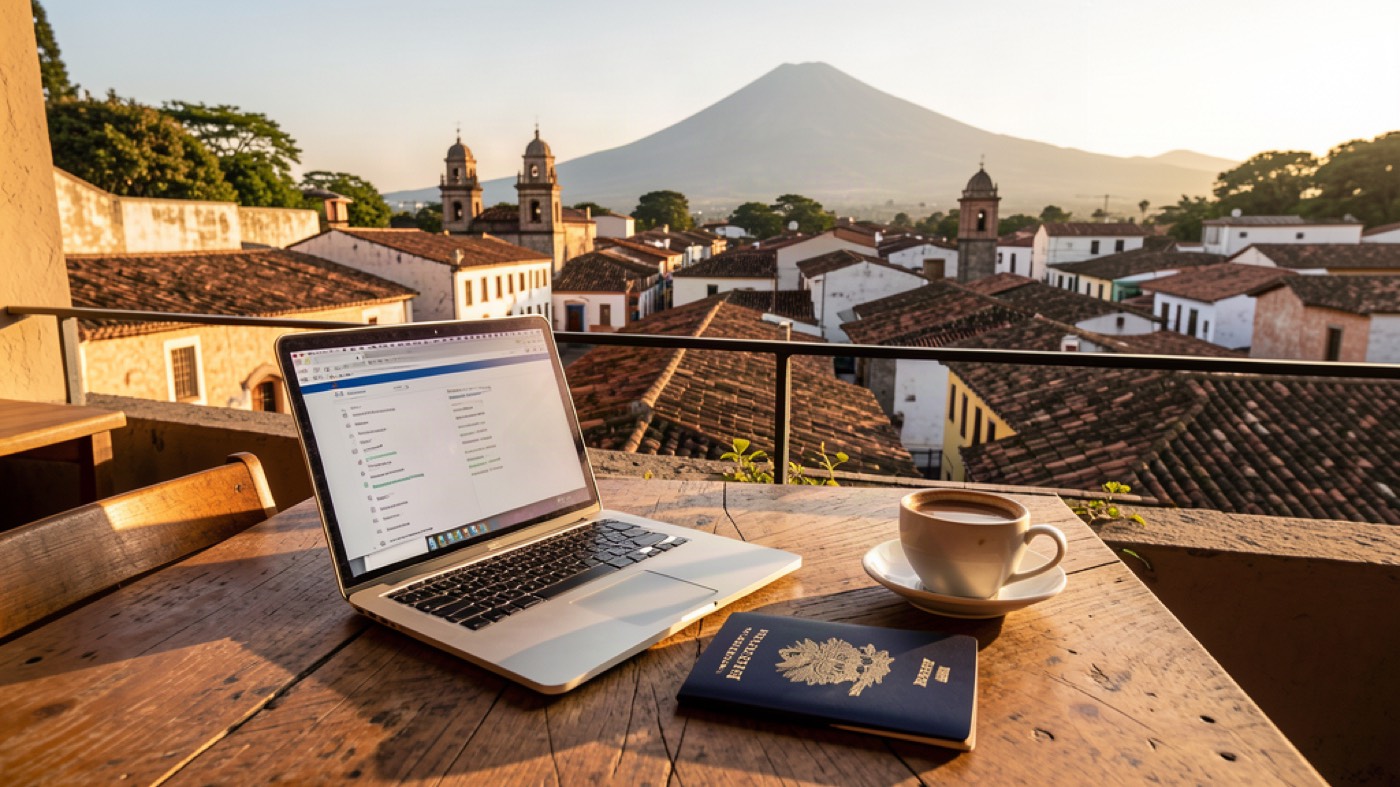
Guatemala launched its official digital nomad visa program in 2025, and it has quickly become one of the most attractive options for remote workers looking to relocate to Central America. Unlike neighboring countries that impose strict income requirements or short stay limits, Guatemala’s visa strikes a balance between accessibility and affordability, especially for those who want to base themselves in Antigua Guatemala.
The program allows remote workers, freelancers, and digital entrepreneurs to live in Guatemala for up to two years while continuing to work for foreign employers or clients. If you have been considering a move to Antigua and want to do things legally, this guide covers exactly what you need to know.
What Is the Guatemala Digital Nomad Visa?
Guatemala’s digital nomad visa is a temporary residence permit designed specifically for remote workers. It was introduced as part of the country’s broader effort to attract international talent and investment. The visa allows you to live in Guatemala without paying local income tax on foreign-earned income, which is a significant advantage over many other digital nomad programs.
The initial visa is valid for one year and can be renewed for a second year. After two years, you must either leave the country for a period or apply for a different residency category.
Requirements for the Guatemala Digital Nomad Visa
The requirements are refreshingly straightforward compared to other countries in the region. You will need:
A valid passport with at least six months of remaining validity. Proof of remote work or self-employment showing you earn income from sources outside Guatemala. A minimum monthly income of approximately $1,500 USD, though higher income strengthens your application. Proof of health insurance valid in Guatemala. A clean criminal record from your country of residence, apostilled and translated if not in Spanish. A completed application form and passport-sized photos.
The income requirement is one of the lowest in Latin America. Costa Rica’s similar program requires $3,000 per month, while Panama asks for significantly more. Guatemala’s $1,500 threshold makes it accessible to a much wider range of remote workers.
Application Process Step by Step
Start the process at a Guatemalan consulate in your home country, though some applicants have reported success applying from within Guatemala on tourist status. The steps are as follows.
First, gather your documents. Get your criminal background check apostilled and translated into Spanish by a certified translator. Secure proof of income such as pay stubs, a contract with your employer, or client invoices for freelancers. Purchase health insurance that covers you in Guatemala and obtain a letter confirming coverage.
Second, submit your application at the nearest Guatemalan consulate. The application fee is approximately $200 to $300 USD depending on the consulate. Processing time varies but typically takes four to eight weeks.
Third, once approved, you receive a visa stamp in your passport. You have 30 days to enter Guatemala and register with immigration (Direccion General de Migracion). After registration, you receive your temporary residence card, which is valid for one year.
Renewal follows a similar process and requires proof that you still meet the income and insurance requirements.
Why Antigua Guatemala Is the Best Base for Digital Nomads
Most digital nomads who come to Guatemala settle in Antigua, and for good reason. The city offers everything a remote worker needs within walking distance.
Internet infrastructure in Antigua is excellent. Fiber optic connections are available in most neighborhoods, with speeds of 100 to 200 Mbps being standard. Many cafes, coworking spaces, and rental properties include high-speed WiFi. For backup, cellular data plans from providers like Tigo and Claro offer generous 4G and growing 5G coverage across the city.
Coworking spaces have multiplied in recent years. Spaces like Impact Hub Antigua, Tres Amigos, and Selina offer reliable internet, desk space, meeting rooms, and a built-in community of fellow remote workers. Monthly memberships range from $100 to $200 USD.
Cost of Living for Digital Nomads in Antigua
One of the biggest draws of the Guatemala digital nomad visa is how far your income goes. A remote worker earning $3,000 to $4,000 per month can live very comfortably in Antigua.
Rent is the largest expense. A fully furnished one-bedroom apartment in a central location runs $600 to $900 per month. Larger spaces and houses with gardens cost more but are still affordable by international standards. Unfurnished rentals in areas like El Hato or Ciudad Vieja can be found for $400 to $700 per month for those willing to furnish their own space.
Monthly groceries for one person cost $200 to $350 USD depending on how much local food you buy versus imported goods. Eating out at local restaurants costs $5 to $10 per meal, while nicer international restaurants run $15 to $25 per person.
Total monthly expenses for a single person living well in Antigua typically fall between $1,500 and $2,500 USD, including rent, food, transportation, entertainment, and health insurance.
Finding Long-Term Housing as a Digital Nomad
The biggest challenge for digital nomads on the Guatemala visa is finding quality long-term housing. Many Airbnb listings are priced for short-term tourists, and the best long-term rentals often go through local agents rather than online platforms.
This is where working with a local real estate agent makes a significant difference. A knowledgeable agent like Luna Jerney at Antigua Real Estate Development can help you find properties that are actually available for long-term leases, not just short-term tourist rentals. She knows which landlords accept foreign tenants, which neighborhoods offer the best internet, and which properties include the amenities digital nomads actually need.
Popular neighborhoods for digital nomads include the historic center for walkability, El Hato for mountain views and newer construction, and Jocotenango for a quieter suburban feel with easy access to the city. Each area offers different trade-offs between price, space, and convenience.
Taxes and Banking for Digital Nomads
One of the most attractive features of the Guatemala digital nomad visa is the tax treatment. Income earned from foreign sources is not subject to Guatemalan income tax. You remain tax resident in your home country unless you meet that country’s criteria for changing your tax status.
Guatemala has a territorial tax system, meaning only income generated within Guatemala is taxed locally. As a digital nomad earning from overseas clients or employers, your income falls outside Guatemala’s tax jurisdiction.
Opening a local bank account as a digital nomad is possible but requires patience. Banks like Banco Industrial, GYT, and Banrural will open accounts for foreign residents, but they require your temporary residence card and additional documentation. Many digital nomads operate using international accounts from Wise or Charles Schwab combined with ATM withdrawals in Quetzales.
Common Mistakes to Avoid
Several pitfalls catch new arrivals who are applying for the Guatemala digital nomad visa.
Do not arrive without your apostilled background check. Getting documents apostilled from abroad once you are in Guatemala is complicated and requires either a trip back home or working through a courier service.
Do not assume you can extend the 90-day tourist visa by crossing a border. While some people do this, immigration has been tightening enforcement. The digital nomad visa is the legal path and gives you peace of mind and full access to banking and long-term rentals.
Do not commit to a year-long lease before you have seen the property in person. Some photos look better than reality, and Antigua’s colonial buildings vary significantly in quality. Always view the property first, or use a local agent who can vet properties on your behalf.
Ready to Make Antigua Your Home Base?
The Guatemala digital nomad visa is one of the most accessible remote work visas in the Americas. With reasonable income requirements, two years of validity, and a tax-friendly structure, it is an excellent option for anyone looking to trade the rat race for colonial streets and volcano views.
Finding the right long-term rental is the most important step after your visa is approved. Luna Jerney and the team at Antigua Real Estate Development specialize in helping digital nomads and expats find quality rental properties in Antigua Guatemala. Whether you want a furnished apartment in the historic center or a house with mountain views in El Hato, we can help you find the perfect base for your remote work lifestyle.
Ready to explore your options? Contact Luna Jerney to start your housing search in Antigua Guatemala.
Interested in Antigua Real Estate?
Whether you're looking to buy, rent, or invest — I can help. Free consultation, no pressure.