
Humidity and Damp in Antigua Guatemala Homes
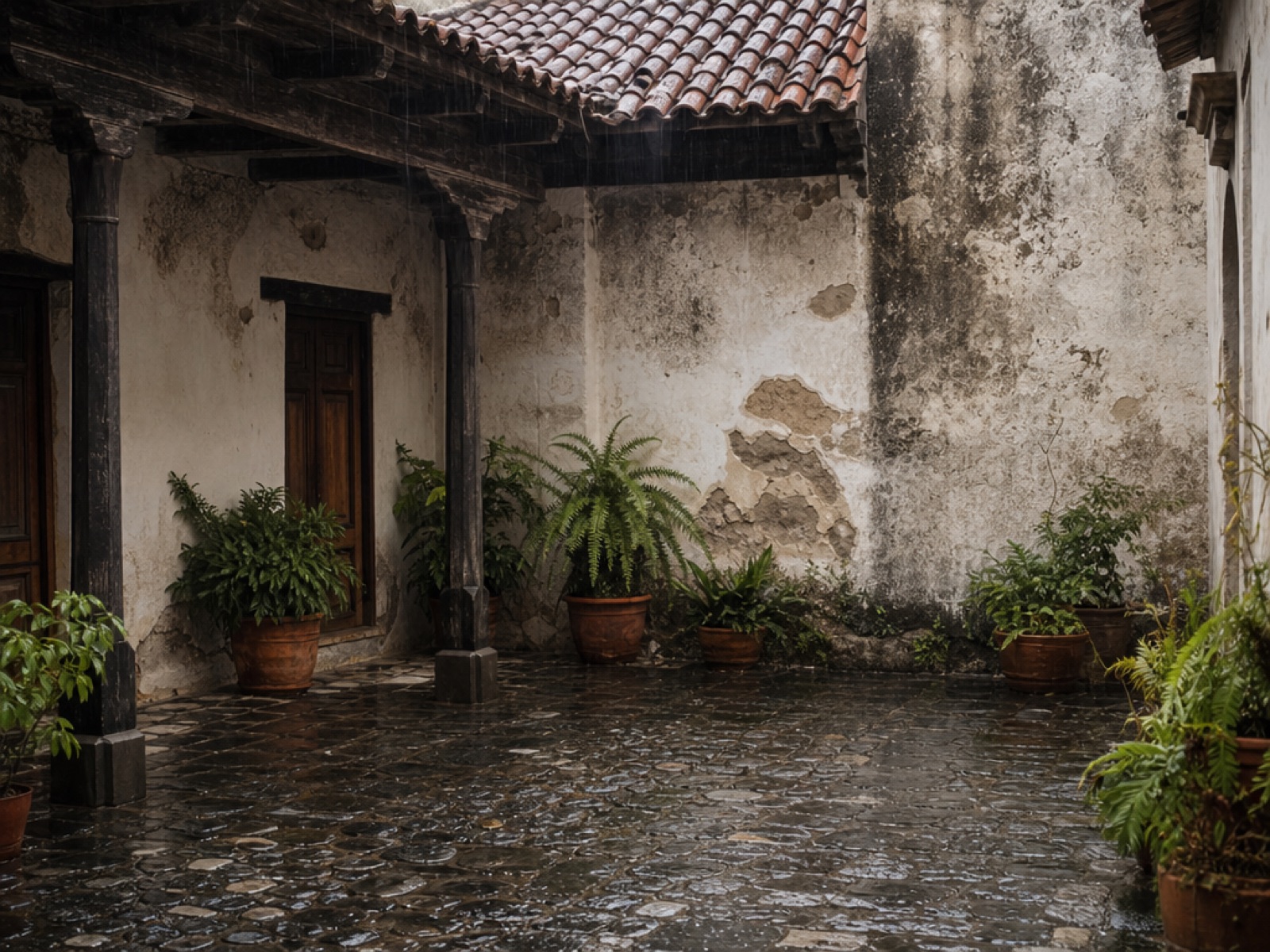
Damp is the most common hidden defect in Antigua Guatemala houses, and the rainy season from May to October is when it shows. Thick colonial walls, lime plaster and enclosed courtyards hold moisture well, so a house that looks flawless in February can smell of mildew and bloom white salt by August. This guide covers what causes it, what repairs cost and how to check a property before you commit.
How Humid Does Antigua Guatemala Actually Get?
Antigua sits at roughly 1,530 metres, which gives it a mild climate rather than a tropical one, but the rainy season is genuinely wet. From June to August humidity runs 80 to 90 percent and it rains most afternoons for four to five months. Nights are cool, so the air that soaks into the walls during the day condenses inside them after dark.
The dry season from November to April is the opposite: strong sun, low humidity, weeks without rain. Houses dry out in that window and re-wet when the rains return. Repeated for decades, that cycle is what slowly destroys paint, plaster, timber and mild steel.
Why Colonial Homes Hold Moisture
Old Antigua houses were built from materials that breathe. Adobe, bahareque (a cane and mud frame), lime plaster and stone all absorb and release water vapour slowly. That is a strength in a hot climate, but it means the walls behave like a sponge.
Three things make it worse. Most houses have no damp-proof course, so ground water wicks straight up the wall. Many were built with internal courtyards and small windows to keep the sun out, which also keeps air from moving. And the roofs are terracotta tile over timber, with clay canales that crack, block and overflow.
What Salitre Is and Why It Keeps Coming Back
Salitre is the white, powdery bloom you see on old walls. It is salt travelling through the masonry with water and crystallising on the surface as the wall dries, pushing paint and plaster off as it forms.
Treating the bloom without finding the water wastes money, and it is the most common mistake owners make here. The height of the bloom tells you where the water comes from. At the base it is rising damp or a high water table. At the top, or under a window, it is a roof or flashing leak. Spread across a whole wall it usually means the wall was saturated by runoff or a burst pipe.
Where Moisture Shows Up First
| Where you see it | What it looks like | What it usually means | The fix |
|---|---|---|---|
| Base of an inside wall | White bloom, paint lifting | Rising damp or a high water table | Perimeter drainage, breathable render, injected damp course |
| Wall below the roof or a window | Brown rings, dark streaks, soft plaster | Leaking tile, cracked canale or failed flashing | Roof and canale repair, mortar at ridges and hips |
| North or south shaded wall | Green-black spots, musty smell | Condensation with no airflow | Ventilation, pruning, dehumidifier |
| Around doors and windows | Swollen timber, sticking jambs | Rain driven into the frame | Frame repair and sealing |
| Inside wardrobes and cupboards | Spotted clothes, musty smell | Trapped air, no airflow | Vents, spacing, dehumidifier |
Is Mold in an Antigua House Dangerous?
Surface mold on a shaded wall is mostly cosmetic. Mold that keeps returning, or a musty smell minutes after you close a room, points to structural damp and to air quality that matters with asthma, allergies or small children. Painting over it hides it for one season, then the paint lifts with the mold behind it.
What Damp Repairs Cost in Antigua Guatemala in 2026
Prices come from local contractors in October 2026, in quetzales.
- Room dehumidifier: Q1,500 to Q4,000 ($200 to $520), plus Q150 to Q300 a month in electricity if you run it daily through the rains.
- Extractor fans for bathrooms and kitchens, fitted: Q500 to Q1,500.
- Salitre treatment per square metre, meaning scrape back, salt-neutralising primer and a breathable lime render: Q200 to Q500 ($25 to $65).
- Chemical damp-proof course injected at the base of a wall: Q400 to Q900 per linear metre ($50 to $115).
- Perimeter or French drain along one side of the house: Q700 to Q2,000 per linear metre.
- Small roof and canale repairs: Q1,500 to Q3,000. A full tile roof runs from Q80,000.
One honest caveat: most colonial houses cannot be made permanently dry, only managed. Budget for the source of the water, not the stain.
How to Check a House for Damp Before You Buy
- Visit in the rainy season if you can. July to September reveals every leak, stain and drainage problem February hides.
- Pass your hand along the base of the walls and press the plaster. Cold and soft means it is holding water.
- Open every wardrobe, look under beds and behind furniture. That is where mold grows unseen.
- Look up. Brown rings on ceilings and stains high on walls mean the roof or a canale is leaking.
- Smell the room after closing the door for ten minutes. A musty smell is information, not an insult to the seller.
- Ask what the downhill side of the lot does in a storm.
- Photograph every suspect wall. A July photo beats any verbal assurance.
How to Keep a House Dry Year Round
- Open windows and doors daily, from mid-morning to late afternoon. Cross ventilation does more than any machine.
- Fit extractor fans in bathrooms and kitchens. Steam is the easiest moisture to stop at the source.
- Do roof and drainage work in the dry season, when labour is available and leaks show.
- Never seal lime plaster with cement or plastic paint: it traps the water inside.
- Keep plants 30 centimetres off the walls and clear the roof canales before the rains.
- Run a dehumidifier in closed rooms, or leave wardrobe doors slightly open and space clothes away from the wall.
Does Damp Affect Resale Value and Rental Income?
Both, and more than owners expect. Long-term tenants leave houses that smell of mildew, and short-term guests mention it in reviews, which costs more in lost bookings than the repair would have. Buyers discount damp walls hard, because a stain behind fresh paint tells them the last owner chose cheap over correct. A well-maintained colonial house in Antigua is genuinely dry, though. Damp is a maintenance signal, not something you inherit by buying old.
See the House in the Rainy Season, Then Decide
If you are considering property in Antigua Guatemala, look at it in the wet months, ask for maintenance records going back three years, and price drainage work into your offer. A house that handles August well will treat you well all year.
Browse current listings at /properties/, or tell Luna Jerney what you are looking for at /contact/ and she will send a shortlist, damp history included, before you travel.
Interested in Antigua Real Estate?
Whether you're looking to buy, rent, or invest. I can help. Free consultation, no pressure.