
Living Near Volcanoes in Antigua Guatemala: What Expats Need to Know
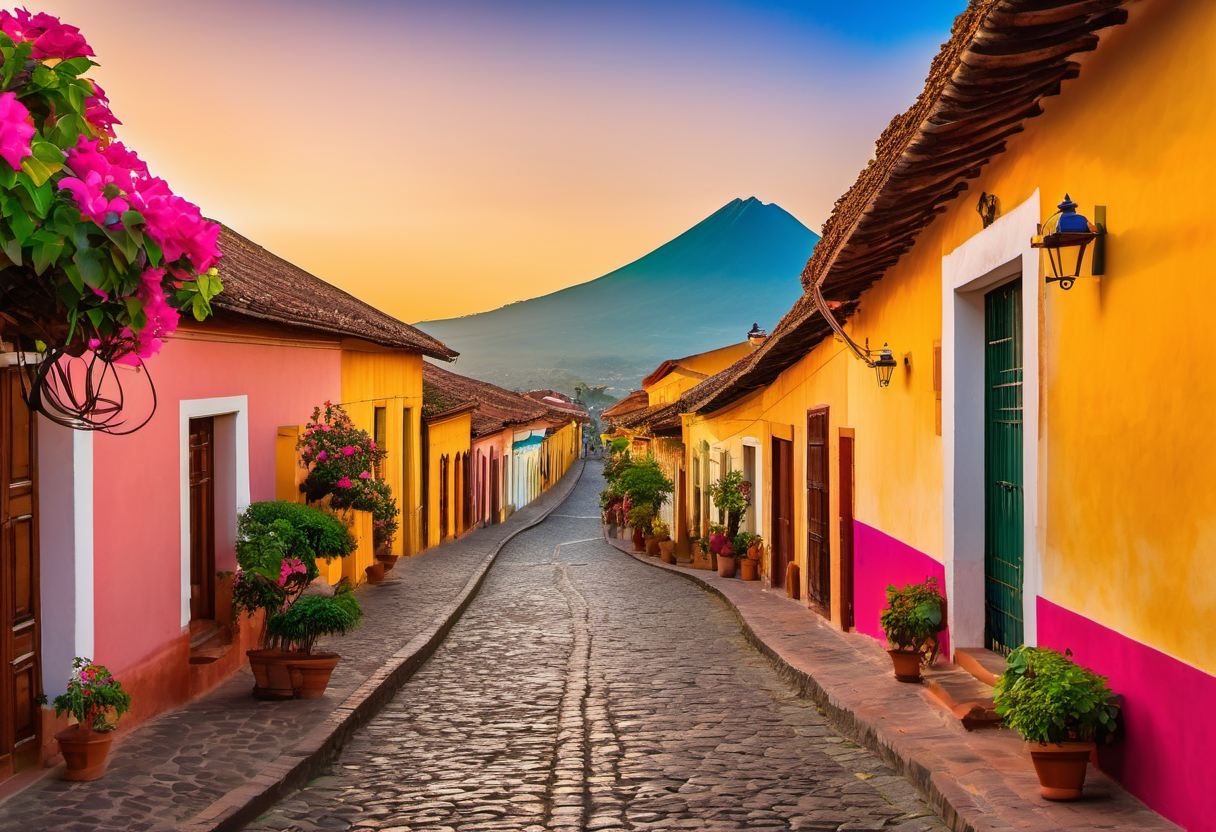
When people first see Antigua Guatemala framed by three towering volcanoes, the reaction is almost always the same: breathtaking awe, followed immediately by a practical question — is it safe? Living next to active and dormant volcanoes is not something most expats have on their resume. But in Antigua, it is simply part of daily life, and understanding the reality helps you appreciate rather than fear the landscape.
The Three Volcanoes That Define Antigua
Antigua sits in a valley surrounded by three volcanoes, each with its own personality and risk profile.
Volcan de Agua (3,760 meters) is the massive, symmetrical cone that dominates the southern skyline. It has been dormant since a devastating eruption in 1541, and geologists consider it unlikely to erupt again in our lifetime. For most residents, Agua is purely scenic — a green giant that catches the morning light and provides a constant sense of orientation. If you can see Agua, you know where south is.
Acatenango (3,976 meters) is the tallest of the three and sits to the west. It last erupted in 1972 and is classified as dormant. The hike to Acatenango’s summit is one of Guatemala’s most popular outdoor activities, offering a jaw-dropping view of its neighbor, Fuego, erupting in real time. Many expats consider this hike a rite of passage.
Volcan de Fuego (3,763 meters) is the one that demands respect. Fuego is one of Central America’s most active volcanoes, with frequent small eruptions that produce ash plumes and occasional lava flows visible at night. Its 2018 eruption was catastrophic for nearby communities, but Antigua itself sits roughly 20 kilometers away — a distance that provides significant safety margin for most volcanic activity.
What Living Near Fuego Actually Feels Like
Here is what expats discover after the first few months: most of the time, you forget Fuego is even there. The volcano is often hidden by cloud cover, and minor eruptions happen without anyone in town noticing.
When Fuego does put on a show, it is usually spectacular rather than scary. On clear evenings, you can sometimes see a faint orange glow from lava flows on the summit. During more active periods, you might hear a low rumble that sounds like distant thunder. Ash fall in Antigua is rare and light — a thin dusting on cars and rooftops that clears with the next rain.
The community has well-established alert systems. CONRED (Guatemala’s national disaster reduction agency) monitors volcanic activity 24/7, and local authorities communicate evacuation routes and safety zones clearly. Most expats who have lived here for years describe the volcanic presence as more awe-inspiring than anxiety-inducing.
Earthquake Reality in Antigua
Beyond volcanoes, Guatemala sits on active tectonic boundaries, and earthquakes are a fact of life. The country experiences frequent minor tremors that most long-term residents barely notice. Significant earthquakes are less common but do happen — the 2012 earthquake caused damage to some colonial structures in Antigua.
The practical reality for expats is straightforward. Modern construction in Antigua follows seismic building codes, and newer homes are built with reinforced concrete designed to withstand tremors. Older colonial properties vary in their earthquake resilience, which is why buying or restoring a colonial home requires a structural engineer’s assessment — something any reputable real estate agent will recommend.
Many expats living in Antigua describe the occasional tremor as a gentle reminder of the living landscape around them. Guatemala’s building culture has evolved over centuries of seismic experience, and the construction standards in quality developments reflect that knowledge.
Practical Safety Tips for Expats
Living well near volcanoes and fault lines comes down to preparation rather than worry.
Choose your property wisely. Work with a local real estate agent who understands geological risk zones. Properties on stable ground with modern construction offer peace of mind. Areas like Ciudad Vieja, San Pedro Las Huertas, and the outskirts toward San Miguel Duenas all have solid options.
Keep an emergency kit. Guatemala’s emergency services recommend having a basic kit with water, first aid supplies, a flashlight, and important documents. This is standard advice for anyone living in a seismically active region worldwide, not unique to Antigua.
Stay informed. Follow CONRED’s volcanic monitoring updates. Local Facebook groups and neighborhood WhatsApp chats are excellent real-time information sources. Most expats find that staying connected to the community provides all the situational awareness they need.
Understand your insurance. Property insurance in Guatemala can cover volcanic and seismic events, but coverage varies significantly between providers. Discuss this with your insurance broker before purchasing a property.
Why Expats Choose to Stay
Despite the dramatic landscape, or perhaps because of it, Antigua has a remarkably high expat retention rate. People who move here for a trial period frequently decide to stay permanently. The volcanoes are part of what makes the town extraordinary — not just visually, but culturally and spiritually.
Guatemalan culture has a deep, respectful relationship with the volcanic landscape. The volcanoes appear in local art, literature, and daily conversation. Living near them connects you to something ancient and powerful that flat-terrain cities simply cannot offer.
Morning coffee on a terrace with Volcan de Agua filling the horizon, watching Fuego’s plume catch the sunset light, hiking Acatenango on a weekend — these are not the experiences of someone living in danger. They are the experiences of someone living in one of the most extraordinary places on earth.
Ready to explore properties with volcano views in Antigua Guatemala? Contact Luna Jerney to find your perfect home in this stunning volcanic valley.