Renovating for Profit in Antigua Guatemala
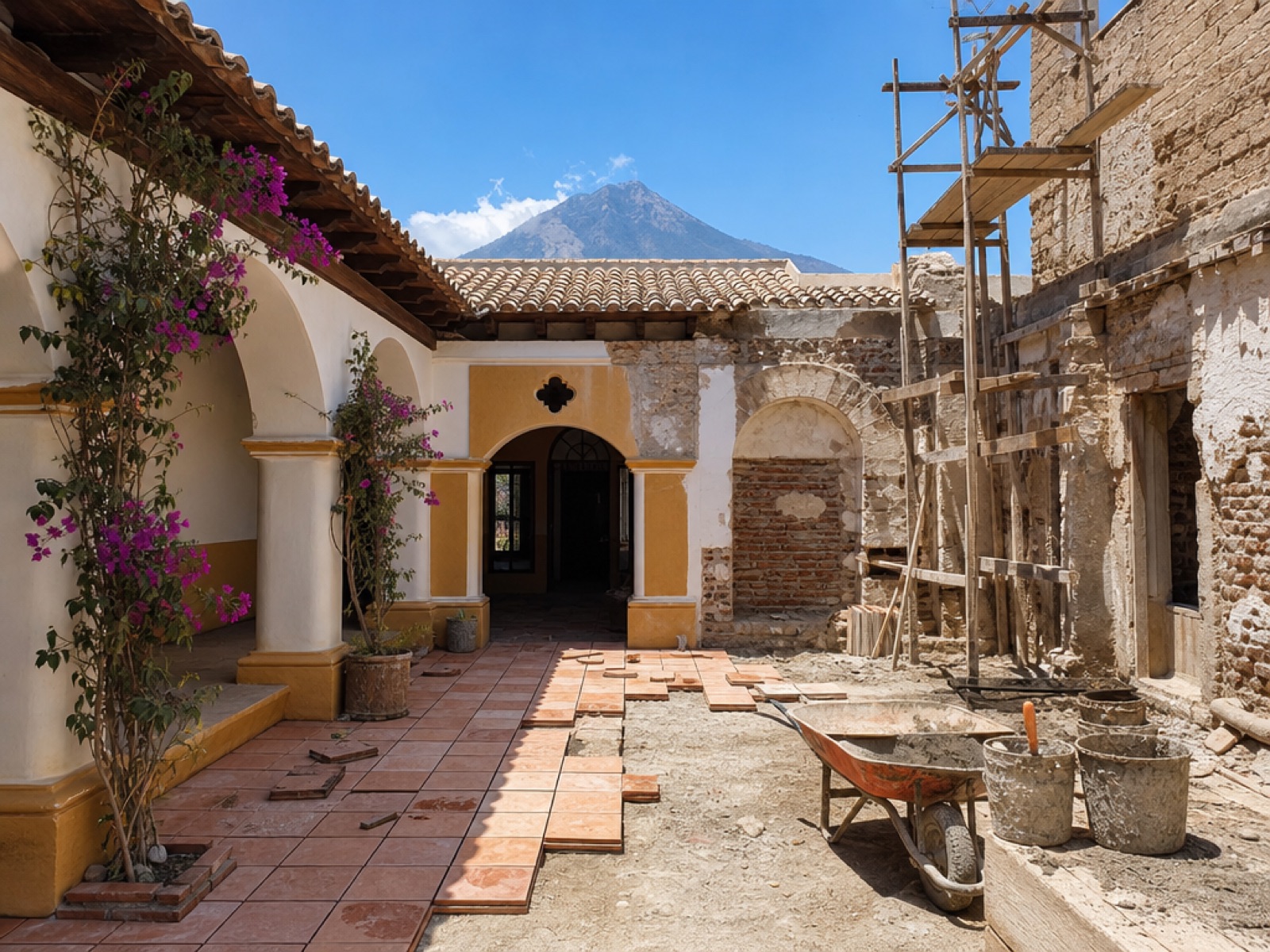
Renovating for Profit in Antigua Guatemala
Antigua Guatemala has one of the few real estate markets in Central America where an old, tired building can be worth considerably more after a careful renovation than the money you put into it. That gap — between what a neglected property sells for and what a restored one sells or rents for — is the entire business case for renovating for profit here. It is not a get-rich-quick market. But for a buyer who understands the numbers, the colonial premium is real and repeatable.
This guide covers how the math works in Antigua: the exit routes, the costs, where profit comes from, the heritage rules, and the risks.
Why Renovation Projects Work in Antigua
Three conditions make Antigua unusually good for this kind of investment:
- Limited supply of restored homes. The UNESCO-protected historic core is a fixed footprint. You cannot build more colonial houses, so every well-restored property competes against a shrinking pool.
- A steady stream of undervalued stock. Long-held family homes, unfinished construction, and estates sold by heirs who live abroad regularly come to market below a restored equivalent’s value.
- Deep rental demand. Antigua draws tourists, students, remote workers, and long-stay visitors year-round, so a renovated property has a second income route if a sale runs late.
The premium is measurable. A restored colonial home inside the historic center typically sells for 40–80% more per square meter than a comparable unrestored property.
Three Ways to Exit a Project
Before you buy, decide how you intend to make your money. The renovation plan should follow the exit, not the other way around.
1. Fix and Flip (Resell)
You buy below market, renovate in 6–12 months, and sell to an owner-occupier or investor. Highest return per project, but you carry the full property cost while you work and depend on a buyer appearing on schedule.
2. Long-Term Rental
You renovate to a solid, durable standard and rent to expat families or professionals on 12-month leases. Lower headline return, far less management, and much more predictable.
3. Short-Term / Vacation Rental
You renovate for guests — good bathrooms, reliable internet, a photogenic courtyard — and rent nightly or weekly. The highest gross income, but also the most operating effort and regulation exposure.
What Renovation Actually Costs in Antigua
These are realistic 2026 ranges for a mid-size colonial property, quoted in US dollars. Actual numbers depend on the condition of the structure and how much of the work you keep original.
| Scope of Work | Typical Cost Range | Notes |
|---|---|---|
| Cosmetic refresh (paint, fixtures, lighting) | $8,000 – $20,000 | Fastest to complete, smallest margin |
| Kitchen and bathrooms only | $15,000 – $35,000 | Highest return per dollar spent |
| Structural repair + seismic retrofitting | $20,000 – $60,000 | Non-negotiable on old adobe or unreinforced walls |
| Full restoration (roof, floors, plumbing, electric) | $50,000 – $150,000+ | Where the real profit and the real risk both live |
| Permits, architect, engineer, supervision | 10–15% of construction cost | Always budget this separately |
Labor and local materials — stone, terracotta tile, lime plaster, wood — cost far less than in the US or Europe. Imported finishes (high-efficiency windows, heat pumps, specialty fixtures) do not, and they are the line item that most often blows a budget.
Where the Profit Really Comes From
Buy Below Market, Not Below Cost
The profit is made on the purchase, not the renovation. If you pay full retail for the property, no amount of good renovation will create a margin. Look for properties that are priced for their condition, not their potential.
Fix Layout and Light
The cheapest high-impact changes are almost always spatial. Opening a dark room onto the courtyard, exposing original beams, or reorienting a kitchen toward the garden can transform how a buyer values the home for a fraction of a structural budget.
The Courtyard Is the Asset
In Antigua, the central courtyard is what buyers photograph, remember, and pay for. A courtyard that is clean, planted, and usable year-round does more for your sale price than almost any interior upgrade.
Don’t Over-Improve
Adding something the neighborhood cannot support — a pool on a street where nobody has one, or finishes far above the local standard — is money you will not get back. Renovate to the top of the local market, not above it.
The Rules That Change Your Math
- Heritage and conservation permits. Any property inside the protected zone needs conservation-board approval before you alter facades, rooflines, or visible structures. This adds time and is not optional.
- Seismic retrofitting. Antigua sits in an active seismic zone. Any serious structural work should include an engineer’s assessment — see our guide to earthquake safety for property in Antigua Guatemala.
- Water rights and cisterns. Confirm the water source and storage before you design. Water independence is a selling point, not an afterthought.
- Closing costs and taxes. Transfer taxes, notary fees, and agent commissions on both the purchase and the sale all reduce your net margin. Budget them at the start.
A Realistic Timeline and Budget
A well-run project in Antigua generally looks like this:
- Months 1–2: Search, due diligence, structural inspection, and purchase.
- Months 3–4: Design, permits, and contractor selection.
- Months 5–10: Construction and restoration.
- Months 11–12: Finishing, staging, and either listing or furnishing for rental.
Plan for a contingency of 15–20% on top of your construction budget. In a market with 300-year-old buildings, surprises are the norm, not the exception.
The Risks That Kill a Flip
- Permit delays that push your carrying costs past your margin.
- Structural surprises discovered only after walls are opened.
- Over-improvement that prices your property above what the local market will pay.
- Slow liquidity. Antigua is a small market. A property can take months to sell, so keep the cash flow to hold it.
- Managing from abroad without local support. This is the single most common reason projects stall.
Is It Worth It?
For a buyer with realistic numbers, local support, and patience, renovating for profit in Antigua is one of the more defensible strategies in the region. The colonial premium is structural, not speculative — it comes from a supply that cannot increase. But the profit lives in the purchase price and the budget discipline, not in the romance of an old house. Go in with numbers, not a feeling.
How to Get Started
If you are considering a renovation project in Antigua, the first step is finding the right property at the right price. Browse our current listings to see what is available, and read our guide to home renovation costs in Antigua Guatemala to build a realistic budget before you make an offer.
Luna and the team at Antigua Real Estate Development work with buyers and investors every week on exactly this kind of project — sourcing undervalued properties, coordinating architects and contractors, and keeping the numbers honest. If you want a second opinion on whether a property is worth renovating, reach out and we will tell you straight.
Interested in Antigua Real Estate?
Whether you're looking to buy, rent, or invest — I can help. Free consultation, no pressure.