
Semana Santa in Antigua Guatemala: A Resident's Guide
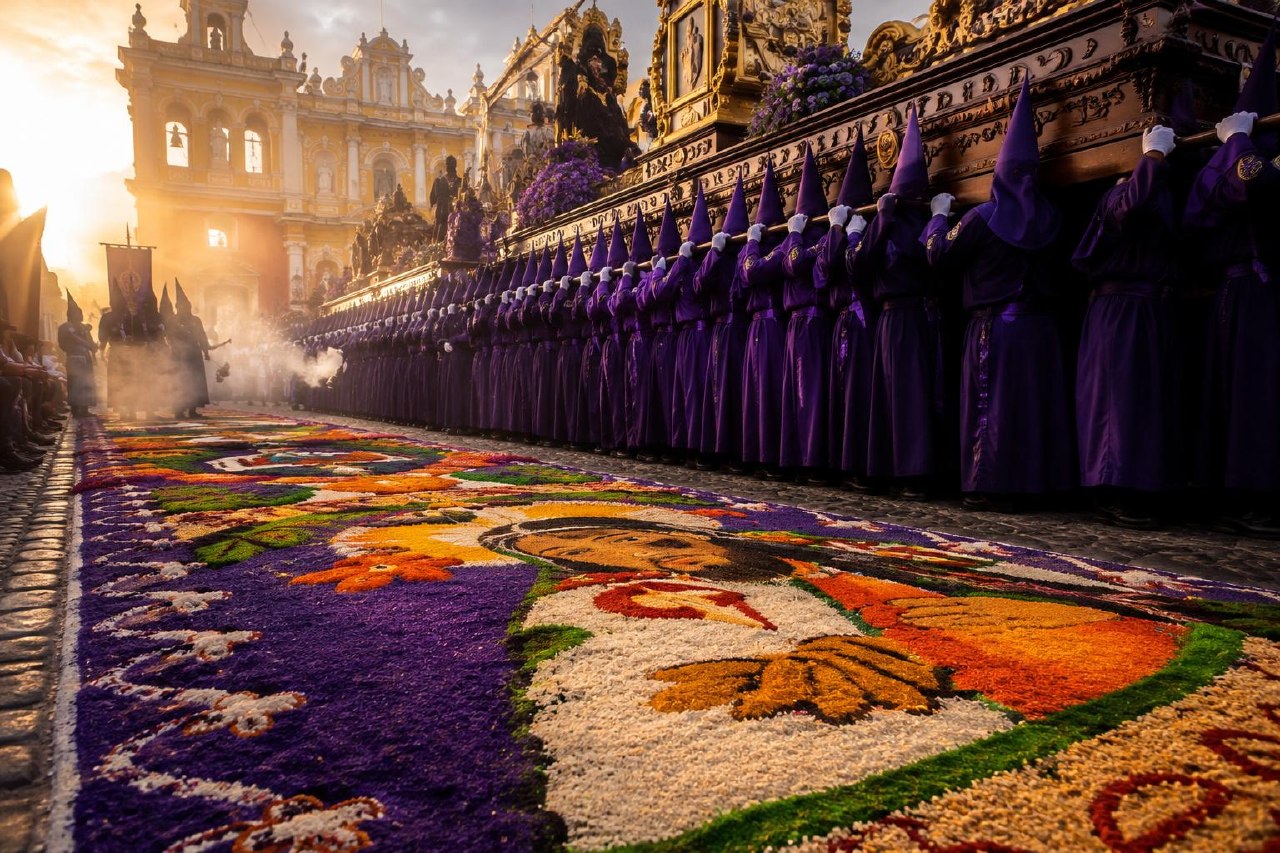
Semana Santa in Antigua Guatemala is not just a holiday. It is the most spectacular Easter celebration in the Western Hemisphere, drawing over a million visitors to a city of roughly 45,000 permanent residents. If you live here, or you are planning to, understanding what Semana Santa means for daily life is essential.
What Makes Antigua’s Celebration Unique
Antigua’s Holy Week dates back to the early 1500s and has earned UNESCO recognition as part of the city’s Intangible Cultural Heritage. The entire colonial center transforms into an open-air cathedral. Alfombras, intricate carpets made from colored sawdust, flowers, fruits, and pine needles, line the cobblestone streets. Families spend hours creating these temporary masterpieces, only to have them trampled by massive processions carrying ornate floats bearing statues of Christ and the Virgin Mary.
The scale is hard to grasp until you see it. Each procession float, called an anda, can weigh over 3,000 kilograms and requires 80 to 100 carriers called cucuruchos. The processions wind through the city for up to 12 hours, passing over the freshly laid alfombras while incense fills the air and brass bands play somber marches.
When It All Happens
Semana Santa runs from Palm Sunday through Easter Sunday, which typically falls in late March or early April. In 2027, the main celebration week begins on March 28. However, the preparations start weeks earlier. You will see alfombras being planned, supplies being stockpiled, and the city’s infrastructure quietly shifting into festival mode.
The most intense days are Thursday and Friday. On Good Friday, processions begin before dawn and continue well past midnight. The largest procession, Jesus de la Merced, departs from La Merced church and takes nearly 12 hours to complete its route.
What Changes for Residents
If you live in Antigua’s historic center, Semana Santa affects your daily routine in practical ways.
Street closures. Most streets in the colonial core close to vehicle traffic starting Wednesday or Thursday of Holy Week. If you have a car, park it outside the center by Tuesday evening or you may not move it until the following Monday.
Noise levels. Fireworks, brass bands, and crowds are constant from Thursday through Sunday. If you are a light sleeper, earplugs are a worthwhile investment.
Grocery shopping. Stock up by Tuesday. Many small shops close for the week, and the markets become overwhelmed with tourists. Supermarkets like La Bodegona remain open but have long lines.
Garbage and services. Trash collection is suspended during peak days. Water pressure may drop in some areas due to the sheer number of visitors using the infrastructure.
Transportation. Tuk-tuks and Ubers cannot enter the closed zones. Walking is the only option within the center. If you need to get to Guatemala City airport, leave early and expect detours.
The Upside: Why Residents Love It
Despite the disruptions, most long-term residents in Antigua develop a deep appreciation for Semana Santa. The city becomes genuinely magical. The alfombras are breathtaking works of ephemeral art. The community spirit is palpable, with neighbors working side by side to create the carpets. And there is something profoundly moving about watching a centuries-old tradition unfold on the same streets you walk every day.
Many expats and foreign residents describe Semana Santa as the moment Antigua truly felt like home. It is the week when you stop being an outsider and become part of something much larger.
Real Estate Implications
For property owners, Semana Santa drives significant rental demand. Short-term vacation rentals in the historic center can command three to five times their normal nightly rate during Holy Week. Property management companies in Antigua typically handle the logistics, but absentee owners should confirm their bookings and pricing well in advance.
If you are considering buying property in Antigua specifically for rental income, the Semana Santa demand cycle is an important factor. The same properties that attract long-term renters year-round see massive short-term demand during this single week. Combined with other festivals and the steady growth of tourism, Antigua’s rental market continues to strengthen.
Neighborhoods like the Historic Center, La Merced area, and San Felipe are particularly sought after during Semana Santa because of their proximity to the main procession routes. Properties with rooftop terraces in these areas offer front-row views of the processions without battling the street-level crowds.
Tips for First-Time Semana Santa Residents
- Plan your week in advance. Know which days you need to stay home and which days you can move freely.
- Respect the tradition. Do not walk on unfinished alfombras. Do not stand in the path of a procession. Ask before photographing people creating carpets.
- Embrace the chaos. The city will be loud, crowded, and messy. That is part of the experience.
- Invite friends. Semana Santa is better shared. Many residents host viewing parties from their balconies or rooftops.
- Explore beyond the center. Smaller processions happen in surrounding towns like Ciudad Vieja, San Juan del Obispo, and Jocotenango. These offer a more intimate experience with fewer crowds.
Living the Tradition
Semana Santa is one of the defining experiences of living in Antigua Guatemala. It is loud, beautiful, inconvenient, and unforgettable. For those who call this city home, it becomes the week you plan your year around.
Interested in finding a home in Antigua Guatemala with a front-row seat to Semana Santa? Contact Luna Jerney at Antigua Real Estate Development to explore properties along the main procession routes.