
Septic Tanks in Antigua Guatemala: What to Know
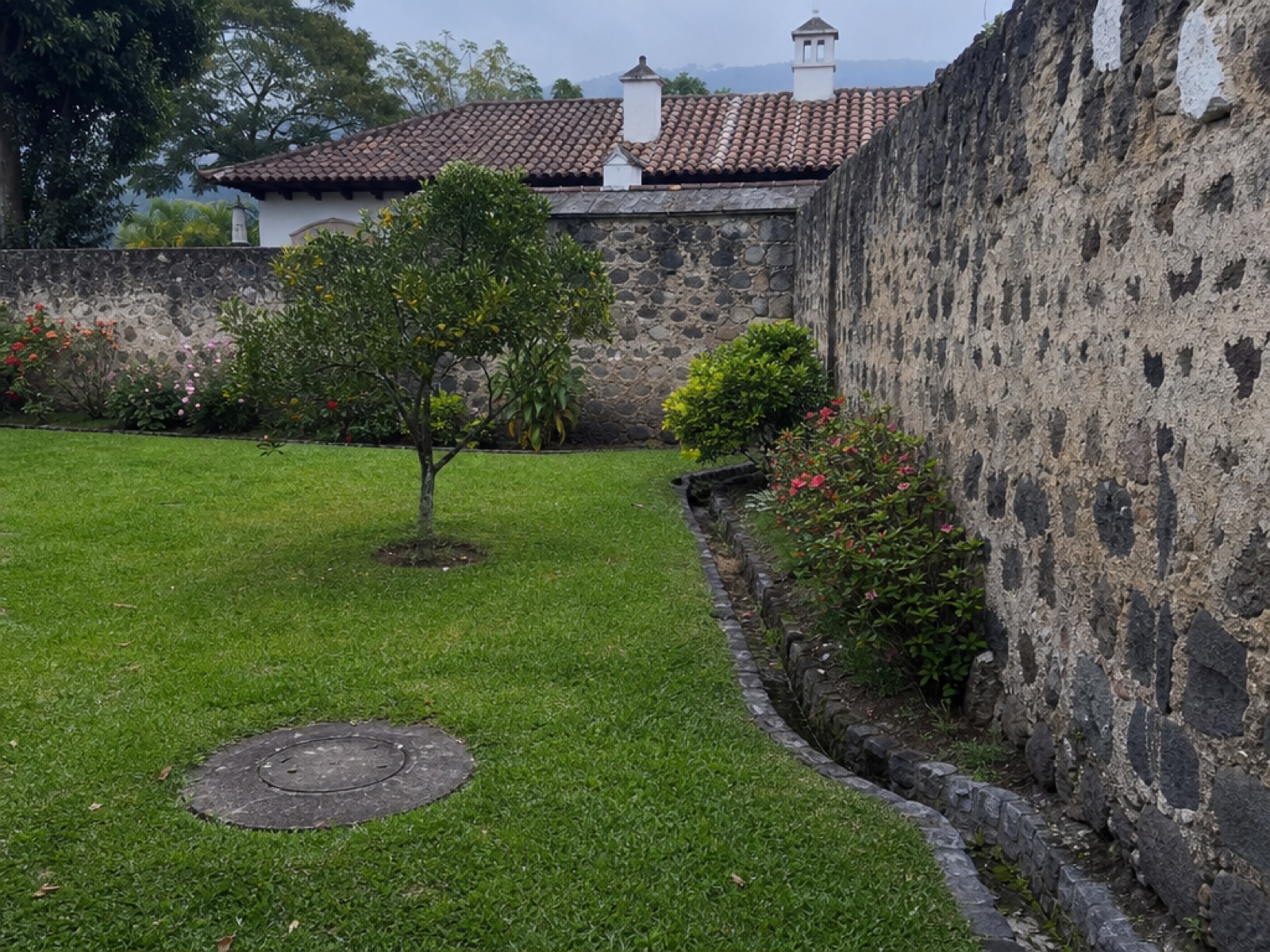
Septic Tanks in Antigua Guatemala: What to Know
Homes in Antigua’s historic center and the barrios around it usually connect to the municipal sewer, while properties in the villages, on the coffee slopes and along the hillside roads outside the city almost always run on a septic tank, known here as a fosa séptica. If you are buying outside the ring road, the condition of that tank matters as much as the condition of the roof.
This guide covers how to find out which system a property uses, what installation, pumping and repair cost in 2026, and the checks that save buyers from a very expensive surprise.
Does every home in Antigua Guatemala have a septic tank?
No. Antigua has two parallel systems, and which one a property uses depends almost entirely on its location.
Inside the city, most streets have municipal drainage (the drenaje municipal), managed by the municipality and EMPAGUA. Older colonial houses connect to it through internal patios and sometimes share lines with neighbours, which is why a smoke or dye test is worth doing before you remodel a kitchen or bathroom.
Outside the city, including San Juan del Obispo, San Pedro Las Huertas, El Hato, Jocotenango’s outer lanes and the finca roads, municipal lines often do not reach, and homes use an on-site tank. Standard construction is a two or three chamber concrete fosa séptica with a drain field or absorption pit (pozo de absorción). Some newer builds use a prefabricated biodigester tank, which is faster to install and needs less space.
When you view a property, ask the seller directly: is there a municipal connection, and if not, where is the tank and when was it last pumped? A vague answer is a signal to book a professional inspection before you commit.
How much does a septic system cost in Antigua Guatemala?
Prices below are typical 2026 contractor rates for the Antigua area, quoted in quetzales with a rough dollar equivalent at around Q7.7 per dollar. Confirm current numbers with two local contractors before you budget, since excavation costs swing with rock and slope.
- New fosa séptica, 2 to 3 bedrooms: Q8,000 to Q18,000 ($1,040 to $2,340), including excavation, block chambers and the drain field.
- Prefabricated biodigester tank: Q6,000 to Q14,000 ($780 to $1,820), plus installation and plumbing tie-in.
- Pump-out (limpieza por deslave): Q700 to Q1,500 ($90 to $195) for a vacuum truck, depending on tank size, access and distance from the city.
- Repair or rebuild of a collapsed tank: Q6,000 to Q25,000 ($780 to $3,250), the wide range reflects whether the drain field is still usable.
- New connection to an existing municipal line: Q3,000 to Q12,000 ($390 to $1,560), mostly trenching and permits.
A property that has never had a tank, or one that has failed, is a negotiating item rather than a deal breaker. Get a written quote from the contractor you would actually hire and use it in the offer.
What are the warning signs of a failing septic system?
Septic failure in Guatemala usually announces itself slowly, and most of the clues are visible in a 20 minute walk around the property.
- Smell. A persistent sewage odour in a bathroom, patio drain or garden corner means gas is escaping, usually from a full tank, a cracked lid or a blocked vent.
- Slow drains. Every drain in the house draining slowly at once points to the tank or the main line, not to a single fixture.
- Standing water or a soggy patch. A permanently damp area over the tank or drain field, especially in the dry season, means the absorption side is saturated.
- Backflow after heavy rain. If the garden floods into the house in September, the tank was likely sized for a smaller household or the drain field is too shallow.
- Toilet gurgling when you run a tap. Classic sign of a venting or line blockage.
- Cracks or a sunken lid. Old concrete lids in a colonial patio can crack under foot, which is both a safety risk and a way for rainwater to flood the tank.
A septic tank that is pumped on schedule and not abused should last 20 to 30 years. Most failures here trace back to never pumping, pouring grease and bleach down the drain, or adding a bathroom for a guest house without resizing the tank.
What rules apply to septic systems and wastewater?
Guatemala regulates wastewater at the municipal level, and the practical rules matter most when you build, remodel or rent out a property.
Any new construction or significant remodel needs municipal approval, and the plan must show where wastewater goes. In the heritage zone, work also passes through the national heritage authority, so do not assume you can hide a tank or a new drain line in a protected patio without a permit.
Greywater from kitchens, laundry and showers should not be dumped into the street, into a neighbouring lot or into a stream. In practice, kitchens and cafés need a grease trap (trampa de grasa), and that requirement follows the size of the operation. If you plan to run a short-term rental or a small restaurant, size the system for the people you expect, not the people living there.
Rules and fees change, and enforcement varies between Antigua and the surrounding municipalities. For anything beyond a like-for-like replacement, confirm the current requirement in writing with the municipal office before work starts.
What should you check before buying a property with a septic tank?
Do these checks during the due diligence window, not after.
- Confirm the system type. Municipal connection, concrete tank, or biodigester, and where each element sits on the lot.
- Find the paper trail. Pumping invoices, contractor receipts and the original construction plan tell you how the property has actually been maintained.
- Get the tank inspected. A local contractor can open the lid, check levels and confirm the drain field is working. Budget Q500 to Q1,500 for the visit.
- Test every drain. Run taps, flush toilets, and watch the patio drains while the water runs.
- Check the legal access. If the tank needs pumping, the vacuum truck must be able to reach it. Narrow colonial patios are a real constraint.
- Ask about future capacity. Adding a bathroom, a casita or a rental unit usually means a bigger tank.
If you are buying a property you will rent out, add a maintenance line to the annual budget. A single emergency pump-out on a holiday weekend costs more than a scheduled one.
Who handles this for you?
Buying outside the city does not mean buying blind. We walk properties in the Antigua area with local contractors, flag the wastewater and drainage questions early, and put you in touch with people who have done the work on other lots nearby. If you would like a shortlist of homes for sale in the Antigua area where the water and wastewater systems are documented, tell us what you are looking for and we will send options. Our property services team can also arrange the inspection and the contractor quotes, and you can contact us here to talk through your plans before you make an offer.
Interested in Antigua Real Estate?
Whether you're looking to buy, rent, or invest. I can help. Free consultation, no pressure.