
Short-Term Rental Regulations in Antigua Guatemala: What Property Investors Need to Know in 2026
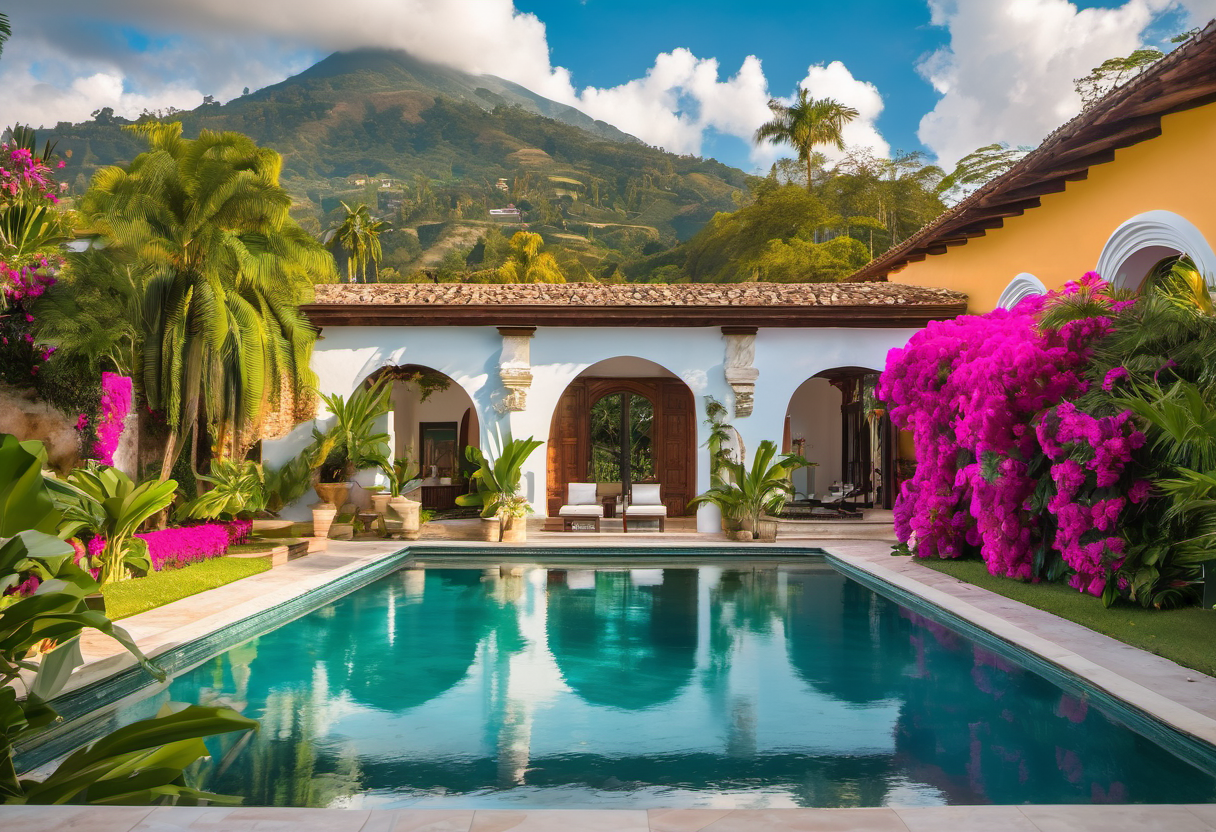
Antigua Guatemala’s short-term rental market has grown fast over the last five years. More investors are buying colonial homes and condos specifically to list them on Airbnb and Vrbo. And with that growth has come a wave of new regulations — some formal, some informal, some municipal, some from homeowner associations.
If you’re considering buying a rental property in Antigua Guatemala, here is what you need to know about the short-term rental landscape in 2026.
Is There a City-Wide Ban on Short-Term Rentals?
No — not yet. Unlike Mexico City (which restricted Airbnb to 60% of annual bookings per host) or Barcelona (which effectively banned tourist apartments), Antigua Guatemala has no city-wide ban on short-term rentals in 2026.
However, the municipal government has been quietly collecting data. The Tourism Office now requires all short-term rental properties to register, and there is growing pressure from neighborhood associations to limit unregulated rentals in residential zones.
The key takeaway: the door is still open, but it’s closing slowly.
The Municipal Registration Requirement
As of early 2025, the Municipality of Antigua Guatemala began requiring all properties rented for periods under 30 days to register with the local tourism office. Here is what the process involves:
- Registration fee: Approximately Q500–Q1,000 ($65–$130) annually
- Property inspection: A basic safety check to confirm the property has fire extinguishers, adequate exits, and working smoke detectors
- Tax ID (NIT): You need a Guatemalan Tax ID to register. If you’re a foreigner, your notary or attorney can help obtain this
- Annual renewal: The registration must be renewed each year, including proof of updated insurance
Foreign owners who skip this registration risk fines — currently Q2,000–Q5,000 ($260–$650) — and potential suspension of booking platforms from listing the property.
The Hotel Tax (IVA Turístico)
Every short-term rental in Guatemala is subject to the 12% IVA (VAT) on the accommodation portion of the booking. Airbnb already collects and remits this automatically in most cases.
But there is a second layer: the tourist tax (Impuesto de Turismo Sostenible) of $5–$10 per guest per night applies to properties in high-tourism zones, including Antigua Guatemala. This tax must be declared quarterly through the SAT (Guatemala’s tax authority).
Most hosts build this into their nightly rate. If you’re comparing expected returns on a property, factor these taxes in — they reduce gross revenue by roughly 14–18% before operating costs.
HOA and Condominium Restrictions
This is the regulation most investors miss. While the municipal government has been slow to act, individual homeowner associations have been aggressive.
Many of Antigua’s new condo developments and gated communities have added clauses to their covenants that restrict or prohibit short-term rentals. Before buying any property in a condominium or planned community:
- Read the HOA bylaws — look for language about “commercial use,” “transient guests,” or “rentals under 30 days”
- Ask the developer or current owner — if they claim short-term rentals are allowed, get it in writing
- Check recent amendments — some HOAs passed restrictions after initial buyers purchased units
In neighborhoods like El Hato, Ciudad Vieja, and parts of Santa Catarina Barahona, several developments now ban rentals under 90 days. This is a growing trend for 2026–2027.
Colonial Property Regulations
If you’re buying a colonial-era home (anything built before 1900), there are additional restrictions that affect rental use:
- The Council for the Protection of Antigua Guatemala requires permits for any structural modification
- Noise ordinances are stricter in the historic center — guests who disturb neighbors can trigger fines against the owner
- Street parking restrictions limit how many guests can arrive by car, which affects larger group bookings
- Some colonial properties have shared water cisterns with neighbors, and high-turnover rentals can strain the supply
These rules don’t forbid short-term rentals, but they add compliance costs. Budget Q3,000–Q5,000 ($390–$650) per year for regulatory upkeep of a colonial rental property.
Neighborhood-Specific Rules
Not all of Antigua is regulated the same way. Here is the current landscape by area in 2026:
| Area | Short-Term Rental Status | Key Restriction |
|---|---|---|
| Central Historic Zone | Permitted with registration | Noise ordinance enforced after 10 PM |
| El Hato | Mostly restricted | HOAs enforce 90-day minimum leases |
| Santa Catarina Barahona | Limited | Zoning review required for new rentals |
| Ciudad Vieja | Permitted | No restrictions beyond municipal registration |
| San Miguel Dueñas | Permitted | Fewer HOA restrictions, growing market |
| Jocotenango | Permitted with registration | Some HOAs restricting under-30-day stays |
| 5a Avenida corridor | Permitted | Strict parking enforcement |
This table will likely change in the next 12–18 months. If you’re targeting a specific neighborhood, check with a local real estate attorney before closing.
What Changed in 2025–2026
The regulatory landscape has shifted more in the last 18 months than in the previous decade. Key changes:
- March 2025: Municipal registration requirement took effect
- October 2025: SAT began cross-referencing booking platform data against registered properties
- February 2026: Several El Hato developments enforced 90-day minimum lease clauses
- May 2026: Airbnb activated automatic IVA collection for Guatemala listings
- August 2026: Municipal government announced plans for a digital short-term rental registry (expected 2027)
The trend is clear: Antigua Guatemala is moving toward formal regulation, not prohibition. Investors who register early and comply with local rules will have a smoother path than those who wait.
How to Stay Compliant
Here is a practical checklist for operating a legal short-term rental in Antigua Guatemala:
- Register with the Municipal Tourism Office before listing on any platform
- Obtain your NIT (Tax ID) through a local attorney — budget Q1,500–Q2,500 ($195–$325)
- Set up your SAT tax declaration — quarterly filing for hotel tax
- Verify Airbnb’s IVA collection is active on your listing
- Get property insurance that covers short-term rental use (standard Guatemalan homeowner policies do not)
- Install safety equipment — fire extinguisher, smoke detector, first aid kit
- Draft a clear house rules document in Spanish and English addressing noise, parking, and guest limits
- Renew your registration annually — set a calendar reminder 60 days before expiry
The Bottom Line for Investors
Antigua Guatemala still offers strong short-term rental returns — occupancy rates for well-managed properties run 65–80% in high season with average daily rates of $120–$250 for a two-bedroom colonial apartment. But the days of unregulated, tax-free rentals are ending.
The investors who succeed in 2026 and beyond will be the ones who treat short-term rentals as a regulated business, not a passive side income. Register properly, pay your taxes, respect neighborhood rules, and the market will continue to reward you.
If you have questions about a specific property’s rental potential, our team at Antigua Real Estate Development can help you navigate the regulatory landscape before you buy. Browse our available properties or contact us for a consultation.
Prices and regulations verified September 2026. Regulations may change — consult a local attorney before making investment decisions.
Interested in Antigua Real Estate?
Whether you're looking to buy, rent, or invest — I can help. Free consultation, no pressure.