
Solar Energy for Antigua Guatemala Homes
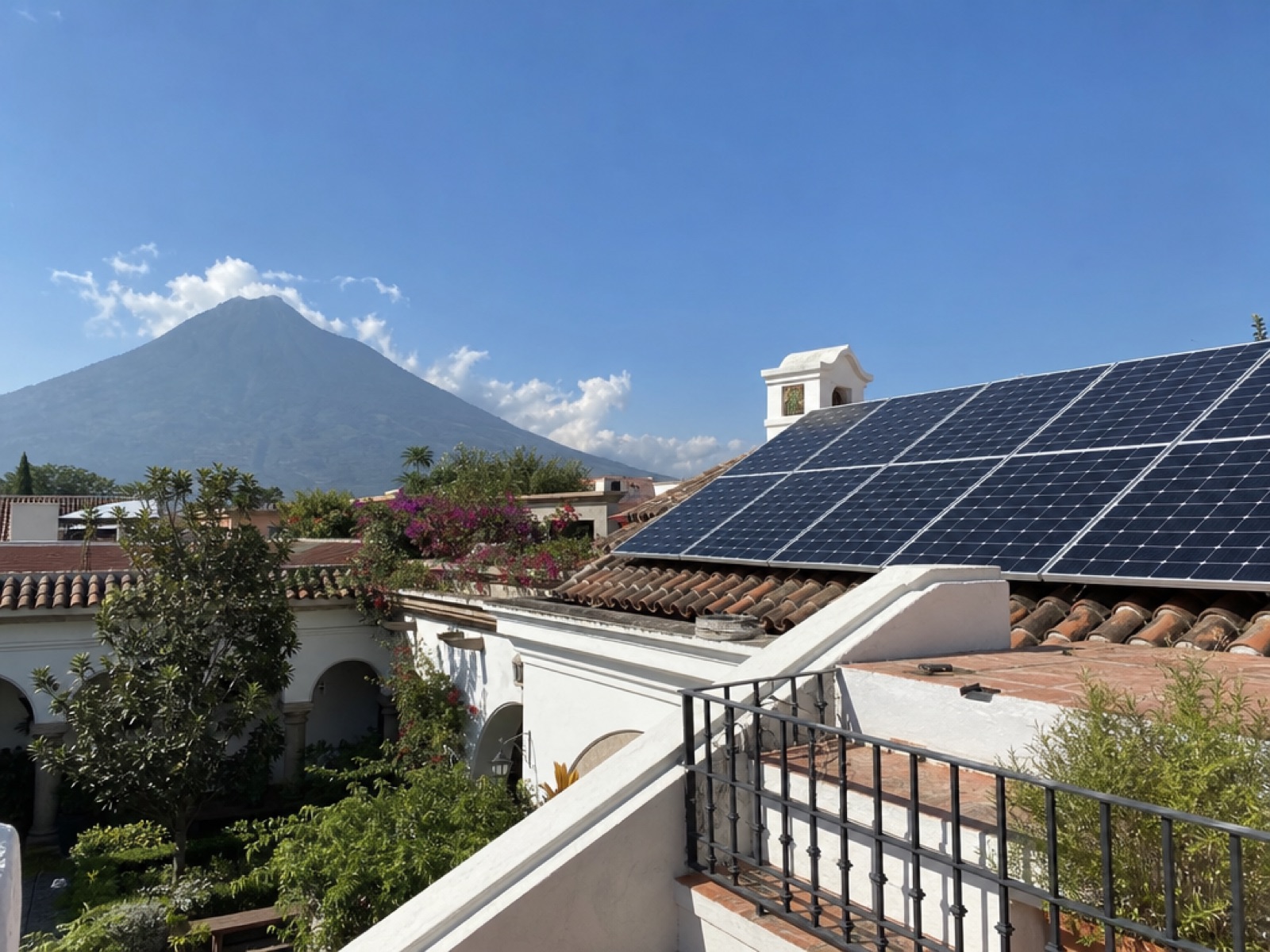
Solar Energy for Antigua Guatemala Homes
Solar energy pays for itself in Antigua Guatemala in roughly five to eight years, thanks to some of the strongest sunlight in Central America and electricity rates that keep climbing. For a homeowner or investor holding a property long term, a rooftop array is one of the few upgrades that lowers a real monthly bill instead of adding to it.
This guide breaks down what solar costs here in 2026, how net metering works, and what to check before anyone touches a colonial roof.
Is solar power worth it for a home in Antigua Guatemala?
Yes, for homes that use electricity every day and plan to stay put for five years or more. Antigua sits at about 1,500 meters of altitude with clear skies for most of the dry season, which means panels here produce more energy per installed watt than systems in cloudy coastal climates.
The math changes for a vacation home that sits empty half the year. If consumption is low, a smaller system of 3 kW or less covers the essentials without overbuilding.
The real value is twofold: you cut a recurring cost, and you insulate yourself from rate increases that have averaged above national inflation for the past decade.
How much sun does Antigua Guatemala get?
Antigua Guatemala receives around 5.2 to 5.8 peak sun hours per day on average, one of the highest figures in the region. The rainy season from May to October brings afternoon clouds, but mornings stay bright and production rarely drops below 70% of dry-season output.
That consistency is why installers here rarely oversize a system for cloudy-day buffers. A well-angled array on a north-facing roof performs close to its rated capacity year-round.
How much does a solar system cost in Antigua Guatemala?
Installed residential solar in Guatemala runs roughly $1.30 to $1.90 per watt as of 2026, including panels, inverter, mounting, wiring, and labor. The table below shows the common configurations.
| System size | Typical installed cost | What it covers | Best for |
|---|---|---|---|
| 3 kW | $4,000 to $5,700 | Lights, fridge, wifi, fans, TV | Small homes and casitas under 800 sq ft |
| 5 kW | $6,500 to $9,500 | Everything above plus water pump and laundry | A typical 2-3 bedroom home with no AC |
| 8 kW | $10,400 to $15,200 | Full household load plus pool pump | Larger homes and short-term rentals |
| 12 kW | $15,600 to $22,800 | High consumption with occasional AC | Luxury homes and boutique guesthouses |
Battery storage is a separate line item. A hybrid system with 10 kWh of lithium backup adds roughly $6,000 to $9,000, and most Antigua owners skip it unless they run a rental where guest comfort justifies the cost.
Prices vary by installer, roof complexity, and whether structural reinforcement is needed. Always get three quotes for the same specification.
How does net metering work in Guatemala?
Guatemala’s net metering framework, part of the renewable energy incentives under Decreto 52-2003, lets a grid-connected home export surplus electricity and receive a credit against future consumption. In practice, your two-way meter spins backward when the array overproduces, and you draw down that credit at night or during cloudy spells.
You still pay a fixed distribution charge every month, so a bill rarely hits zero. But many well-sized systems here cut the energy portion of the bill by 70% to 95%.
The catch is administrative. You need approval from your distributor before the system is energized, and the paperwork usually takes four to eight weeks. A licensed installer handles this as part of the project.
What is the payback period on solar in Antigua?
Most Antigua homeowners see a payback period of five to eight years, depending on system size and how much power they consume. A household paying Q1,800 to Q3,000 a month in electricity typically recovers its investment in six years.
Panels are warrantied for 25 years and inverters for 10 to 12, so the back half of a system’s life is essentially free electricity. At today’s rates, a 5 kW array can save the equivalent of $900 to $1,400 per year.
That return beats most fixed-income investments available to a foreign owner here, and it is not tied to currency swings the way a bank deposit is.
Does solar add resale value to an Antigua property?
Solar adds measurable but modest resale value, generally 2% to 4% of the property price for a well-documented system. The bigger driver is marketability: a listing that shows a Q400 monthly electricity bill stands out against neighbors paying three times that.
Keep the invoices, warranty cards, and distributor approval in the property file. A buyer’s due diligence will ask for them, and a system without paperwork is treated as unverified.
What should you check before installing solar?
First, the roof itself. Many colonial homes in Antigua carry traditional terracotta tile over century-old beams. Have a structural engineer confirm the frame can take the added load, especially in the UNESCO-listed historic center where rooftop modifications may need municipal approval.
Second, roof orientation and shading. A north-facing roof at a 15 to 25 degree tilt performs best here. Mature trees, water tanks, and neighboring walls can cut output dramatically, so check the sun path in the morning and again at midday.
Third, the electrical panel. Older homes often run undersized wiring that needs an upgrade before a modern inverter can be connected safely.
Fourth, ongoing maintenance. Dust, volcanic ash, and pollen accumulate on panels, so budget one or two cleanings a year. Skipping them can cut production by 10% or more.
How solar fits with backup power
Solar and backup power solve different problems, and the smartest setups combine them. Solar lowers your everyday bill during normal grid operation. A hybrid inverter paired with a battery keeps the lights and wifi on when the grid fails, which happens more often during the rainy season.
If your priority is comfort through outages rather than cutting monthly costs, a smaller array with battery storage covers both. If your priority is pure return on investment, a grid-tied system optimized for net metering delivers the faster payback.
For most owners, size the solar for daily consumption first, then add battery capacity only if the property runs short-term rentals or supports remote work where downtime has a real cost.
The bottom line for Antigua owners
Solar works in Antigua Guatemala because the sun is abundant, the rates are high, and the payback window is short. Treat it like any other capital improvement: get three quotes, verify the roof structure, confirm the net metering paperwork is handled, and size the system to your actual consumption rather than to a sales pitch.
Done right, a rooftop array turns one of your most annoying recurring costs into a fixed asset that pays you back for decades.
Ready to buy a home where solar makes sense, or want a property that already has a system installed? Browse our current listings, explore our property services, or talk to Luna about your goals and we will point you to properties where the numbers work.
Interested in Antigua Real Estate?
Whether you're looking to buy, rent, or invest. I can help. Free consultation, no pressure.