
Walking Tours of Antigua Guatemala: Exploring on Foot
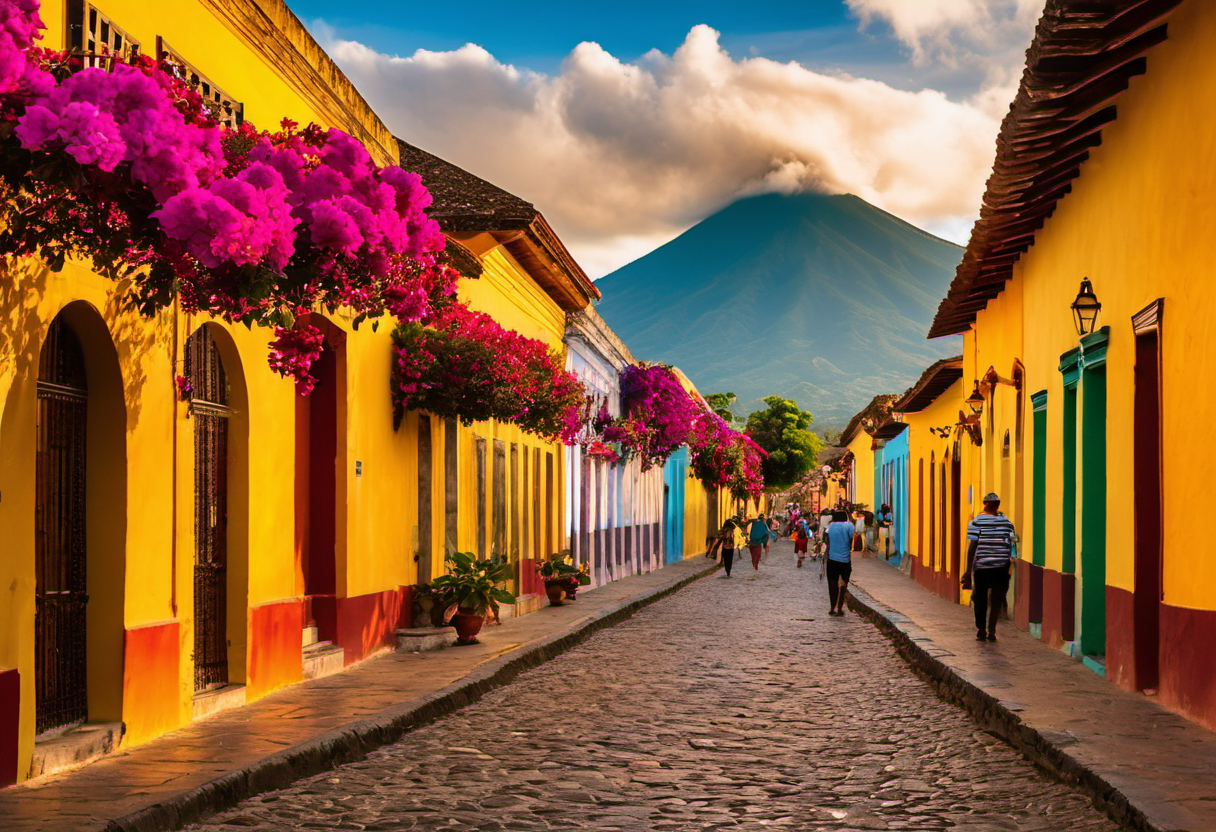
Antigua Guatemala is one of the most walkable cities in Central America. Its compact historic center, cobblestone streets, and dense concentration of colonial landmarks make it ideal for exploring on foot. Whether you are visiting for a week or settling in permanently, walking is the best way to understand the city’s layout, discover hidden corners, and connect with the local community.
Why Walking Is the Best Way to See Antigua
The historic center measures roughly 1.5 kilometers across. You can walk from one end to the other in about 20 minutes. Unlike larger cities where attractions are spread across distant neighborhoods, Antigua packs churches, ruins, museums, markets, restaurants, and parks into a tight grid of streets framed by three volcanoes.
Walking also reveals details that driving or riding in a tuk-tuk simply cannot. You notice the hand-painted tile numbers on doorways, the scent of fresh bread drifting from panaderías, the way morning light hits the Arco de Santa Catalina. These small moments are what make Antigua special.
The Classic Landmark Loop
Start at Parque Central, the social heart of the city. The fountain at the center is a popular meeting point, and the surrounding benches fill with locals and visitors throughout the day. On the north side, the Cathedral of San José stands partially restored, its baroque facade one of the most photographed structures in Guatemala.
Walk west on Calle del Arco toward the Arco de Santa Catalina, Antigua’s most iconic landmark. This yellow arch connects two sections of a former convent and frames a perfect view of Volcán de Agua on clear mornings. Continue south to La Merced, the bright yellow church with an ornate baroque facade. Climb the bell tower for a panoramic view of the city and surrounding volcanoes.
From La Merced, head east along Calle de los Pasos, following the route of Holy Week processions. You will pass several of the stations of the cross marked by small shrines embedded in the walls. End back at Parque Central. This loop takes about 90 minutes at a relaxed pace, longer if you stop for coffee or photos.
The Ruins Route
Antigua’s ruined churches and convents tell the story of the earthquakes that shaped the city. Start at the Convento de Santa Clara, where roofless arches frame the sky and tropical plants grow through the stone walls. Continue to the San José Cathedral ruins behind the main cathedral, where you can walk through the collapsed nave.
Head south to Las Capuchinas, one of the best-preserved convent ruins with an unusual circular tower that once housed individual cells for nuns. The acoustic design is remarkable, whispers carry across the stone floors. Finish at the Convento de Santo Domingo, now partly converted into a luxury hotel and museum complex. The ruins within the hotel grounds are free to visit and among the most extensive in the city.
The Market Walk
For a completely different experience, walk through the local markets early in the morning. Start at the Mercado de Artesanías on the south side of town, where vendors sell textiles, ceramics, and leather goods. Then head to the main municipal market, El Mercado, a sprawling indoor complex where local families shop for produce, meat, spices, and household goods.
The market is busiest on Friday and Saturday mornings. Try a plate of pupusas or a cup of atol de elote, a warm sweet corn drink that locals drink for breakfast. The sights and sounds of the market give you a completely different perspective on Antigua than the tourist-facing streets.
Residential Neighborhoods
Walking through the residential neighborhoods east and west of the center shows you what daily life looks like for Antigua’s long-term residents. The area around Calle del Hermano Pedro has colorful homes, small tiendas, and family-run comedores serving affordable almuerzos. The neighborhood near the San Felipe de Jesús area offers quieter streets with views of Volcán de Fuego.
These walks are especially valuable if you are considering buying or renting property in Antigua. Seeing the condition of streets, the proximity to shops and services, and the overall feel of a neighborhood is something no online listing can replicate. Luna Jerney at Antigua Real Estate Development often recommends that clients spend time walking through different areas before committing to a purchase.
Practical Tips for Walking in Antigua
Wear comfortable shoes with sturdy soles. Cobblestones are uneven and can be slippery when wet, especially during the rainy season from May through October. A light rain jacket is worth carrying year-round.
Start early. The best light for photography is between 6 and 8 AM, and the streets are quieter before tour groups arrive. By midday, the central areas get busy and the sun can be intense at 1,500 meters elevation.
Stay aware of your surroundings as you would in any city. Antigua is generally safe for walking, but keep valuables out of sight, avoid poorly lit streets after dark, and use common sense. The main tourist routes are well-patrolled and busy throughout the day.
Carry small bills and coins. Many street vendors, small shops, and comedores do not accept credit cards or large notes. Having Q20 and Q50 bills makes purchases easier and shows respect for local businesses.
Exploring Beyond the Center
Once you have walked the main routes, consider longer walks to surrounding areas. The hike to Cerro de la Cruz, the hillside viewpoint north of the city, takes about 30 minutes and offers the best panoramic view of Antigua with all three volcanoes in the background. The walk to San Pedro Las Huertas, a quiet village just east of Antigua, follows a tree-lined road and takes about 40 minutes.
For more adventurous walkers, the trail to Hobbitenango, an eco-park on the hillside above the city, offers dramatic views and a unique Lord of the Rings themed setting. The walk up is steep but rewarding.
Walking Antigua is not just a way to get from point A to point B. It is how you build a relationship with the city. Every street has a story, every corner reveals something new. Take your time, look up at the volcanoes, and let the city show you what makes people fall in love with it.
Ready to make Antigua your home? Contact Luna Jerney at Antigua Real Estate Development to explore properties in the neighborhoods you discover on your walks.