
Event Venue Investment in Antigua Guatemala
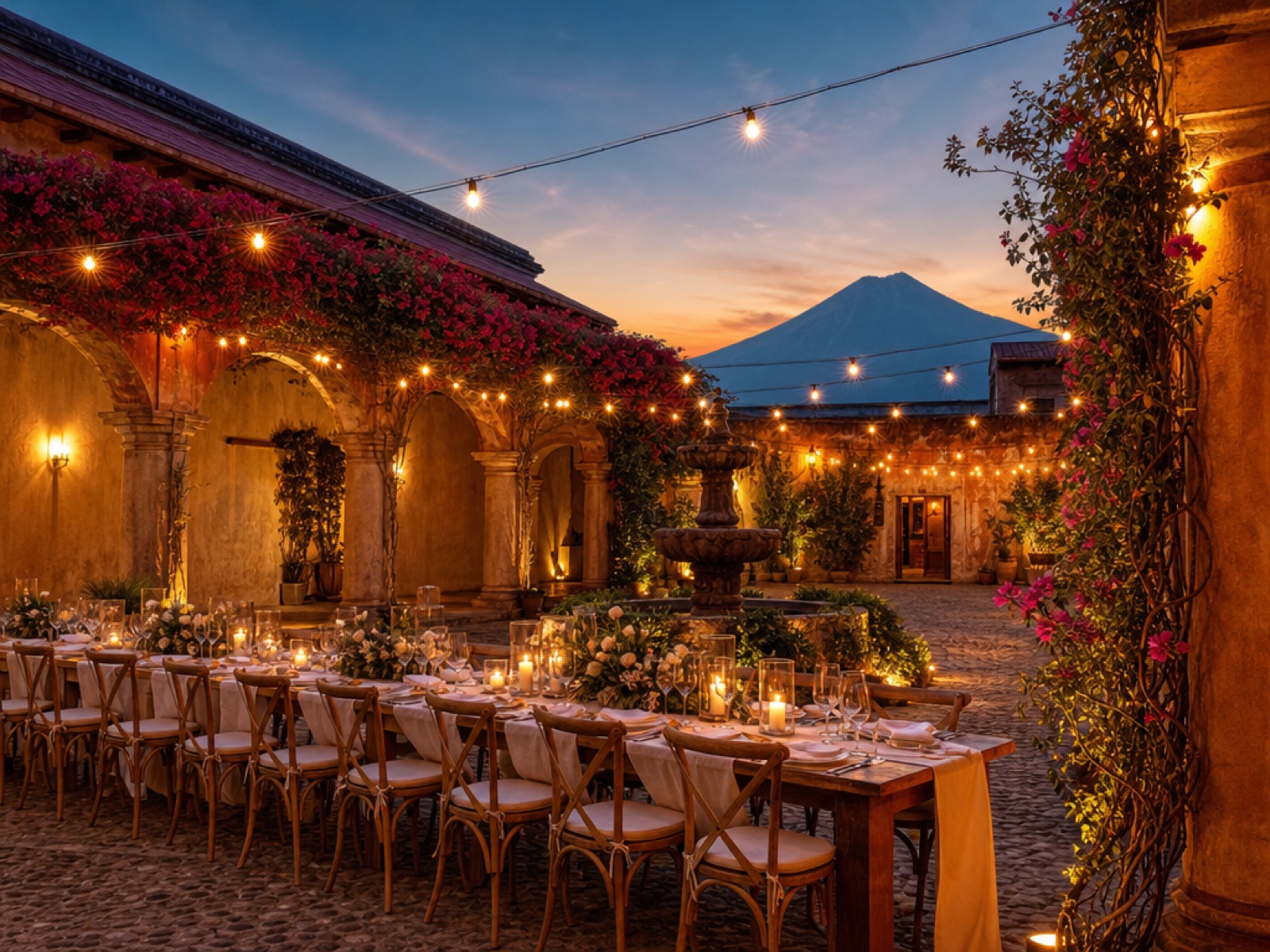
Antigua Guatemala has become one of Central America’s most sought-after destinations for weddings and private events. Colonial architecture, cobblestone streets, volcano backdrops and year-round mild weather draw couples and event planners from the United States, Canada and Europe — and that demand has created a distinct investment opportunity for property owners.
A restored colonial home with a private courtyard is not only a home in Antigua. It is a venue. And venues are rented by the day at rates a standard long-term lease cannot match.
This guide explains how event-venue investing works in Antigua Guatemala, what a property needs to qualify, and what the numbers realistically look like in 2026.
Why Antigua Guatemala Works as a Wedding Destination
Antigua’s appeal for events rests on things that cannot be replicated elsewhere at the same price point.
It is a UNESCO World Heritage city, which gives it instant visual credibility for photographs — the single most important product a wedding delivers. Couples planning destination weddings increasingly prioritize “the backdrop” over almost anything else, and Antigua offers three volcanoes, colonial ruins, bougainvillea-covered walls and candlelit courtyards within a ten-minute walk of each other.
It is also accessible. Guatemala City’s international airport is roughly 45 minutes away, with direct flights from most major US hubs. For a destination wedding, that is a short trip — far shorter than flying to Europe or Southeast Asia.
And it is affordable by destination-wedding standards. A full wedding weekend that would cost $80,000 to $150,000 in Tuscany or Napa can often be delivered in Antigua for $25,000 to $60,000, venue included. That gap is exactly what makes a well-positioned local venue attractive to both couples and the property owner.
What a Colonial Venue Actually Earns
Event venues in Antigua generally charge a rental fee separate from catering, usually structured as a full-day buyout. As 2026 guidance:
- Intimate courtyards (up to 60 guests): $1,200 to $2,500 per event day
- Mid-size colonial properties (60 to 150 guests): $2,500 to $5,000 per event day
- Large or premium properties with volcano views and on-site accommodations: $5,000 to $10,000 or more per event day
A courtyard property that books 30 to 50 events per year — realistic for a well-marketed venue with an established reputation — generates roughly $60,000 to $150,000 in gross venue-rental revenue annually, before catering, bar, accommodation or coordination add-ons.
That is a very different return profile from long-term leasing. A comparable colonial home in Antigua rents long-term for Q8,000 to Q15,000 per month, or roughly $12,000 to $24,000 per year. Event-venue use can multiply gross revenue several times over, because you are selling a single scarce asset — the courtyard — repeatedly at a premium.
The trade-off is operational intensity. Events require coordination, staffing, insurance and marketing. This is a business, not passive income.
What Makes a Property Work as a Venue
Not every colonial home converts into a successful venue. The properties that perform share certain traits.
Courtyard Capacity and Layout
The courtyard is the venue. A property with an enclosed, flat, hardscaped courtyard of at least 80 to 120 square meters can host a seated dinner for 60 to 100 guests. Covered arcades (corredores) along the edges matter enormously — they provide rain backup during the May-to-October green season, which is otherwise lost event revenue.
A property where the courtyard is small, irregular, or divided by interior walls is difficult to stage and will limit your bookings.
Location and Access
Event guests arrive at night, often by shuttle or van. A property with vehicle access to the door, or at least a practical drop-off point within a short walk, is far easier to operate than one tucked deep in a pedestrian-only alley. Proximity to hotels also matters, since most wedding guests do not stay on-site.
Properties in or near the historic center — around the central plaza, La Merced, or the 5a Avenida corridor — command the highest venue fees.
Infrastructure That Handles Load
Events put sudden, heavy demands on a building. Three things determine whether a courtyard can host 100 people comfortably: sufficient electrical capacity for lighting and sound, adequate bathroom count (or space to install rental restrooms), and a service area where a caterer can set up a professional kitchen.
A property missing these can still be converted, but budget the upgrades into your purchase price. Electrical work and bathroom additions in a protected colonial building require permits and can be expensive.
The Legal and Operating Side
Operating a commercial event venue in Antigua means registering as a business, complying with municipal permits, and respecting the city’s rules on amplified sound and event hours. Antigua enforces noise limits, and events in residential zones typically must end by a set hour. Getting written clarity from the municipality before you buy — not after — is essential.
You will also want event liability insurance. Guatemala’s property insurance market has improved, but venue-specific coverage should be arranged deliberately. For more on the broader ownership picture, see our guide to property insurance in Guatemala.
If you are a foreign buyer, you can own and operate a business in Guatemala, but working with a local notary, accountant and attorney to structure ownership correctly will save you significant time. Our overview of the closing process covers the mechanics.
The Hybrid Model Most Owners Use
The strongest-performing properties in Antigua do not choose between being a home, a rental, and a venue. They combine all three.
A colonial property can operate as a boutique hotel or vacation rental during high season (November to April), host weddings and corporate events on selected weekends, and switch to long-term or extended-stay rental during the quietest months. This is the same strategy used by successful boutique hotel investors — and the event component is often the highest-margin slice.
Event clients also become accommodation clients. A wedding that books the venue frequently books every room on the property for the weekend, which is where the real revenue concentrates.
Is a Venue Property Right for You?
Event-venue investing in Antigua Guatemala rewards owners who are willing to run a business rather than simply hold an asset. If you want a hands-off investment, a long-term rental is a better fit. If you want to actively operate — or hire a manager to do so — an event-ready colonial property can outperform almost any other use of the same square meters.
The key is buying the right property from the start. Courtyard size, access, infrastructure and location determine your ceiling, and no amount of marketing overcomes a courtyard that is too small or a building that cannot handle 100 guests.
Thinking about buying a colonial property with venue potential in Antigua Guatemala? Browse our current listings to see courtyards, colonial homes and event-ready properties, or contact Luna Jerney for a candid assessment of what a specific property could realistically earn as a venue.
Interested in Antigua Real Estate?
Whether you're looking to buy, rent, or invest — I can help. Free consultation, no pressure.