
Lighting in Antigua Guatemala Colonial Homes
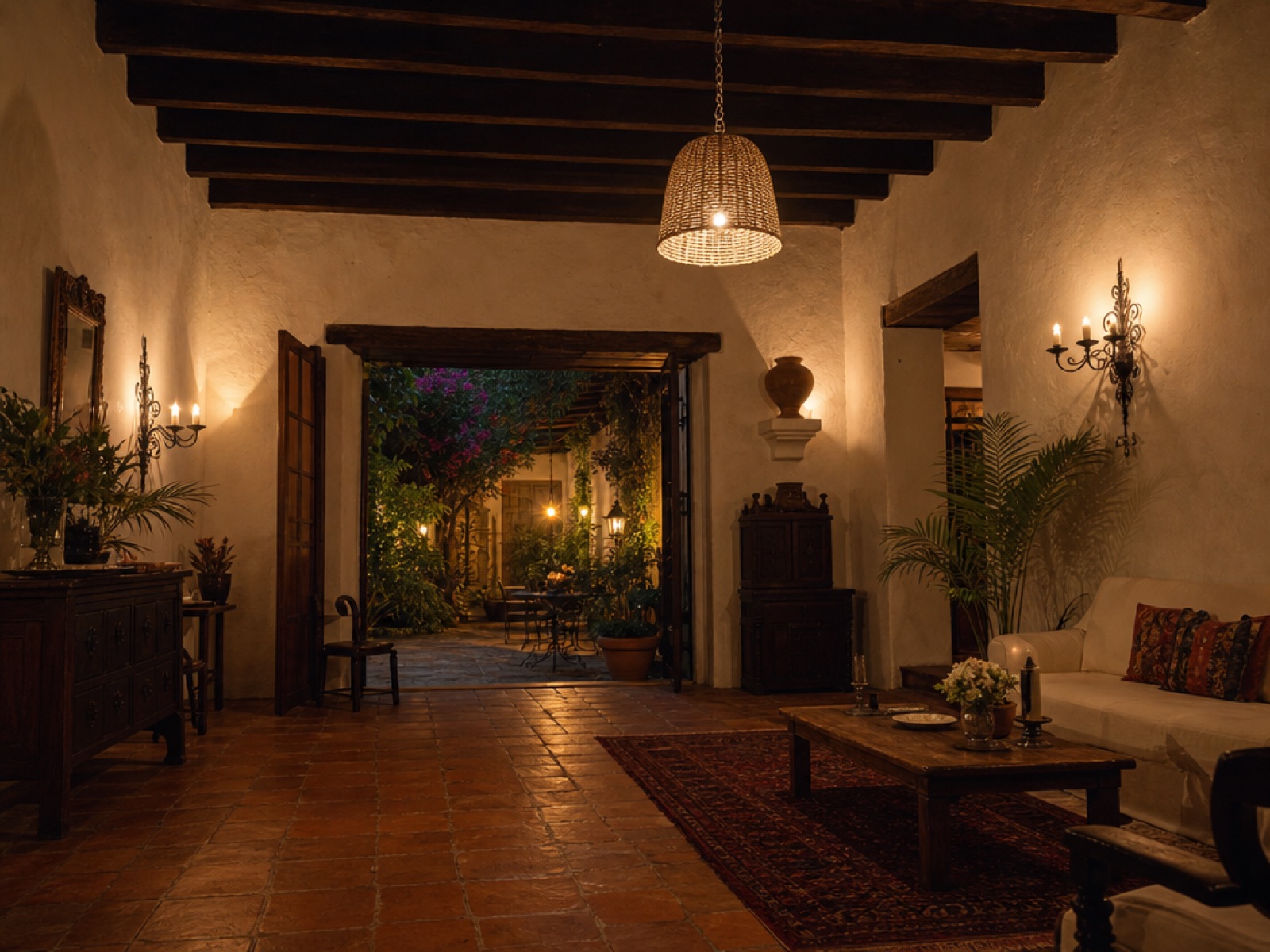
A colonial home in Antigua Guatemala is darker inside than its photographs suggest. Walls 40 to 80 centimetres thick, windows that open onto a courtyard instead of the street, and ceilings three to four metres high swallow daylight, so most rooms lean on lamps by mid-afternoon. Lighting one properly is cheap: a good LED bulb runs Q25 to Q80 ($3 to $10), a basic ceiling fixture Q150 to Q450 ($20 to $60), and a courtyard of six to eight weatherproof fixtures installed about Q6,000 to Q20,000 ($780 to $2,600). The constraint is the historic centre, where a fixture visible from the street sits under heritage review while everything facing the courtyard you can change freely.
How much does lighting cost in Antigua Guatemala?
Late 2026 quotes from electrical suppliers and licensed electricians in Antigua, for standard fittings and ordinary wiring. A house with old aluminium wiring may need part of the circuit re-run before a new fitting goes in.
| Work | Typical cost (Q) | Typical cost (USD) |
|---|---|---|
| LED bulb, 9 to 12 W, good quality | Q25 – Q80 | $3 – $10 |
| Basic ceiling fixture (plafón) | Q150 – Q450 | $20 – $60 |
| Interior wall sconce or aplique | Q250 – Q900 | $35 – $115 |
| Pendant or imported designer fixture | Q600 – Q3,500 | $80 – $455 |
| Recessed spot, supplied and installed | Q250 – Q600 | $35 – $80 |
| New light point and wiring run by an electrician | Q350 – Q900 | $45 – $115 |
| Exterior weatherproof lantern | Q350 – Q1,400 | $45 – $180 |
| Motion sensor security light | Q400 – Q1,500 | $50 – $195 |
| Courtyard scheme, 6 to 8 fixtures installed | Q6,000 – Q20,000 | $780 – $2,600 |
Fixtures alone for a 120 m² house, about 20 light points with nothing exotic, run Q12,000 to Q35,000 ($1,560 to $4,550). Wiring surprises owners more than lamps: a partial rewire to add points and grounds often costs more than every fixture combined, so budget it first.
Why are colonial homes in Antigua so dark inside?
The houses were built before electric light and for a climate. Thick adobe and bahareque walls hold the day’s heat out and have no cavity for cable. Windows stayed small and set high, for privacy and to keep street noise outside. The courtyard, not the rooms, was the bright part of the plan: light source, cooling and social space in one.
An unrestored house usually has one bare bulb per room, hung from a three metre ceiling, lighting the floor and nothing else. Layering fixes that, not brightness.
How do you light a colonial home without changing its character?
Think in layers rather than one central light: a low pendant overhead, wall sconces at 1.7 to 1.8 metres, a lamp beside the chairs, and one accent aimed at a wall or a beam ceiling. Three weak sources read better than one strong one, and they keep the shadows that make a thick-walled room feel like itself. Keep the fittings plain, wrought iron, wood, woven palm, aged brass, and skip chrome and glossy modern pendants.
- Warm temperature, always. Lamps around 2,700 K read like candlelight on old plaster. Bulbs sold as “daylight”, 5,000 K and up, turn a colonial room into an office and make ochre look grey.
- Uplight the beams. A concealed strip or a few spots washing the vigas warms the room and hides a ceiling you cannot reach.
- Use dimmers. With a three metre ceiling, control matters more than wattage.
- Do not chase the walls. Cable normally runs in surface conduit up to the ceiling and down, which is repaintable and reversible. Cutting channels into a 60 centimetre adobe wall is neither.
What lighting can you change on a heritage facade?
Inside the protected historic centre, a fixture visible from the street falls inside heritage review, and the practical rule is to reproduce what is already there: a wrought-iron bracket lantern beside the door, warm bulb, modest size, dark finish.
Changing a facade needs a municipal licence with an opinion from CNPAG, the national heritage council, and the applications refused are the ones that stop looking colonial. Facade floodlights washing a whole wall, cold-white floods aimed at the street and modern spots along a cornice are the usual casualties. A small, warm motion sensor light is generally accepted. Courtyard, rear and interior lighting sits outside permit scope.
What about courtyards, azoteas and gardens?
The courtyard is where lighting earns its money, because it is the part people use at night. Two wall lanterns at head height on opposite walls, a few low spots in the planting and one light on the fountain cover a space up to 40 m², for Q6,000 to Q20,000 ($780 to $2,600) installed. Treat it as security too: a lit patio removes the dark corners that make a wall climbable.
On the azotea, use weatherproof fittings and light the head of the stairs, the step people miss. For garden paths and far corners, solar bollards at Q150 to Q600 each avoid running cable across a patio at all. Outdoors here faces a wet season from May to October, so buy sealed units and check the gaskets in November.
Lighting through power cuts and the rainy season
Afternoon storms from May to October turn the house dark earlier than new owners expect. If the property has an inverter or battery backup, put two or three lamps on that circuit rather than ceiling lights, because a warm LED lamp draws a fraction of the load. Rechargeable LED lamps in the bedrooms cover the rest. Our guide to power outage backup solutions in Guatemala covers inverter sizing.
What should you check before buying a house with old wiring?
Add five minutes of lighting inspection to any showing:
- Count the light points. A three bedroom colonial home with six points is a rewire in waiting, so ask how many new points the panel can take.
- Check the grounds. Two-wire circuits without an earth are common, and an ungrounded exterior fixture is a shock risk in the rain.
- Ask about aluminium. Aluminium wiring is older, more brittle at the connections, and the usual reason a new fitting cannot simply replace an old one.
- Notice what is missing. No lights in the courtyard or on the azotea means the exterior was never wired.
- Inspect the exterior fittings. Cracked gaskets and rusted lanterns mean water has already been getting in.
The bottom line
Lighting is the cheapest way to change how a colonial house in Antigua feels, and the easiest thing to overspend on. Put the money into layers, warm bulbs and dimmers, settle any facade fixture with heritage before buying, and start with the courtyard, because that is the room you will sit in after dark.
Planning a purchase or a renovation in Antigua Guatemala? Browse our available properties, see our services for buyers and owners or talk to Luna. For the wider budget picture, read our guides to renovation costs in Antigua Guatemala and windows and doors in colonial homes.
Interested in Antigua Real Estate?
Whether you're looking to buy, rent, or invest. I can help. Free consultation, no pressure.