
Windows and Doors in Antigua Colonial Homes
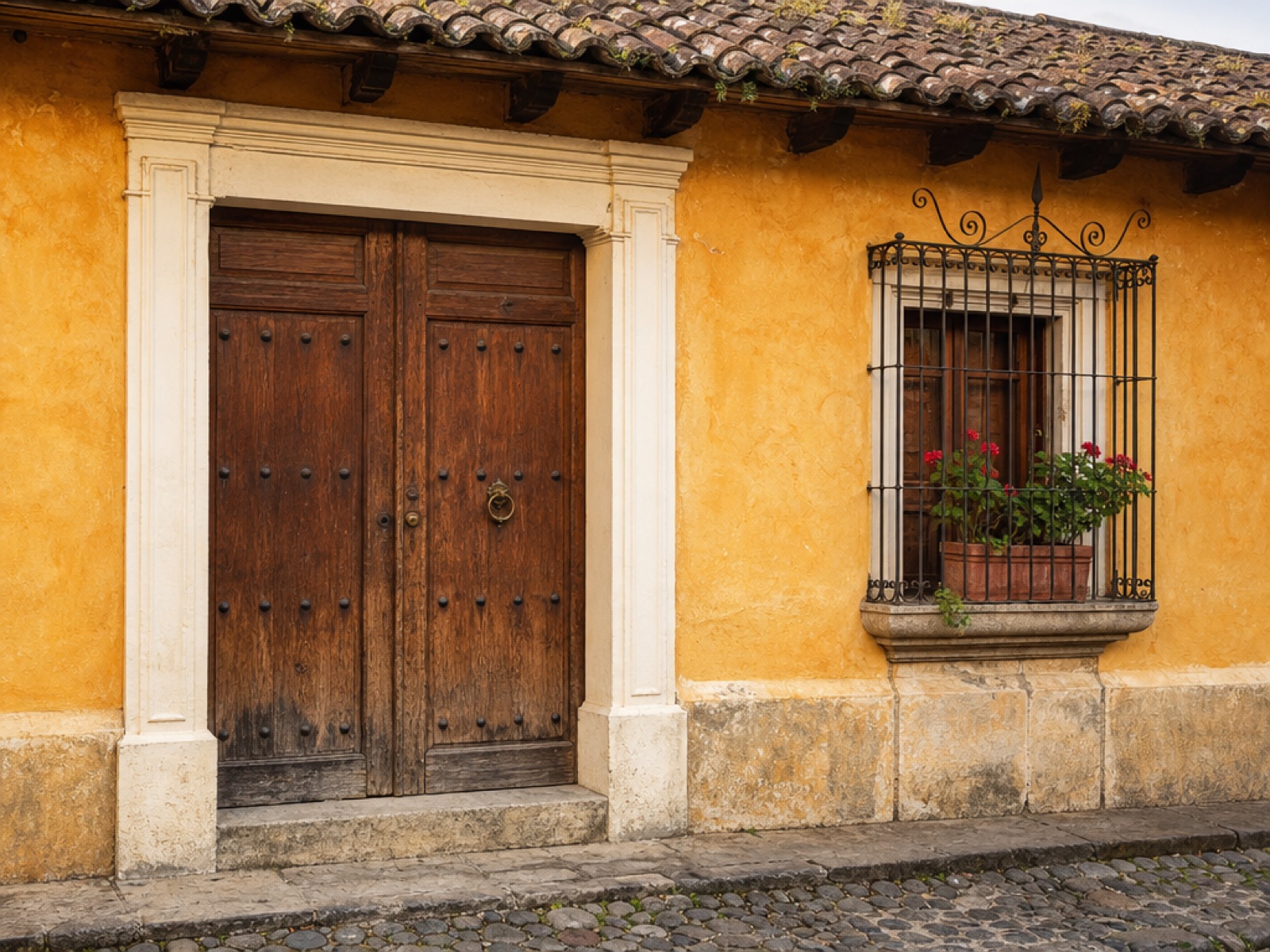
In an Antigua Guatemala colonial home the windows and doors are part of the building’s heritage, so the usual advice to replace them does not apply. A carpentry repair to one wooden window typically costs Q400 to Q1,200 ($50 to $155), a new made-to-measure wooden window Q1,500 to Q4,000 ($195 to $520), and a solid hardwood exterior door Q2,500 to Q9,000 ($325 to $1,170). In the protected historic centre, anything visible from the street also has to keep its colonial profile, which makes approval the first question and price the second.
What do windows and doors cost in Antigua Guatemala?
These are quotes from Antigua carpentry and ironwork workshops in late 2026 for standard residential sizes. Large double doors, hardwoods such as caoba and imported hardware push the number up, so get three quotes first.
| Work | Typical cost (Q) | Typical cost (USD) |
|---|---|---|
| Repair a wooden window, frame, glass and hardware | Q400 – Q1,200 | $50 – $155 |
| New made-to-measure wooden window | Q1,500 – Q4,000 | $195 – $520 |
| New exterior hardwood door | Q2,500 – Q9,000 | $325 – $1,170 |
| New interior wooden door | Q1,200 – Q3,000 | $155 – $390 |
| Iron window grille (reja) | Q700 – Q2,500 | $90 – $325 |
| Aluminum window, courtyard or outside the centre | Q1,200 – Q3,500 | $155 – $455 |
| Mosquito screens, one room | Q300 – Q900 | $40 – $115 |
Replacing every opening in a house, say eight windows and three exterior doors in wood, usually lands between Q20,000 and Q60,000 ($2,600 to $7,800), because rebuilding frames costs far more than patching them.
Can you change the windows and doors of a heritage home?
Antigua’s historic centre is protected under Decreto 60-69 and reviewed by the Consejo Nacional para la Protección de Antigua Guatemala, known as CNPAG. The rules divide four ways:
- Street-facing facades are the protected part. Openings, proportions, materials and colours the public sees have to stay colonial. A wooden replica with the same profile is usually approved without drama.
- Courtyard and rear openings are easier. Where a change is not visible from the street there is far more room to modernise, and this is where most owners add aluminium or larger glass.
- Aluminium or PVC on a street facade is the change most likely to be refused. It is also the fastest way to lose a month of your build, so do not order windows before the permit.
- Repair is the least regulated option and usually the cheapest. Restoring an original frame with traditional materials rarely needs more than a municipal nod.
If you are buying in the centre, ask what facade work is already approved and keep the paperwork, because unpermitted changes surface at resale. Our guide to Antigua’s UNESCO heritage property rules covers the wider framework.
Wood or aluminum, which one should you choose?
Wood is the default in the historic centre. It matches the architecture, keeps resale value, and can be repaired in place, a swollen leaf is planed and re-hung. It needs repainting every two to four years and termite treatment, and costs more than aluminium up front.
Aluminium is cheaper, never warps, needs no paint and seals tighter against insects and draughts. It also reads as modern on a colonial facade, is the option the heritage office questions most, and is replaced rather than repaired when it bends. It suits a courtyard, a rear extension, or a home outside the protected centre.
Many owners keep the original frames and change only the glass and hardware. The frame is the heritage piece.
What goes wrong with colonial windows and doors?
- Swelling in the rainy season. Wood takes on moisture from May to October, so a door that closed in April drags by July. Planing and re-hanging solves it.
- Termites and rot. Frames, sills and the bottom of door leaves are the first places termites reach. Look for soft wood, small holes and fine dust.
- Glass and putty. Original single panes sit in putty that dries and cracks, so they rattle and leak air.
- Painted shut. A long-empty house often has windows painted to the frame, and being unable to open them is a fire and escape issue.
- Rusting ironwork. Hinges, handles and rejas corrode in the wet season and seize.
How do you keep them working?
Five habits carry most of the maintenance:
- Open and close every window and door once a month.
- Oil hinges, bolts and latches twice a year.
- Re-putty or reseal cracked panes before the rains.
- Repaint exterior wood every two to four years and treat for termites on the same cycle. Our pest control guide covers what to watch for.
- Keep water off sills and thresholds, that is where rot starts.
Do you need screens and security grilles?
Yes to both, for practical reasons. Windows stay open for airflow most of the year, so mosquito screens matter from May to October, and guests notice their absence in a rental. Rejas, the iron grilles over the openings, are the standard security measure and let you keep a window open at night. Two cautions: keep one bedroom window openable from inside in an emergency, and check that grilles can be released with a key from the inside rather than welded shut.
What should you check before you buy?
- Open and close every door and window in the house.
- Look at the top and bottom of each frame, and at the sill, for rot, termites and old repairs.
- Check whether the glass is original and the putty intact.
- Test the rejas and the locks, and ask which key opens what.
- Count the missing screens if you plan to rent the house out.
- Ask which doors and windows are original, because replacing them is the expensive scenario, not repairing them.
- Visit in the rainy season if you can, that is when swollen frames show themselves.
Where can you get the work done?
Carpinterías in Antigua, Jocotenango and Ciudad Vieja build and repair wooden windows and doors, and several work with the heritage office regularly. Herrerías handle rejas, hinges and ironwork, and aluminium workshops, mostly in Guatemala City, install modern systems. Insist on a written quote naming the wood species, the glass, the hardware and the finish. A custom door or window takes two to six weeks, and the dry season is the better time for exterior work.
The bottom line
Windows and doors are where a colonial house shows its age first, and where the cheapest decision is often the wrong one. Repair what is original, match it when it must be replaced, and settle the permit before ordering anything that faces the street.
Planning a purchase or a renovation in Antigua Guatemala? Browse our current listings, see our services for buyers and owners, or talk to Luna about what to fix first. For the wider cost picture, see our guides to renovation costs in Antigua Guatemala and roof maintenance and repair.
Interested in Antigua Real Estate?
Whether you're looking to buy, rent, or invest. I can help. Free consultation, no pressure.