
Painting Your Colonial Home in Antigua Guatemala
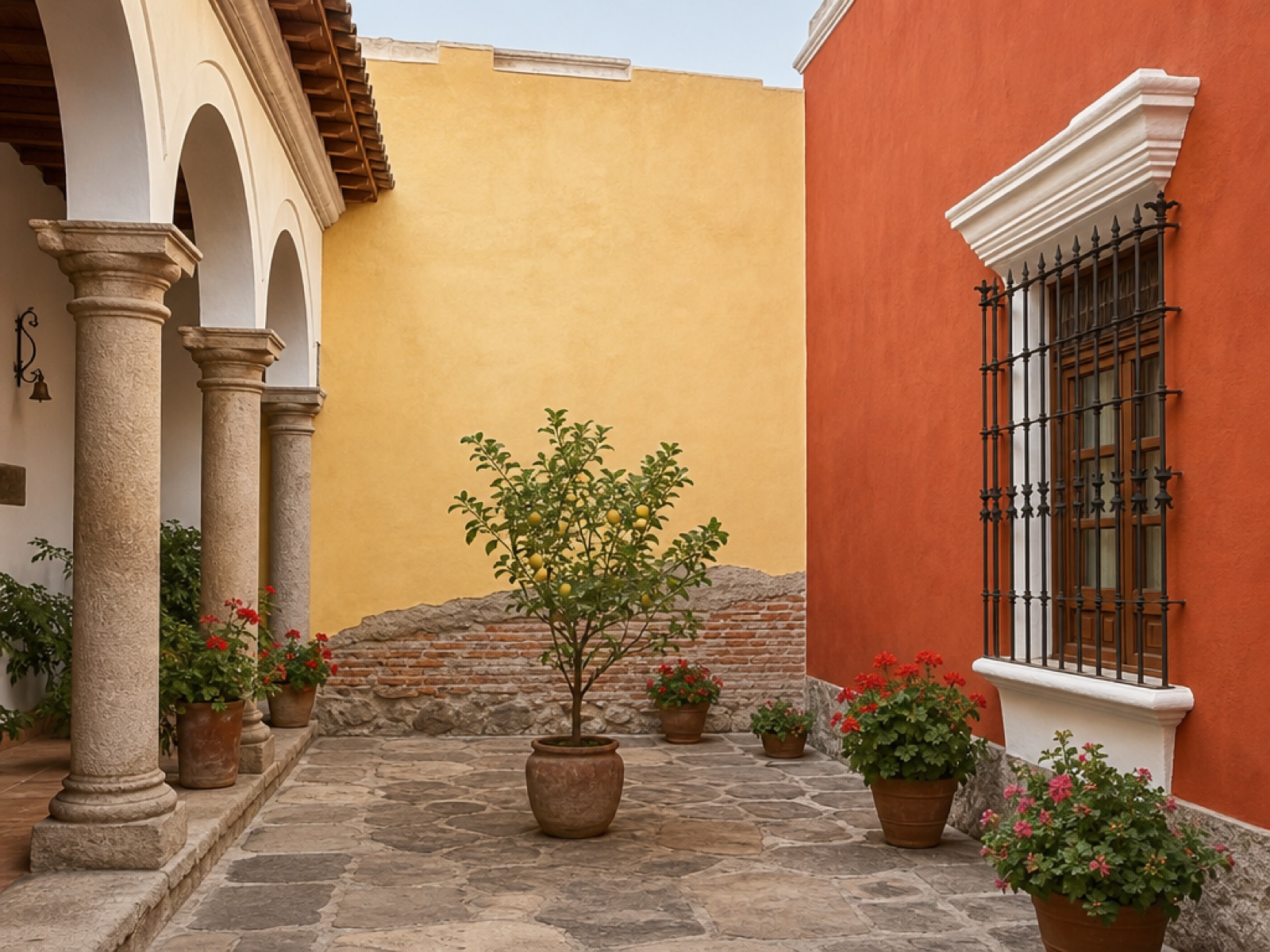
Repainting the inside of a colonial house in Antigua Guatemala costs Q9,000 to Q22,000 ($1,200 to $2,900) for a house of about 120 square metres in 2026. An exterior repaint of the same house, with the preparation these walls actually need, runs Q16,000 to Q40,000 ($2,100 to $5,200). Paint is the cheapest way to change how a colonial house feels, and it is also the most common way owners quietly damage one: the wrong coating on an old lime wall traps moisture and pushes the damp into the plaster behind it.
How much does painting a colonial home cost in Antigua Guatemala?
| Paint work | Typical cost |
|---|---|
| Local-brand interior acrylic, per gallon | Q200 to Q350 ($26 to $46) |
| Interior repaint in acrylic, supplied and applied | Q45 to Q90 per m² ($6 to $12) |
| Interior repaint in lime paint (cal) | Q70 to Q140 per m² ($9 to $18) |
| Exterior repaint on stucco, supplied and applied | Q60 to Q130 per m² ($8 to $17) |
| Lime wash (encalado) of a courtyard wall | Q35 to Q80 per m² ($5 to $10) |
| Repello repair and patching before paint | Q180 to Q400 per m² ($23 to $52) |
| Stripping cement paint off a lime wall | Q120 to Q250 per m² ($16 to $33) |
| Whole interior, about 120 m² | Q9,000 to Q22,000 ($1,200 to $2,900) |
| Whole exterior and street facade, about 120 m² | Q16,000 to Q40,000 ($2,100 to $5,200) |
Prices are supply and labour, checked with local paint suppliers and painting crews in October 2026. Imported brands cost two to three times a local gallon, and on a lime wall they are rarely the better buy. Preparation usually accounts for half the exterior bill, and skipping it is the fastest way to repaint the same wall in three years. Renovation budgets sit these numbers inside a larger picture, which we break down in renovation costs in Antigua Guatemala.
Why does paint fail so fast in Antigua?
Because a colonial wall is a sponge, not a sealed panel. Walls here are 40 to 80 centimetres of adobe, brick or stone with a lime plaster skin, and water moves through that mass all year. In the wet season, May to October, the wall takes on moisture; in the dry months it dries outwards. Paint that cannot let vapour through blocks the second half of that cycle.
The visible result is blistering, flaking, chalky powder on the surface and the white salt bloom called salitre at the base of walls. It looks like a paint problem and it is a moisture problem wearing a paint costume. Our guide to humidity and damp in Antigua homes covers the diagnosis and the draining fixes that have to happen before anyone opens a tin.
Lime paint, acrylic or cement paint: which one belongs on an old wall?
Lime paint (cal) is what these walls were built for. It is breathable, mildly antiseptic, cheap, and it fails gracefully by powdering rather than trapping water. It needs recoating more often, which is why crews push acrylic.
Acrylic is a reasonable choice on modern cement render, on interior partition walls added in a later renovation, and in wet rooms where a washable surface matters. It is a poor choice directly on old lime plaster.
Cement paint, sometimes sold as pintura de cemento, is the trap. It is hard, cheap and waterproof, and on a heritage wall it holds moisture in until the plaster behind it lets go. Removing it later costs Q120 to Q250 per square metre, more than the paint saved. If a wall has been sealed this way, the fix is stripping, not another coat on top.
What colours are allowed on a colonial facade?
In the heritage zone, changing the colour of a street-facing facade needs municipal permission with an opinion from the heritage authority, and the same applies to window style, door design and roof material. The rule bites on the street side; courtyard and rear walls are far more flexible. Our UNESCO heritage property guide sets out the permit path in full.
The traditional palette is warm and grounded: ochre, pale yellow, terracotta, deep red, off-white trim, with stronger greens and blues kept for doors and window frames. The least regulated and least expensive option is repainting the colour that is already there.
Two practical rules. Test on the actual wall, not on a colour card, because lime plaster shifts a colour. And look at the sample in daylight, dry: a tone that reads soft in the paint shop can turn hard on a wall that gets six hours of sun.
What colours work inside a colonial house?
Rooms off a courtyard get light from one side, through a door and a window, so they are darker than they look on a plan. Saturated colours absorb what little light arrives. Off-whites, pale ochres and soft greys bounce it back and make a small room live bigger.
Good pattern for these houses: white or off-white ceilings, a pale neutral on most walls, and the colour budget spent on one wall, a passage, the doors and the window frames. The courtyard and the corridor around it can carry a stronger tone, because they are open to the sky.
How often does a colonial house need repainting?
Interior walls every five to eight years. Exteriors every four to six in this climate. Courtyard walls and lime-washed facades more often, every two to four years, because rain hits them directly. The efficient habit is to recoat before failure, while the surface is still sound, and to treat the source of any damp first.
What should you check before buying a painted colonial house?
Fresh paint is the cheapest cosmetic fix in the market, and it hides exactly what a buyer needs to see. Look at the base of every wall, behind potted plants, under window sills, around the patio drain and in the ceiling corners of rooms below the roof terrace. Press a palm against suspect patches after rain: cool and soft means moisture is still moving.
Then ask when the house was painted and why. A full repaint two months before listing, on a house that had stood unpainted for years, is worth a second look rather than a compliment. Structure, roof and drainage are where the money is; the paint is the part you can redo.
Does paint add value?
Yes, indirectly. A coherent palette and a clean facade read as a cared-for house, which shortens time on market and helps a rental photograph well. A street facade in the right heritage colour also avoids permit friction later. What paint cannot do is fix a damp wall, a tired roof or a soft floor.
Getting help
If you are buying, selling or renovating in Antigua and want a straight read on what a paint job will actually cost, talk to us. We manage properties for owners living abroad and list homes for sale and rent across Antigua and the surrounding villages.
Interested in Antigua Real Estate?
Whether you're looking to buy, rent, or invest. I can help. Free consultation, no pressure.