
Seasonal Rental Market in Antigua Guatemala: What Property Owners Need to Know
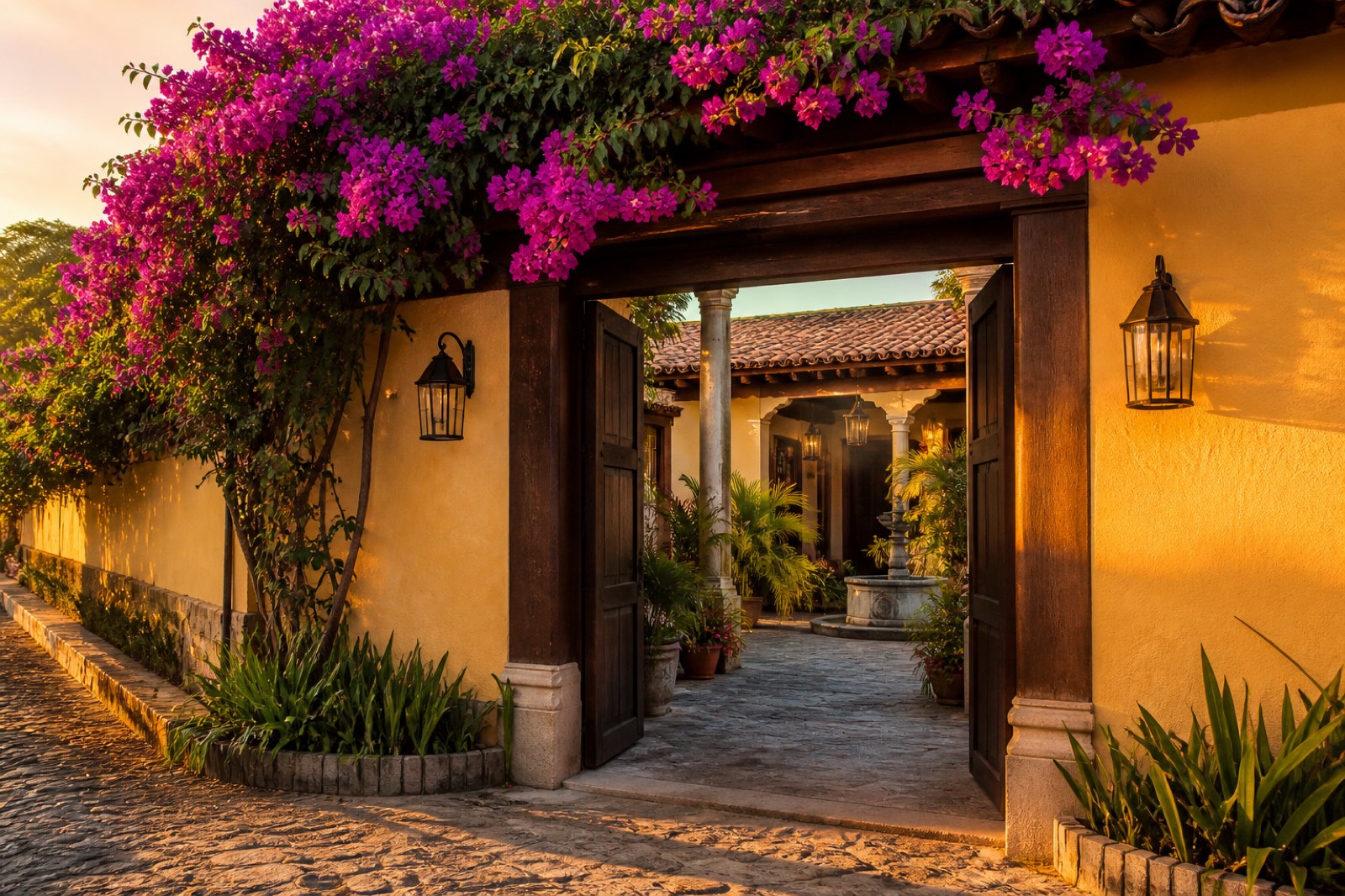
If you are considering buying property in Antigua Guatemala as a rental investment — or already own one — understanding the seasonal rental market is essential. Unlike most North American or European markets, Antigua’s rental demand shifts dramatically through the year, driven by tourism patterns, climate, and cultural events.
The good news? A well-managed property in Antigua can deliver strong returns across all seasons — if you know what each season demands and how to position your property accordingly.
Antigua’s Two Distinct Rental Seasons
Antigua Guatemala has two primary rental periods, each with its own character, pricing dynamics, and guest expectations.
High Season: November through April
The high season coincides with Guatemala’s dry season, when skies are clear, afternoon rains are rare, and temperatures hover in the pleasant 70s Fahrenheit (low 20s Celsius). This is peak tourist season, and it shows in the rental market.
Demand drivers during high season:
- International tourists escaping northern winter
- Semana Santa (Holy Week) — the single biggest tourism event in Antigua, drawing hundreds of thousands of visitors
- New Year and Christmas holiday travel
- Digital nomads seeking warm winter base camps
- Wedding groups and family reunions
What this means for rental owners: Occupancy rates for well-located properties during high season typically run 75 to 90 percent. Nightly rates for a furnished colonial home in central Antigua can reach $150 to $250 during peak weeks, with Semana Santa commanding a premium of 30 to 50 percent above standard high-season rates.
Properties near the central plaza, La Merced church, or along the popular tourist corridors of 5a Avenida and 4a Calle Poniente see the strongest demand. If your property is within walking distance of the main attractions, you are well positioned to capture high-season traffic.
Low Season: May through October
The rainy season brings afternoon downpours and fewer international tourists. This is the “green season” — the volcanoes are often shrouded in dramatic clouds, the gardens are lush, and the city has a quieter, more local feel.
Demand drivers during low season:
- Budget-conscious travelers (lower prices attract a different segment)
- Spanish language students (Antigua has dozens of language schools that operate year-round)
- Remote workers looking for affordable long-term stays
- Regional travelers from Central America
- Volunteer and NGO workers
What this means for rental owners: Occupancy typically drops to 40 to 60 percent during low season, but nightly rates can be adjusted downward to maintain bookings. Many owners shift to monthly or extended-stay pricing during this period, offering discounts of 20 to 40 percent off high-season rates.
The smartest strategy is to plan for low-season maintenance: schedule renovations, deep cleaning, and property upgrades during this window. The rental income may be lower, but the downtime gives you the opportunity to refresh your property before the next high season rush.
Beyond Tourism: The Long-Term Rental Alternative
Not every property in Antigua is suited to short-term vacation rentals. Many owners find that a hybrid or long-term rental strategy works better, especially in certain neighborhoods.
Long-term rentals (six months or more) in Antigua offer steady income with far less management overhead. There is no seasonal fluctuation to worry about, no guest turnover costs, and no marketing required. A well-presented unfurnished colonial home in neighborhoods like Ciudad Vieja or Jocotenango can command Q8,000 to Q15,000 monthly (roughly $1,000 to $2,000), with tenants typically paying utilities directly.
The trade-off: your per-night yield is lower than what you would earn in high-season short-term rentals. But the reliability and lower management burden make long-term leasing an attractive option for absentee owners who cannot oversee a vacation rental remotely.
For owners who want the best of both worlds, a hybrid approach works well: offer short-term rentals during high season (November through April) and switch to monthly or long-term leasing during the rainy months. This maximizes income during peak demand while minimizing vacancy risk during the slower period.
What Makes a Property Perform Well in Antigua’s Seasonal Market
Not all properties perform equally across the seasonal cycle. Based on market data from properties managed in Antigua, here are the features that correlate with strong year-round returns.
Location Factors
Central Antigua (historic core). Highest nightly rates and strongest high-season demand. A colonial home within two blocks of the Parque Central can command premium pricing during Semana Santa and other peak periods. The trade-off is that low-season bookings can be slower — tourists who book in the off-season are often looking for quieter, more residential areas.
El Hato and mountain communities. These properties appeal to a different market segment — nature lovers, wedding groups, and remote workers seeking tranquility. They tend to perform well year-round because their unique setting (volcano views, cooler climate, natural surroundings) attracts guests regardless of season. Properties like Casa Contenta in Finca El Tambor consistently book well because they offer an experience that central Antigua cannot replicate.
San Miguel Dueñas and Jocotenango. Growing areas with good demand from both short-term and long-term tenants. These neighborhoods offer better value for buyers and attract renters who want a quieter lifestyle while still being close to Antigua.
Property Features That Command Premiums
- Private outdoor space. A courtyard, garden, or terrace with volcano views is the single highest-value feature for a vacation rental in Antigua. Guests consistently prioritize outdoor living space in their reviews.
- Parking. Antigua’s streets are narrow and parking is limited. Off-street parking is a major differentiator, especially for guests renting cars.
- Reliable internet. This is non-negotiable for the growing remote worker segment. Properties with fiber internet and dedicated workspace areas outperform those without.
- Well-equipped kitchen. Many seasonal renters are families or groups who want to cook at home. A proper kitchen with quality appliances extends the length of stay and improves reviews.
Seasonal Maintenance and Preparation
Each season demands different preparation from property owners. Here is a seasonal checklist.
Pre-high-season (October): Deep clean the property, service the water heater and plumbing, test internet speed, refresh bedding and towels, inspect the roof and gutters before the rains taper off, and update your listing photography with current seasonal images.
Pre-low-season (April): Schedule any major renovations or repainting, service air conditioning units (if you have them), reseal wooden doors and windows that may have expanded during the wet season, and adjust your pricing to attract budget-conscious travelers.
Year-round: Maintain a relationship with a reliable property manager in Antigua who can respond to guest issues within hours. The most successful rental owners in Antigua have a local partner who handles check-ins, maintenance, and emergencies.
Understanding Your Yield by Season
To plan your cash flow as a rental property owner, it helps to model your income by season. Here is a realistic projection for a well-maintained one-bedroom colonial home in central Antigua:
- High season (November-April): 6 months × 26 nights/month at $120/night average = $18,720
- Shoulder months (May, October): 2 months × 20 nights/month at $90/night average = $3,600
- Low season (June-September): 4 months × 15 nights/month at $75/night average = $4,500
Total annual gross: approximately $26,820
After operating expenses (cleaning, utilities, management fees, maintenance, and listing platform fees), the net annual return typically lands between 6 and 10 percent of the property’s value. For a property valued at $200,000, that translates to $12,000 to $20,000 in net annual rental income.
These are conservative estimates for a well-managed property. Top-performing properties with premium features (volcano views, parking, pool access, or unique architectural character) consistently outperform these averages by 20 to 30 percent.
The Growing Shoulder Season Opportunity
One trend worth noting: Antigua’s shoulder seasons are getting longer. February through April and October through November are seeing increasing tourist traffic as travelers discover that these months offer excellent weather with fewer crowds and more moderate prices.
This is especially relevant for property owners. If you price your property competitively during these transitional months and market to the growing segment of remote workers and digital nomads, you can effectively extend your high season by several weeks at either end.
Guatemala’s digital nomad visa has also contributed to steadier year-round demand. Remote workers who qualify for the visa tend to stay one to six months, booking during the low season when rates are more favorable for extended stays.
Is Your Property Right for the Seasonal Market?
Before you decide on a rental strategy for your Antigua property, consider your goals. Are you looking for maximum income, minimum management, or a balance?
For maximum income with hands-on management (or a good property manager), short-term seasonal rentals are the clearest path to the highest returns. For a set-it-and-forget-it approach, long-term leasing to a local professional or expat family provides reliable income with minimal seasonal variability.
Many buyers choose the hybrid approach: start with short-term rentals, gather data on your property’s performance across the seasons, and adjust your strategy based on what the market tells you.
Ready to find a property suited to Antigua’s seasonal rental market? Browse our listings to see available homes, or contact Luna Jerney for personalized advice on choosing the right property for your investment goals.
Interested in Antigua Real Estate?
Whether you're looking to buy, rent, or invest — I can help. Free consultation, no pressure.