
Antigua Guatemala vs Xela: Where Should You Buy?
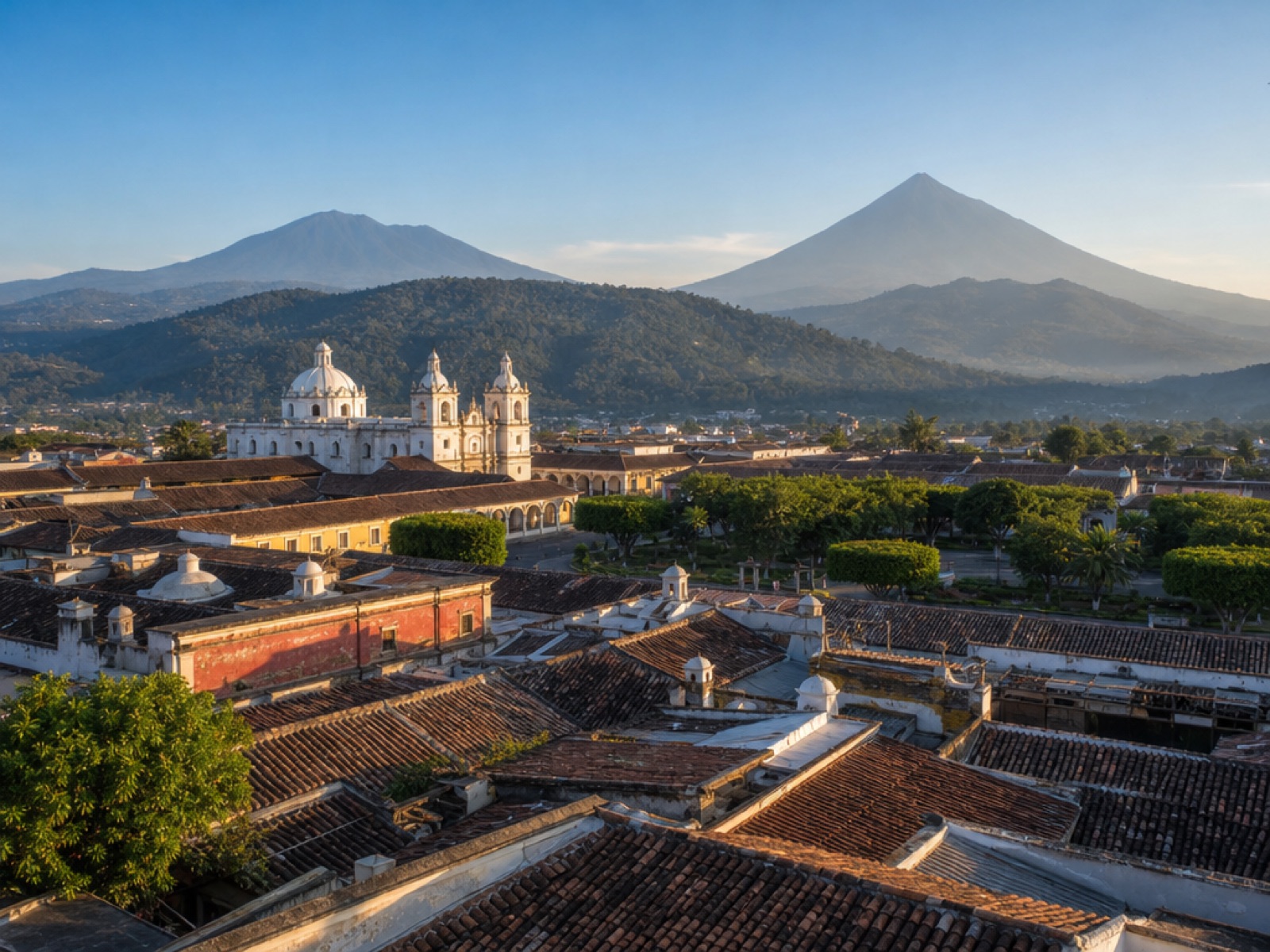
Antigua Guatemala and Quetzaltenango, almost always called Xela, are the two Guatemalan cities foreign buyers compare most often. Antigua is the heritage town: a UNESCO-listed colonial grid with a tourism and rental economy, an established expat network, international schools and the capital’s airport an hour away. Xela is Guatemala’s second city: bigger, cooler, cheaper, anchored by universities and a largely indigenous population, with a slower daily rhythm. Neither is better; they suit different buyers, and the choice changes what you get for your money and the rent you can charge.
Antigua Guatemala vs Xela at a glance
| Factor | Antigua Guatemala | Quetzaltenango (Xela) |
|---|---|---|
| Altitude and climate | About 1,530 m; days 22 to 26 C all year, cold nights 11 to 13 C | About 2,330 m; days 18 to 22 C, colder nights and a real cold season |
| City size | Small colonial grid, about 45,000 people | Guatemala’s second city, about 180,000 in the urban area |
| Cost of living | Higher, set by the tourism and expat market | Lower for rent, food and services across the board |
| Property prices | Roughly $100 to $250 per square metre inside the colonial grid | Lower entry prices, but a thinner market for foreign buyers |
| Rental demand | Strong short-term and long-term demand from tourists, students and expats | Steady student and local demand, limited short-term tourism |
| Expat infrastructure | Deep: English services, international schools, bilingual healthcare | Smaller: fewer English services and international schools |
| Getting in and out | About 45 minutes to Guatemala City and an hour to La Aurora airport (GUA) | Three to four hours from the capital, a small airport with few flights |
| Best for | Buyers wanting heritage, walkability and rental income | Buyers wanting a bigger, cheaper city and a local life |
The table shows the trade quickly. Antigua wins on access, heritage and rental demand. Xela wins on price, space and a quieter everyday life.
How do the climates compare?
Both cities sit in the highlands, so neither is tropical, but Antigua is the milder of the two. Antigua sits at about 1,530 metres, with days of 22 to 26 degrees Celsius all year and cold-season nights of 11 to 13. Xela sits higher, around 2,330 metres, so it runs a few degrees cooler and its nights are genuinely cold; a jacket is normal most evenings. Both share the same two seasons: dry from November to April, rainy from May to October.
For a buyer, the practical difference is heating. Antigua rarely needs it, while Xela leans on a fireplace or space heater through the cold months, which is a running cost to budget for.
What does it cost to live in each city?
Antigua is the more expensive of the two, because tourism sets the floor for rent, restaurants, groceries, domestic help and transport. A one-bedroom rental runs about $400 to $700 a month in the centre, with the furnished flats most foreign buyers consider averaging closer to $877, and about $523 outside the centre. The cost of living guide breaks the monthly numbers down.
Xela costs noticeably less for the same standard of living. Rent, meals, taxis and services all sit below Antigua’s, the biggest reason buyers choose it. Budget roughly 20 to 35 percent less for a comparable lifestyle, and confirm current figures locally.
What is the property market like in Antigua vs Xela?
Inside Antigua’s colonial grid, expect roughly $100 to $250 per square metre, with restored courtyard homes at the top of that range and beyond. Raw land outside town runs about $15 to $50 per square metre. An outlying village home or lot sits between $30,000 and $80,000, and a house with usable land near San Miguel Duenas or Ciudad Vieja between $80,000 and $200,000. The market is deep and well served: agents, lawyers, notaries and surveyors who work with foreign buyers daily.
Xela’s entry prices are lower, and the same money buys a bigger, older house near its centro. The trade-offs are a thinner market for foreign buyers, fewer turnkey restored homes, a smaller pool of English-speaking agents and slower resales. Xela rewards a patient buyer who is comfortable with local paperwork.
Which city has better rental income potential?
Antigua has the stronger rental market, and it is why many buyers look here first. Tourism, Semana Santa, Spanish-language students and long-term expats keep both short-term and long-term demand high. Short-term rentals are regulated, so read the 2026 short-term rental rules first.
Xela’s rental demand is real but different: mostly university students and local professionals on long-term leases, with limited short-term tourism. You pay less to buy and earn lower nightly rates, so the yield depends on the property, not the city alone.
What about schools, healthcare and daily life?
Antigua has several international schools, bilingual clinics and hospitals, with the capital’s full medical offering about an hour away. The international schools guide covers the options, and the expat community is large.
Xela has three universities and good, low-cost local healthcare, but far fewer international schools and English-speaking services. Families who choose Xela usually want Spanish immersion and a more Guatemalan childhood.
How do you get in and out of each city?
Antigua sits about 45 minutes from Guatemala City on the main highway and about an hour from La Aurora international airport, which makes weekend trips and flights home straightforward. Xela is three to four hours from the capital by car or intercity bus, and its own airport has few reliable commercial flights. If you travel often or work in the capital, Antigua’s location is worth a lot.
Which city is right for you?
Choose Antigua for a walkable heritage town, strong rental income, international schools, an easy airport link and deep English-speaking services. Choose Xela for a bigger, cooler, cheaper city, a more Guatemalan everyday life and lower running costs, accepting less convenience.
Many buyers visit both first, and a two-day stop in Xela is enough to feel the difference. If you are weighing Antigua against the capital, our guide to Antigua Guatemala versus Guatemala City covers it. Prices here reflect asking prices around Antigua in 2026 and general market comparisons, so verify current figures with a local agent before you commit.
Planning a purchase in Antigua Guatemala?
Luna Jerney and the Antigua Real Estate Development team work with foreign buyers every day, from viewings and due diligence to closing. Browse current listings, review our services, or get in touch to talk through what you are looking for and which city fits it best.
Interested in Antigua Real Estate?
Whether you're looking to buy, rent, or invest. I can help. Free consultation, no pressure.