
Floors and Flooring in Antigua Guatemala Homes
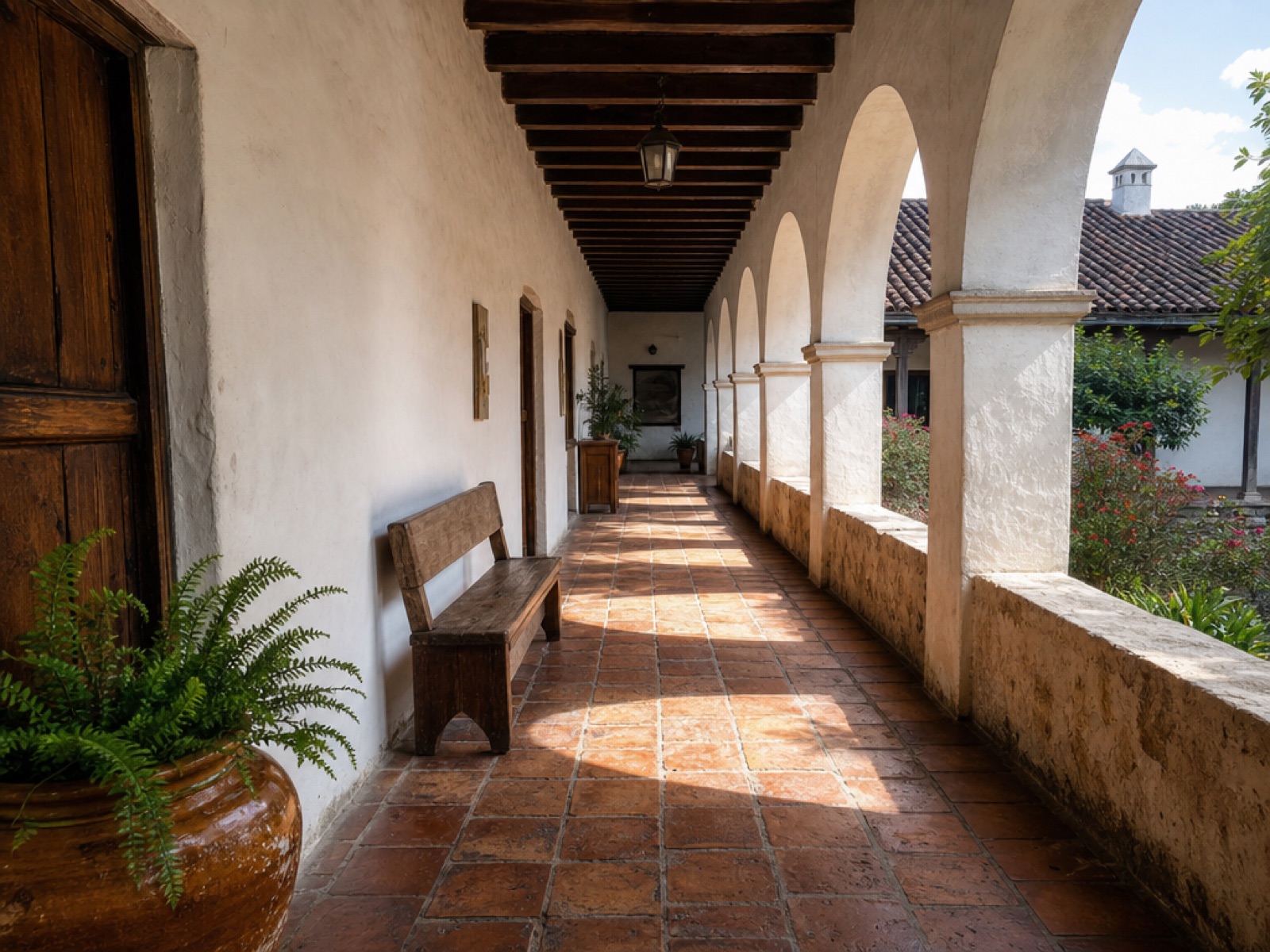
The floor of a colonial house in Antigua Guatemala is usually hand-made clay tile laid on a solid base, and relaying a room in the same tile costs Q250 to Q550 per square metre ($32 to $70) installed. Floors are the surface you touch most and the one buyers judge last, so a raised, hollow-sounding or damp floor deserves the same attention as the roof above it. This guide covers 2026 prices, what the wet season does to a tile floor, what heritage rules allow, and what to check before you buy.
How much does flooring cost in Antigua Guatemala?
| Floor work | Typical cost |
|---|---|
| Local ceramic tile, supplied and laid | Q120 to Q300 per m² ($16 to $39) |
| Hand-made clay tile (barro), supplied and laid | Q250 to Q550 per m² ($32 to $70) |
| Imported porcelain or rectified tile | Q450 to Q900 per m² ($58 to $117) |
| Volcanic stone or slate, supplied and laid | Q400 to Q800 per m² ($52 to $104) |
| Hardwood floor (cypress or cedar), laid and sealed | Q350 to Q650 per m² ($45 to $85) |
| Polished concrete or terrazzo | Q300 to Q600 per m² ($39 to $78) |
| Deep clean and re-seal of an existing clay floor | Q80 to Q180 per m² ($10 to $23) |
| Levelling or rebuilding a soft sub-floor | Q500 to Q1,200 per m² ($65 to $155) |
| Whole house, about 120 m², relaid in clay tile | Q36,000 to Q66,000 ($4,700 to $8,600) |
These are 2026 figures from tiling crews working in Antigua, Jocotenango and Ciudad Vieja, including labour, adhesive, grout and a first seal. Material alone is roughly half. If a quote lands far below the range, ask what happens to the old floor underneath: laying new tile over old hides a soft base rather than repairing it, and the failure shows up two wet seasons later.
What are colonial floors actually made of?
- Clay tile and brick. The default in old houses. Square tiles of fired clay (ladrillo de barro) bedded in mortar over rubble or compacted fill, with a slight colour variation from tile to tile because they were made by hand.
- Stone. Volcanic stone slabs in corridors, patios and service areas, laid in irregular shapes with wide joints. Slow to warm up, effectively permanent, and slippery when wet.
- Concrete, cement tile and ceramic. Later layers, added any time from the 1950s onward. Cement tile with inlaid patterns is worth saving; plain grey concrete usually is not.
- Wood. Upper floors and mezzanines, in cypress or cedar. Comfortable and quiet, but it needs a dry space under it.
- Patio and corridor paving. Outdoor floors fall toward a drain or a garden bed, which is why the inside floor often sits a step below the street.
Why does a colonial floor slope, and does it matter?
Most old houses here were built without a damp course, with floors laid to shed water rather than to be perfectly level, so a gentle fall toward the patio is normal. It matters when the slope is new: a corner that has dropped, a step at a doorway, or a crack running out of a wall usually says the base underneath has moved or water is sitting under the tile. Compare the level of each room at the thresholds, and ask when the floor was last worked on. A floor that has moved in the last few years will keep moving.
What does the rainy season do to a floor?
From May to October the ground stays wet, and tile floors react in three visible ways. Salitre, the white salt bloom that pushes out of mortar, shows as a chalky line along the bottom of walls. Damp patches darken first in corners, behind furniture and along the outside walls, and they are the same problem the humid climate creates elsewhere in the house. Hollow or lifted tiles happen when water reaches the base and the tile loses its grip, so tap across a floor in the wet months, not the dry ones.
The trap is sealing a floor to keep water out: clay that cannot breathe holds water in the mortar instead. Clean, ventilate, and reseal with a breathable product.
Can you change the floor inside the historic centre?
Floors are largely out of the heritage review, because the rules governing the protected zone are mostly about what the street sees. That is a relief when relaying a kitchen or a bathroom, where the floor is normally part of the job.
Two limits remain. Structural work, lowering or raising a floor level, rebuilding a base or touching a load-bearing wall, does need a municipal construction licence, and inside the zone the municipality consults CNPAG, the same review that governs renovation of a colonial home. Original clay in reasonable condition should also be kept if it can be: it is a large part of what makes an old house feel old. If a floor must come up, save the tiles, because salvaged barro is in demand and nearly impossible to match once it is gone.
What should you check before you buy?
- Tap across every room. A hollow note means a tile has lifted, and a run of them usually traces water coming in from a wall.
- Look at the corners and the outside walls. Dark patches and chalky white lines point to damp rather than to dirt.
- Check the thresholds. A step between rooms, or one room clearly higher than its neighbour, can hide a rebuilt base or a floor laid over something that should have come out.
- Watch the direction of the fall. Water should run toward a drain or the patio, never toward a bedroom door.
- Ask about the last seal. Untreated clay is fine, but if the floor was varnished or sealed, find out when and with what.
- Walk the patio too. Outdoor paving that has settled away from the wall is the most common way water gets in. The inspection guide sets out what else to check in the same visit.
How do you look after a clay tile floor?
Sweep grit before it works into the surface, wash with mild soap and water, and keep acid and bleach away from clay and cement tile. Reseal every three to five years, use felt pads under furniture, and lift plant pots onto a saucer rather than leaving them on bare tile, because a pot holds moisture against the floor for months. In a rental, this routine decides whether a floor lasts decades or needs relaying between tenants.
Getting help
A floor tells you more about how a house has been kept than any listing photo, and it is expensive to get wrong. If you want a straight read on a property, talk to us. We also manage properties for owners living abroad and list homes for sale and rent across Antigua and the surrounding villages.
Interested in Antigua Real Estate?
Whether you're looking to buy, rent, or invest. I can help. Free consultation, no pressure.