
Plumbing and Pipes in Antigua Guatemala Homes
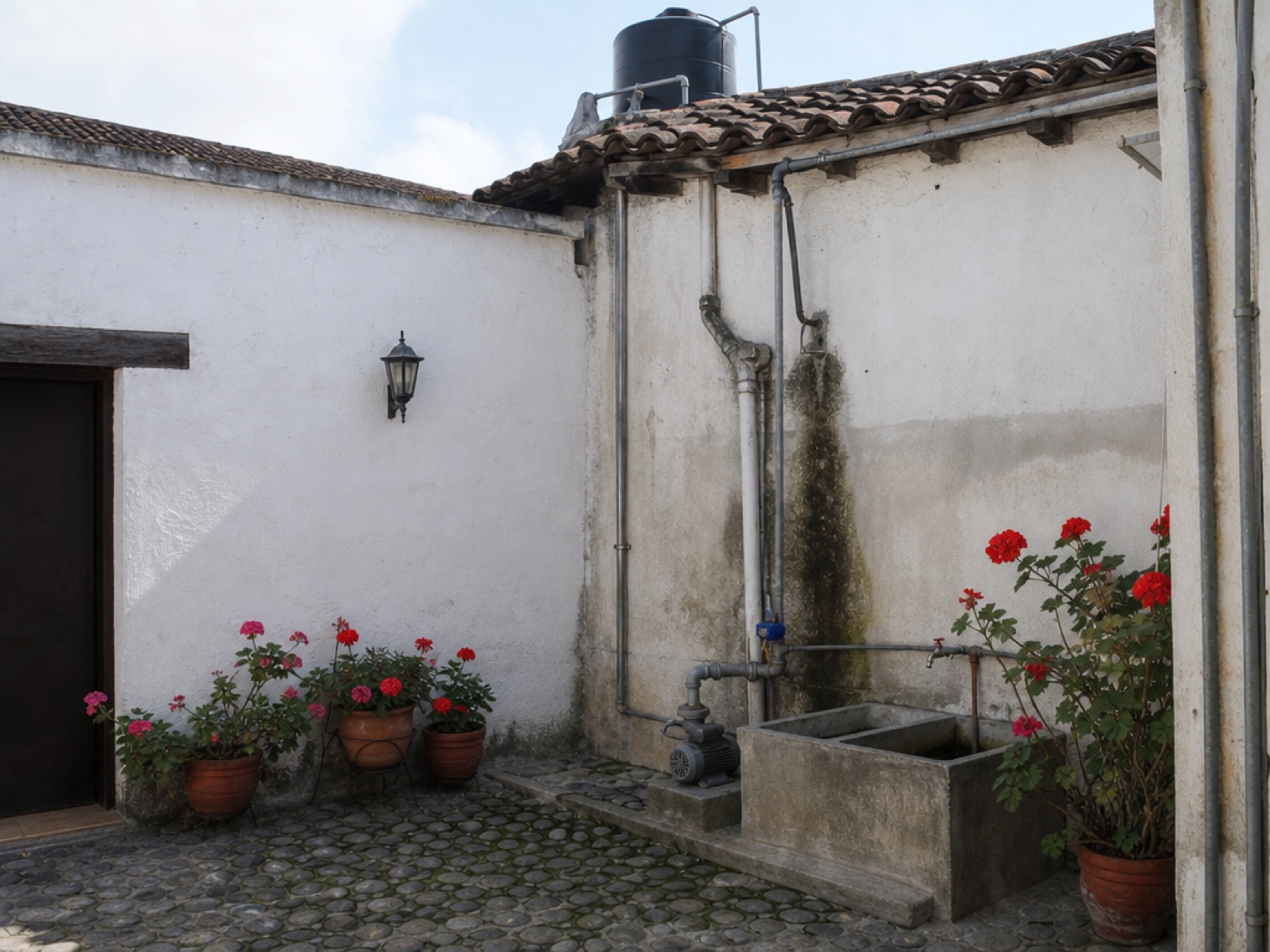
A colonial house in Antigua Guatemala can hold four or five generations of water pipe inside its walls, from rusted galvanized steel fitted in the 1970s to PVC added last year. The most common failure is not a burst pipe but a slow one: galvanized steel corrodes from the inside, pressure falls, and water starts to seep at joints buried in a wall 60 centimetres thick. Repairing one leaking section costs Q600 to Q1,800 ($80 to $235), repiping a single bathroom or kitchen Q3,500 to Q9,000 ($455 to $1,170), and repiping a whole 120 m2 colonial house Q25,000 to Q70,000 ($3,250 to $9,100), material and labour included.
How much does plumbing work cost in Antigua Guatemala?
Installed prices from local plumbers, supply included. Material is roughly half of each figure, so a quote far below these numbers usually means old pipe is being joined to old pipe. Prices checked in October 2026.
| Work | Typical 2026 cost |
|---|---|
| Replace a leaking section, 1 to 2 m | Q600 to Q1,800 ($80 to $235) |
| Repipe one bathroom or kitchen, hot and cold | Q3,500 to Q9,000 ($455 to $1,170) |
| Repipe a whole 120 m2 colonial house | Q25,000 to Q70,000 ($3,250 to $9,100) |
| Replace the water pump, 1/2 to 1 HP | Q1,800 to Q5,500 ($235 to $715) |
| Install a pressure tank or booster system | Q2,500 to Q8,000 ($325 to $1,040) |
| Find and repair a hidden leak, wall opened and rebuilt | Q1,200 to Q4,500 ($155 to $585) |
| Replace a rooftop tinaco, 1,100 litres, with fittings | Q2,500 to Q6,000 ($325 to $780) |
| Annual service: valves, aerators, pump, tank flush | Q400 to Q1,200 ($50 to $155) |
Treat the repipe line as the honest one. Most owners spend five years and three repairs of Q1,000 before accepting that the pipe itself is finished.
How does water reach an Antigua Guatemala house?
Municipal water arrives from EMPAGUA at set hours, often in the morning or late afternoon, and fills a rooftop tinaco or a concrete pila. From there, most houses run on gravity, with a small pump for the upper floor. Water delivery is covered in the utilities guide; the point that matters here is that the pressure inside the house depends on tank height, not on the street main. A house with a low tank or one pump doing all the work will always feel weak at the shower.
Which pipes are in the house, and which fail?
Age is the best predictor. A house built before the 1990s is likely to have galvanized steel, which narrows and rusts from the inside until it weeps. From the 1990s onward, PVC and CPVC are standard, with copper used in some renovations and polypropylene (PPR) now common in new work.
- Galvanized steel: rusty water in the morning, low pressure, pinhole leaks at joints
- PVC: reliable for cold water, but it becomes brittle and cracks at fittings after decades in the sun
- CPVC: correct for hot water, common in bathrooms
- Copper: long-lived but expensive, and it can be stolen if a wall is open
- PPR: heat-fused joints, the current choice for repiping, with no threaded points to leak
Why does the water pressure drop?
Low pressure in a colonial home is usually structural rather than temporary. Expect one of these:
- A gravity system fed from a tank that sits only two to three metres above the shower
- A single pump shared by the house, with a tired pressure switch
- Galvanized pipe narrowed by decades of scale
- A full-house load at 7 am, when a washing machine, a shower and a kitchen tap run together
- Clogged aerators that look like a pipe problem and cost nothing to clean
A booster pump and pressure tank solve the first three. They cost Q2,500 to Q8,000 and are the single upgrade owners notice most.
Where do leaks hide in a colonial home?
In walls 40 to 80 centimetres thick, a leaking pipe can run for months without showing. The wet season, May to October, is when most of them surface, because rain keeps walls damp and a small seep never dries. The usual signs are a dark patch at the base of a wall, salt bloom or peeling paint, a soft spot in the plaster, and a water meter that keeps turning with every tap closed.
Test the meter yourself. Close every tap and the tank inlet, then watch the dial for ten minutes. Movement means water is escaping somewhere in the system. The repair is inexpensive once the leak is found; the search is what costs money, since it means opening and rebuilding plaster and tile.
Does plumbing work need a permit in Antigua Guatemala?
Inside the front door, repiping, changing fixtures and adding a bathroom are ordinary maintenance and normally sit outside heritage review. The regulated edge is the street: the municipal service connection, a new meter, and any pipe or pump housing on the street facade fall under a municipal licence with a CNPAG opinion in the historic zone. Breaking a floor, chasing a groove into a structural wall or changing the position of a bathroom is a different matter and needs a qualified opinion before work starts. The electrical upgrades post follows the same street-versus-interior logic.
What should you check before buying a colonial home?
Bring these five questions to any viewing:
- Open every tap at once and watch how pressure holds while the shower runs
- Ask when the house was repiped and whether the seller has the invoice
- Look for dark patches, salt bloom and fresh paint at the base of walls
- Find the tinaco, the pila and the pump, and test the pump under load
- Check the water meter with every tap closed
A property that fails on three of the five is not a deal breaker, but it is a negotiation. Repiping a whole house is a known, quotable number, and it belongs in the price conversation rather than in the first surprise after closing.
The bottom line
Water is the quiet cost in an old Antigua Guatemala home. Repair what leaks, plan for a repipe every 30 to 40 years, and budget Q2,500 to Q8,000 for a booster and pressure tank if the shower has never satisfied you. If you are buying, ask the questions above before you sign, and put the answer in writing.
Ready to look at properties that have already had this work done? Browse the current listings at our properties page or send me a message through contact and I will tell you what to check on any specific house.
Interested in Antigua Real Estate?
Whether you're looking to buy, rent, or invest. I can help. Free consultation, no pressure.