
Electrical Upgrades in Antigua Guatemala Homes
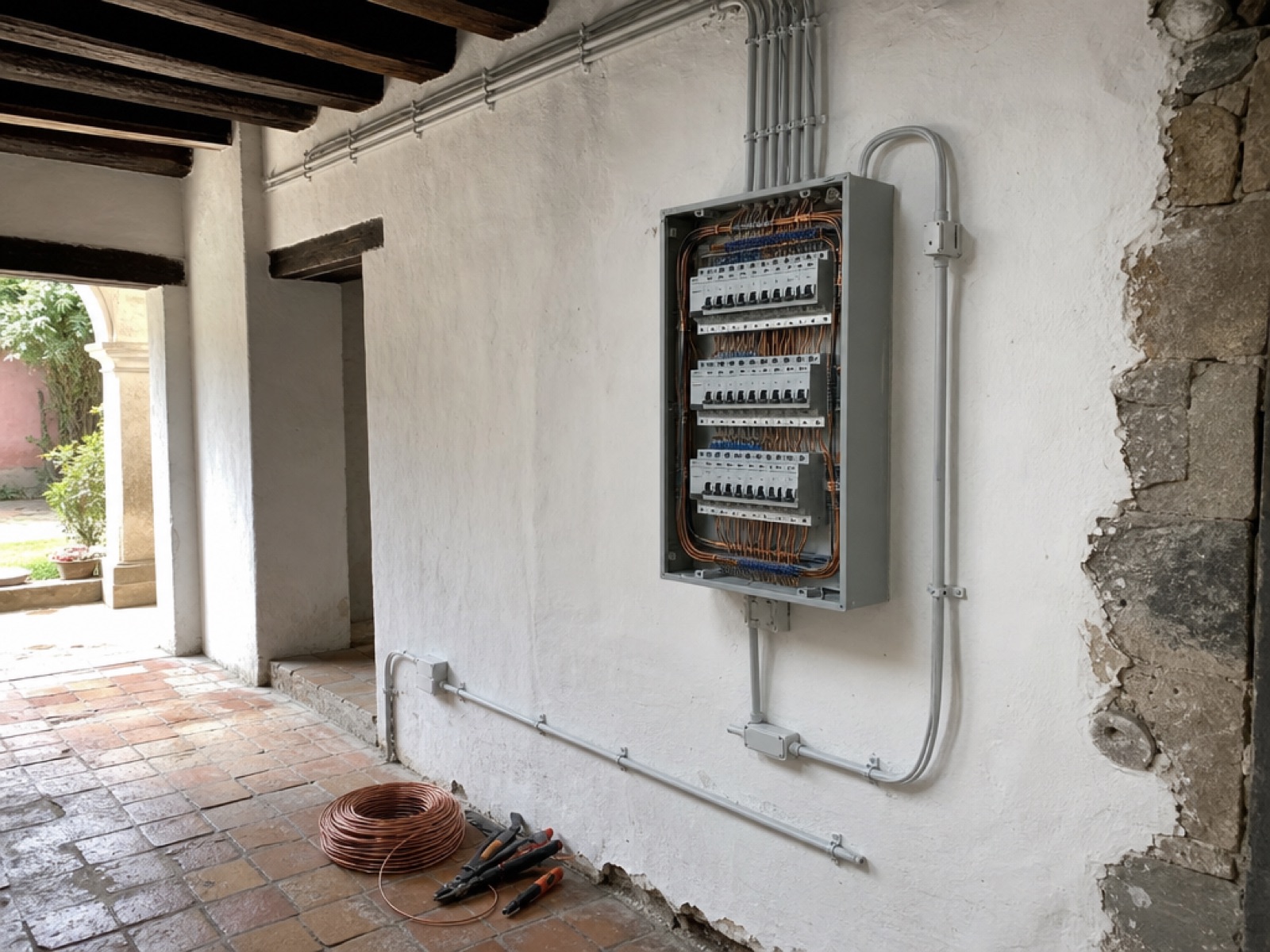
Most houses in and around Antigua Guatemala were wired for a 40 or 60 amp service, a few lights, a fridge and a television. A modern household runs air conditioning, an electric oven, a tankless water heater, a washer and a water pump, and the system was never sized for those loads. A panel replacement costs Q3,500 to Q9,000 ($450 to $1,170), adding a single circuit Q500 to Q1,500 ($65 to $195), rewiring one room Q4,000 to Q12,000 ($520 to $1,560), and a full rewire of a 120 m2 colonial house Q45,000 to Q120,000 ($5,800 to $15,600), supply and installation included. The utility side upgrade to 100 or 200 amps is a separate application and a separate cost.
How much does an electrical upgrade cost in Antigua Guatemala?
Installed prices from local electricians, supply included. Material alone is roughly half of each figure, so a quote far below these usually means old cable is being reused. Prices checked in October 2026.
| Work | Typical 2026 cost |
|---|---|
| Replace the main panel, 8 to 12 circuits | Q3,500 to Q9,000 ($450 to $1,170) |
| Add one new circuit, outlet or light point | Q500 to Q1,500 ($65 to $195) |
| Rewire one room | Q4,000 to Q12,000 ($520 to $1,560) |
| Full rewire, 120 m2 colonial house | Q45,000 to Q120,000 ($5,800 to $15,600) |
| Grounding and earth electrode | Q1,500 to Q4,500 ($195 to $585) |
| Convert one circuit to 240 V for a heavy appliance | Q1,200 to Q3,500 ($155 to $455) |
| Utility service upgrade to 100 or 200 amps (company trámite, service side) | Q2,000 to Q5,000 ($260 to $650) |
| Annual inspection by a qualified electrician | Q400 to Q1,200 ($50 to $155) |
Budget the panel and the trámite together. The company will not connect a heavier service to a panel that cannot take it, and a new panel alone leaves the same 40 amp ceiling.
Why do old Antigua Guatemala homes fail an electrical check?
A colonial house here was built around light, water and air, not cables. Walls 40 to 80 centimetres thick have no cavity for wire, so circuits were surface mounted, chased into adobe where possible, or added one appliance at a time. A check usually turns up one of these:
- A 40 or 60 amp service feeding loads that need 100 to 200 amps
- No earth: two-wire outlets are common, and a three-prong socket may have nothing behind the third pin
- Aluminium branch circuits from the 1970s and 1980s
- A panel with no spare ways, so every new appliance arrived as an extension lead
- A water pump, a shower-head heater or an air conditioner tapped off a lighting circuit
- Damp surface boxes after the rainy season, and a panel aged by years of outages and voltage swings
None of this is exotic: it is normal wear on a system sized for 1975.
Is Guatemalan electricity 110 volts or 220 volts?
People here say 110 and 220 in conversation, and both are approximations. The grid runs at 120 volts, 60 hertz, and most homes have a 120/240 volt service: two live legs used separately or together. Small appliances and lighting take one leg at 120 volts. Air conditioners, electric ovens and some dryers use both legs at 240 volts, which is why a heavy appliance needs its own circuit. Appliances built for 120 volts in the US and Canada plug in directly. A 230 volt appliance from Europe runs, but anything with a motor or a clock runs about 20 percent fast, because the frequency here is 60 hertz rather than 50.
The practical consequence is balancing: new circuits have to be spread across the two legs, and loading everything onto one leg trips a house on a normal evening.
Aluminium or copper: which wiring is in the house?
Older homes here often have aluminium branch circuits, and that is not automatically dangerous. It fails at the joints: a termination tightened once and never checked oxidises, heats up and loosens. Two routes: pigtail each device with a short length of copper on an approved connector, or rewire the circuit in copper. Pigtailing is cheaper and suits a house you keep, while a full rewire suits a renovation already opening walls. Either way, disclose it in writing at resale, because the buyer’s inspection will ask.
Does electrical work need a permit in Antigua Guatemala?
The split that governs the rest of the house applies here: it is about what the street sees. Heritage review through the municipality and CNPAG covers a new meter box, a panel on the street facade, conduit up the front wall and a new service drop, so that work needs a municipal licence and an opinion before anyone drills. The service change itself is an application to the electricity company, which inspects the connection.
Behind the front door, a new panel, new circuits and a rewire fall outside heritage scope. They need no CNPAG review, but they do need an electrician who works regularly with the utility: one who cannot file the trámite leaves you holding an unconnected service.
What are the warning signs an old panel cannot cope?
Watch for breakers that trip when the oven and the air conditioner run together, a warm or discoloured panel cover, a burning smell near the box, lights that dim when the pump starts, fuses where you expected breakers, and extension leads feeding a water heater or an air conditioner. Any of these justifies an inspection. If you also want backup power, read the guide to inverters and generators first: an inverter is only as good as the panel it connects to.
What changes if you add solar or an EV charger?
Both loads change the calculation, and both are usually quoted before anyone checks the panel. A solar inverter needs a modern panel, spare capacity and an earth, and undersized wiring has to be upgraded before the inverter is connected safely, the point the solar article makes. An electric vehicle charger needs a dedicated 240 volt circuit with its own breaker, and on a 40 amp service that often cannot coexist with an oven and an air conditioner, so ask for a written load calculation before you buy the charger.
What should you check before buying a colonial home?
- The number on the main breaker: that figure tells you whether the house is at its limit
- Panel age and brand, and whether spare ways exist
- Copper or aluminium on the branch circuits, and whether an earth exists
- Which appliances have their own circuit, especially the pump and the air conditioner
- Whether the meter and the electricity account are paid up, which the utilities guide explains alongside water and gas
A paid inspection covers the electrical section in writing and is the cheapest way to price the work before an offer.
If the electrical system is the part of a colonial house you cannot read, that is normal. Luna Jerney at Antigua Real Estate Development works with local electricians every week and can arrange an inspection, a quote and a plan before you commit. Browse available properties or get in touch.
Interested in Antigua Real Estate?
Whether you're looking to buy, rent, or invest. I can help. Free consultation, no pressure.