
Antigua Guatemala Home Maintenance Calendar
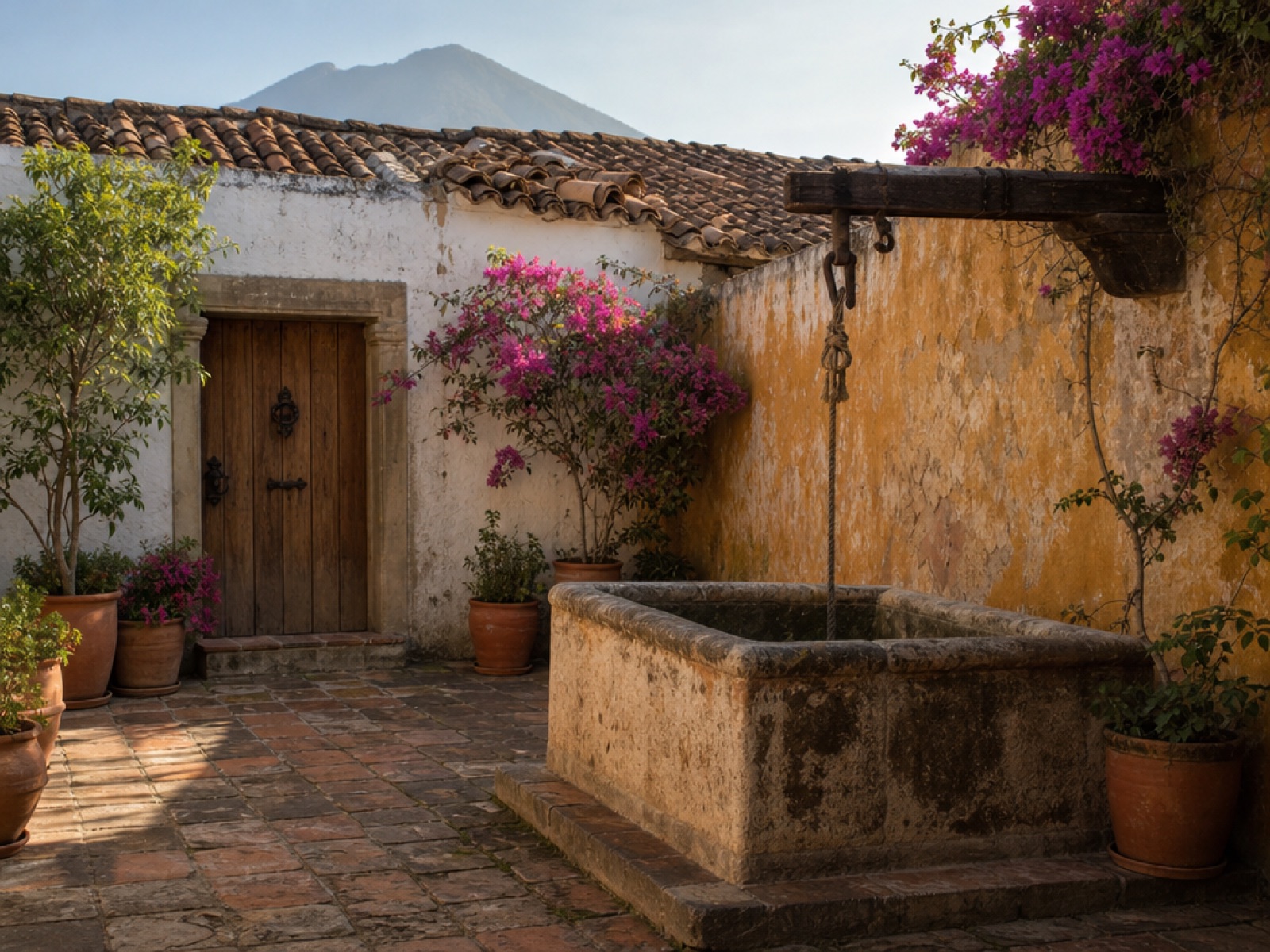
A colonial home in Antigua Guatemala runs on two seasons, not four. The calendar that keeps it sound is built around the dry months, roughly November to April, and the rains from May to October. Almost every expensive repair we see traces back to doing the right job at the wrong time: painting a facade in the wet season, clearing drains after the first storm, or leaving the roof alone until the water is already inside. This is the schedule that fits both the climate and the way these houses are built.
Why does a colonial home need its own calendar?
Colonial houses are not modern boxes. The walls are 40 to 80 cm of adobe, bahareque or block under lime render. Roofs are clay teja on timber vigas. Courtyards and patios drain across open ground. This construction breathes, moves with the seasons and has almost no hidden cavities for pipes or cables. That changes the maintenance logic. Water, not wear, is what shortens the life of a colonial home: a blocked drain or a lifted tile does more damage in one wet season than a decade of sunlight.
So the year splits cleanly. The dry months are for work that has to be done dry and finished properly. The wet months are for watching, catching problems early and reacting fast. Our guide to damp and humidity in colonial homes explains why moisture is the enemy rather than age.
What does the season table look like?
| Season | Months | What the house is doing | What you should be doing |
|---|---|---|---|
| Dry season | November to April | Walls and render dry out, ground hardens, timber shrinks | Roof repair, facade paint and lime work, tree pruning, pump and tank service, termite and beam checks |
| Start of rains | May | The first heavy storms find every weak point | Walk the roof and drains after the first big rain, test for leaks, clear gutters and patio drains |
| Full rainy season | June to September | Walls take on moisture, damp and salitre appear, pests rise | Watch for damp patches and salt bloom, keep air moving, treat mosquitoes, check beams for rot |
| End of rains | October | The last storms, then a drying-out period | Final roof check, clean and reseal floors and wood, book dry-season work early |
What should you do in the dry season?
- Roof. Inspect teja, ridge mortar, valleys and underlayment while everything is dry. Replace cracked or displaced tiles, reset the ridge mortar and replace any rotten viga before the rains return. This is the single highest-value job on the calendar. See our roof maintenance guide.
- Facade and paint. Lime and acrylic both need dry, stable weather to cure. Paint the exterior, refresh the courtyard lime wash and repair repello before it fails.
- Trees and drains. Prune trees away from roofs and power lines, and clear gutters, downpipes and patio drains so the first storm has somewhere to go.
- Water and pumps. Service the pump and pressure tank, clean the tinaco and check the pila. Water demand peaks in the dry season, when EMPAGUA supply is thinnest.
- Wood and termites. Treat beams, doors and window frames. The dry season is when an inspection finds damage before it spreads.
What should you do in the rainy season?
- Walk the roof after the first heavy rain. Leaks show up where you can see the water, not always where it enters. Check the ceiling of every room on the top floor.
- Watch for damp and salitre. Chalky salt bloom and dark patches on lower walls are the first sign of a moisture path. Fix the source, and never seal a wall that needs to breathe.
- Keep air moving. Open the house whenever you can. Still, humid air in a closed room is what grows mould and rots timber.
- Stay ahead of pests. Standing water brings mosquitoes, and damp wood brings termites. Clear pots, saucers and blocked drains.
- Do not start exterior paint or render work. A rushed coat in the wet season fails within a year and costs more to undo than to have waited.
What are the once-a-year checks?
Beyond the season cycle, a handful of systems want one proper look each year: the electrical panel and grounding, water pressure and hidden leaks, the fosa séptica or the municipal connection, water quality if you drink from a filter, and the pest routine. Review your insurance and your IUSI standing at the same time, so nothing lapses quietly. Our breakdown of the cost of owning a home in Antigua puts a number on each of these.
Which jobs actually protect resale value?
Not every quetzal spent comes back. The work that shows up in a valuation is the unglamorous kind: a sound roof, no active damp, dry beams, working water and drainage, and a facade in good repair. A buyer’s inspector will find all of it, and a seller who can show a maintenance record negotiates from a stronger position. Cosmetic upgrades matter far less if the roof is tired.
What if you own the house from abroad?
An absentee owner needs a local routine, not good intentions. A property manager who walks the house on a set schedule, sends photos after each rainy-season check and holds a small repair budget will catch the small failures that turn into expensive ones. Our note on property management for absentee owners covers what that service should include.
The bottom line
Maintain a colonial home in Antigua on the two-season rhythm: do the dry work in the dry months, and spend the wet months watching and reacting. A roof repaired in February costs a fraction of a ceiling rebuilt in August. If you would like help finding a home to care for, or a manager to look after one you already own, talk to our team.
Interested in Antigua Real Estate?
Whether you're looking to buy, rent, or invest. I can help. Free consultation, no pressure.