
Do You Need Air Conditioning in Antigua Guatemala?
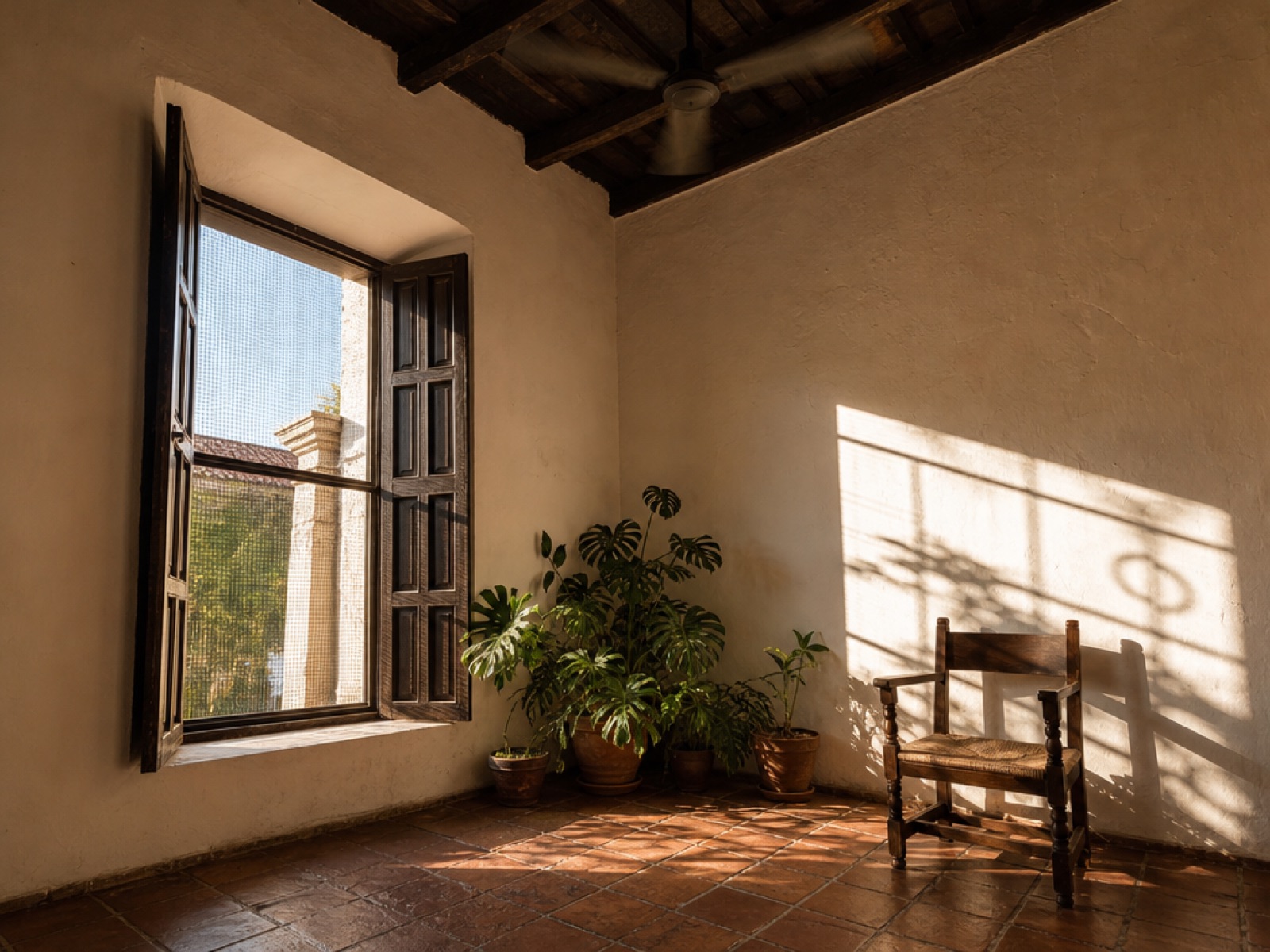
Antigua Guatemala sits at about 1,530 metres, and for most of the year the honest answer is no. Days run 22 to 26 degrees Celsius, nights fall to 12 to 16, and the altitude keeps the air drier than the coast. A house you can open at night, with ceiling fans and shade, is comfortable here without air conditioning. It earns its place in three cases: bedrooms in the March and April dry-season heat, upper rooms baking under a tile roof, and short-term rentals where guests expect it.
How hot does Antigua Guatemala actually get?
Antigua is warm, not tropical-hot, and that gap matters when you price a cooling system. Daytime highs sit between 22 and 26 degrees Celsius most of the year, and March and April are the only months that push toward 28 or 30 in the early afternoon. Nights drop to 12 to 16 degrees all year, which is why a house that breathes is comfortable by nine in the evening, and humidity stays well below the coast, so the heat reads as dry rather than sticky.
Why colonial homes stay cool, and where they still get stuffy
Colonial construction was designed for this climate. Walls 40 to 80 centimetres thick act as thermal mass, so they warm up slowly and hold the interior cooler than the street at midday. Ceilings of three to four metres let warm air rise away from you, windows are small and set high, and the courtyard was the original source of light and moving air, which is why the courtyard and patio matter more than the lot.
Where it fails is predictable: a room with one window and no opposite opening, an upper floor under a tile roof that absorbs sun all afternoon, a west-facing room with no shade, and a house left shut up all day. That last one is common in a holiday home sitting empty while the owner is abroad, and it is the one that feels hottest when you walk in.
Cooling a house without air conditioning
You can usually solve Antigua heat for far less than a minisplit costs, and the fixes also help the two problems this climate really has, mosquitoes and damp.
| Measure | Typical 2026 cost |
|---|---|
| Ceiling fan, supplied and installed on an existing point | Q450 to Q1,500 ($60 to $195) |
| Pedestal or wall-mounted fan | Q350 to Q900 ($45 to $115) |
| Window screen, per opening, so windows can stay open at night | Q350 to Q1,100 ($45 to $140) |
| Toldo or awning over a window or patio | Q1,200 to Q4,500 ($155 to $580) |
| Shade cloth or blackout curtain, per room | Q400 to Q2,000 ($50 to $260) |
| Courtyard pergola, wood or metal, installed | Q6,000 to Q25,000 ($775 to $3,200) |
Prices are installed, materials included, verified in October 2026. The habits matter as much as the hardware:
- Open opposite windows and doors in the evening and early morning to flush the house, then close them and drop the curtains on the sunny side by mid-morning.
- Fit screens so windows can stay open at night without letting mosquitoes in, as the windows and doors guide explains.
- Run a ceiling fan only when someone is in the room, since it cools people rather than air.
- Shade the outside of the glass rather than the inside, where a toldo or a leafy tree stops heat before it enters.
If you do install air conditioning, what actually works
In bedrooms, one inverter minisplit of roughly 9,000 to 12,000 BTU covers a 12 to 18 square metre room, and that is where most owners stop. A portable unit is cheaper but weak, since the hot exhaust still has to leave through a window, and a window unit is awkward here because cutting a street-facing opening is a facade change.
Two practical points come up every time. First, a minisplit needs its own 240 volt circuit and a place for the condenser, which is why the electrical upgrade guide matters before you buy the unit. Second, heritage rules split cleanly: an installation behind the front door normally sits outside permit scope, but a condenser on the street facade or a cable run up the front wall needs a municipal licence with a CNPAG opinion. Cooling is also the load you are least likely to back up, since a minisplit drains a small inverter fast, as the backup power guide explains.
What cooling and air conditioning cost in Antigua Guatemala in 2026
| System | Typical 2026 cost, installed |
|---|---|
| Minisplit, 9,000 to 12,000 BTU inverter | Q4,500 to Q9,000 ($580 to $1,160) |
| Minisplit, 18,000 to 24,000 BTU inverter | Q8,000 to Q16,000 ($1,030 to $2,060) |
| Dedicated 240 volt circuit for the unit | Q1,200 to Q3,500 ($155 to $450) |
| Portable unit, no installation needed | Q2,500 to Q5,000 ($320 to $640) |
| Window unit, where an opening can be adapted | Q2,000 to Q4,500 ($260 to $580) |
| Annual service and filter cleaning | Q250 to Q600 ($30 to $80) |
Running cost is the number owners forget. A small inverter minisplit draws roughly one kilowatt hour per hour in a typical Antigua bedroom, so at 2026 residential tariffs it lands near Q1.20 to Q2.30 per hour, or about Q10 to Q20 for an eight-hour night. A non-inverter unit can use half as much again, while a ceiling fan draws 60 to 80 watts.
What should you check before you buy?
- Which way the main rooms face, and whether the bedrooms get cross-ventilation from two openings
- Ceiling height upstairs, and whether the room sits under tile with no insulation
- Whether screens already exist, because fitting them to tall colonial windows is a carpentry job
- If a minisplit exists, whether it has its own circuit and what the main breaker reads, the points the electrical guide sets out
- How the rooms feel in March, since a dry-season viewing tells you more about heat than a rainy-season one
A paid home inspection will not assess comfort, but it confirms the wiring, the roof and the damp, which decide how a house handles this climate. Warmth and damp travel together, as the humidity and damp guide explains.
Does cooling change what a rental earns?
It can. Short-term guests in the dry season treat a cooled bedroom as standard, while long-term tenants treat fans as normal. Put the running cost in your numbers, since a tenant told cooling costs Q200 a month when it costs Q900 is an unhappy tenant.
The bottom line
Antigua Guatemala does not demand air conditioning the way the coast does. Buy orientation, thick walls, cross-ventilation and shade, add fans and screens, and budget a minisplit for the bedrooms if the March heat bothers you. See the house in the hottest month, and treat cooling as part of the electrical plan.
If you are weighing which Antigua properties will actually stay cool, Luna Jerney at Antigua Real Estate Development walks buyers through orientation, airflow and services on every viewing, and can price cooling or wiring work before you commit. Browse available properties or get in touch.
Interested in Antigua Real Estate?
Whether you're looking to buy, rent, or invest. I can help. Free consultation, no pressure.