
How to Stay Warm in Antigua Guatemala Homes
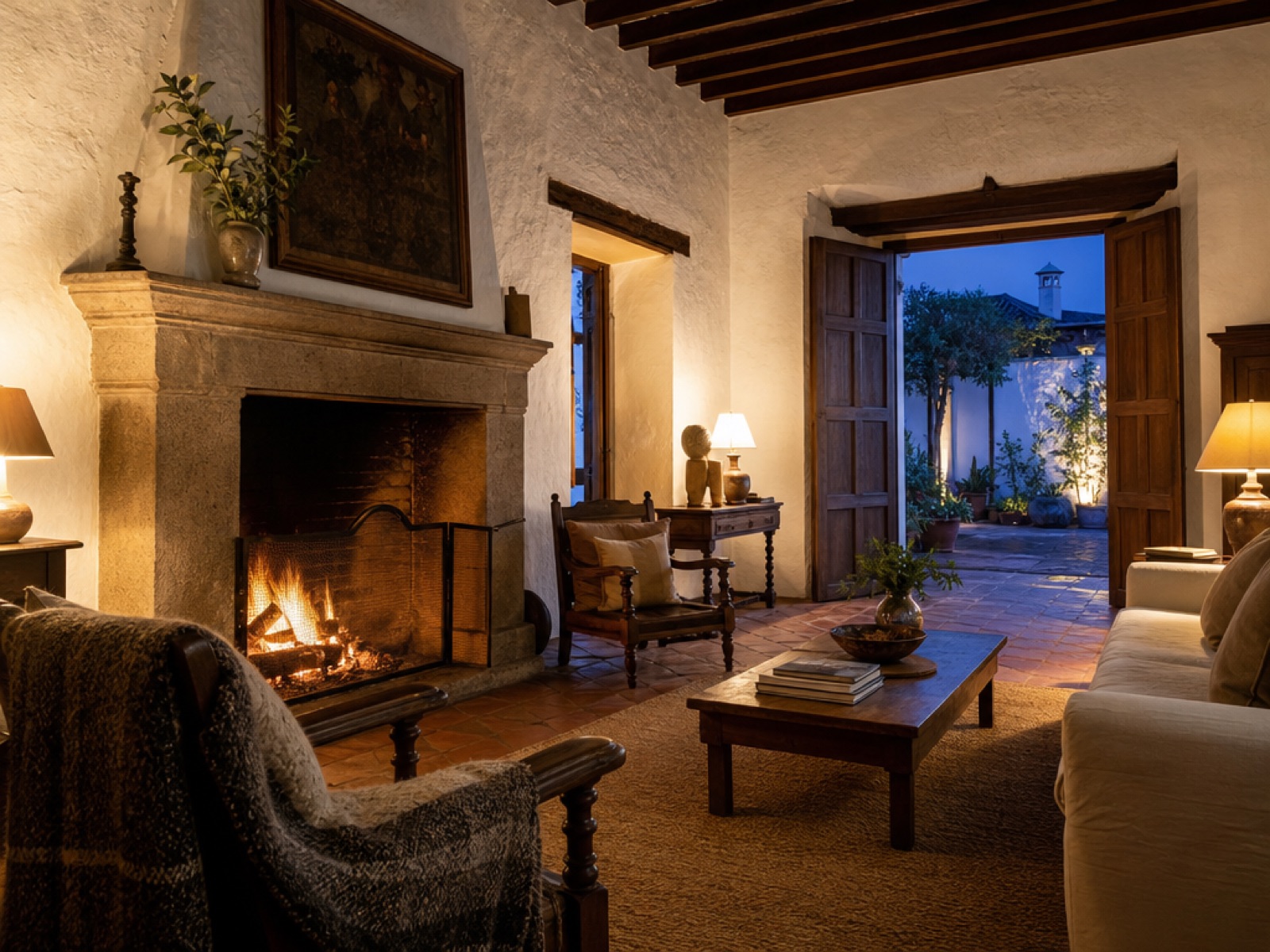
Antigua Guatemala gets cold at night, and most foreign buyers are surprised by it. The town sits at about 1,530 metres, nights average 11 to 13 degrees Celsius from November through February, and a few nights fall to 6 or lower. Nothing here has central heating, and colonial construction was never insulated. You will heat one or two rooms rather than a whole house, and it costs less than you expect with the right method, and far more than you expect if you leave a 1,500 watt radiator running all night.
How cold does Antigua Guatemala actually get?
Days stay pleasant all year, between 22 and 26 degrees Celsius, which is why the cold only shows up after dark. The cold season runs from November to February, and January and February mornings are the coldest of the year. Nighttime lows settle between 11 and 13 degrees in town, with a few nights a season dropping to 6 or 8. Properties in the hills above town, in El Hato or San Juan del Obispo, and on the slopes toward the volcanoes, run two to four degrees colder.
The number that matters is the one inside the house. Thick stone walls hold the night’s coolness long after sunrise, so a colonial living room can sit at 15 or 16 degrees at seven in the morning while the patio is already 24 by ten. The weather and climate guide walks through the seasons month by month.
Why colonial homes feel cold indoors
Four things work against warmth here.
- Masonry mass. Walls of 40 to 80 centimetres, as the colonial architecture guide explains, store the night’s cold and give it back slowly indoors.
- High ceilings and tile floors. Three to four metre ceilings put the little heat you make metres above your head, and terracotta tile stays cold underfoot.
- Loose openings. Wooden windows are single glazed at best, doors have gaps, and patio openings often do not close properly.
- No roof insulation. Under a tile and beam roof, nothing stops warmth rising out through the ceiling.
Passive habits therefore carry more weight here than the heater you buy.
What heating options actually work
These are typical 2026 costs, installed where installation applies, verified in November 2026.
| Option | Typical 2026 cost |
|---|---|
| Existing fireplace, flue inspected and swept | Q400 to Q900 ($50 to $115) |
| Glass door or insert for an open fireplace | Q2,500 to Q7,000 ($320 to $900) |
| Seasoned firewood, per tarea (a pickup load) | Q700 to Q1,500 ($90 to $195) |
| Wood stove with flue, supplied and installed | Q4,500 to Q12,000 ($580 to $1,550) |
| Propane space heater, 3 to 4 kW | Q700 to Q1,800 ($90 to $230) |
| Propane refill, 25 pound cylinder | Q90 to Q130 ($12 to $17) |
| Electric oil filled radiator, 1,500 W | Q1,200 to Q2,800 ($155 to $360) |
| Reverse cycle minisplit, 12,000 BTU, installed | Q4,500 to Q9,000 ($580 to $1,160) |
| Electric blanket or heated mattress pad | Q400 to Q1,300 ($50 to $170) |
| Thermal lined curtains, per room | Q400 to Q2,000 ($50 to $260) |
Running cost separates these options far more than purchase price does. At 2026 residential tariffs of roughly Q1.20 to Q2.30 per kilowatt hour, a 1,500 watt radiator costs Q11 to Q21 for six evening hours. A 4 kilowatt propane heater empties a 25 pound cylinder in about a week of evening use, which lands near Q15 to Q20 a night and matches electricity almost exactly. A reverse cycle minisplit moves heat instead of making it and warms the same room for roughly a third of the electricity, which makes a heat pump the cheapest way to warm a bedroom, and a fireplace the cheapest way to warm one room if firewood is delivered locally.
Fireplaces and chimneys: what to check before winter
A working fireplace is one of the most-loved features of a colonial Antigua home, and the one most often neglected. Before the first cold week, have the flue swept and inspected, watching for a blocked or undersized flue that smokes into the room, masonry cracked by years of heat cycles, and anything combustible near the hearth. A mesh screen keeps sparks off tile roofs and rugs. Firewood is sold by the quintal or the tarea, and dry seasoned wood burns hotter with far less smoke: a tarea runs Q700 to Q1,500 and lasts weeks of evening fires.
One permit point catches buyers out. Using an existing flue as it is needs no licence, but a new external flue or a chimney stack visible on a street facade falls under the same municipal rules as any facade change, with a CNPAG opinion in the protected zone, as the building permits guide sets out.
Propane, and the carbon monoxide point
Propane is the practical answer for a room with no fireplace, and it is what most local families use. Two cautions belong in writing. An unvented or catalytic heater releases water vapour as it burns, the last thing a colonial house with a damp problem needs, as the humidity and damp guide explains. And any unvented fuel heater produces carbon monoxide, so leave a window cracked and never run one in a closed bedroom overnight. Carbon monoxide alarms are hard to find locally, so buy one online before your first winter, and never use a gas stove or oven as a room heater, a habit that turns up in furnished rentals.
Cheap fixes worth doing first
- Open shutters wide by nine in the morning to let the sun warm the walls, then close them at dusk to trap that heat.
- Add a thermal lined curtain to the coldest room, where single glass loses heat faster than the walls.
- Put rugs on tile and a draft stopper at the patio door.
- Heat the person, not the room: an electric blanket draws 60 to 100 watts, so an eight hour night costs about Q1.
- Raise the hot water temperature for evening showers, the subject of the hot water guide.
Heating, guests and rental income
Short-term guests arriving in December and January notice a cold house immediately and say so in reviews. A working fireplace, electric blankets on every bed and a one page note on the propane heater cost little and remove most winter complaints. Long-term tenants treat blankets as normal, but they will notice a heating bill you did not disclose, so put running costs in your numbers. Heating is a small line in the annual cost of owning a home, and a minisplit that also cools in March, as the air conditioning guide explains, earns its place twice.
What to check when you view a property
- Whether the house has a fireplace and whether the flue is clear and capped
- How the main rooms face, since a south or west facing living room stays warmer in the afternoon
- Whether windows are single glazed, and whether the shutters close properly
- Electrical capacity for a heater or a minisplit, the point the electrical upgrade guide covers
- Signs of damp near the fireplace or in unvented heated rooms
- How the house feels on a December morning, not on a warm June afternoon
A paid home inspection confirms the roof, the wiring and the damp, which together decide how the house handles the cold months, and the utilities guide shows what gas, power and water cost month to month.
The bottom line
Antigua Guatemala is comfortable by day and genuinely cold at night from November to February, so plan to heat one or two rooms rather than a whole house. Start with the free habits, add a swept fireplace or a propane heater, and choose a reverse cycle minisplit if you want the lowest running cost. Buyers should see a property on a cold morning and price the heating before they commit.
If you want to know how a specific Antigua property handles the cold season, Luna Jerney at Antigua Real Estate Development walks buyers through fireplaces, flues, orientation and electrical capacity on every viewing, and can price a heating solution before you close. Browse available properties or get in touch.
Interested in Antigua Real Estate?
Whether you're looking to buy, rent, or invest. I can help. Free consultation, no pressure.